
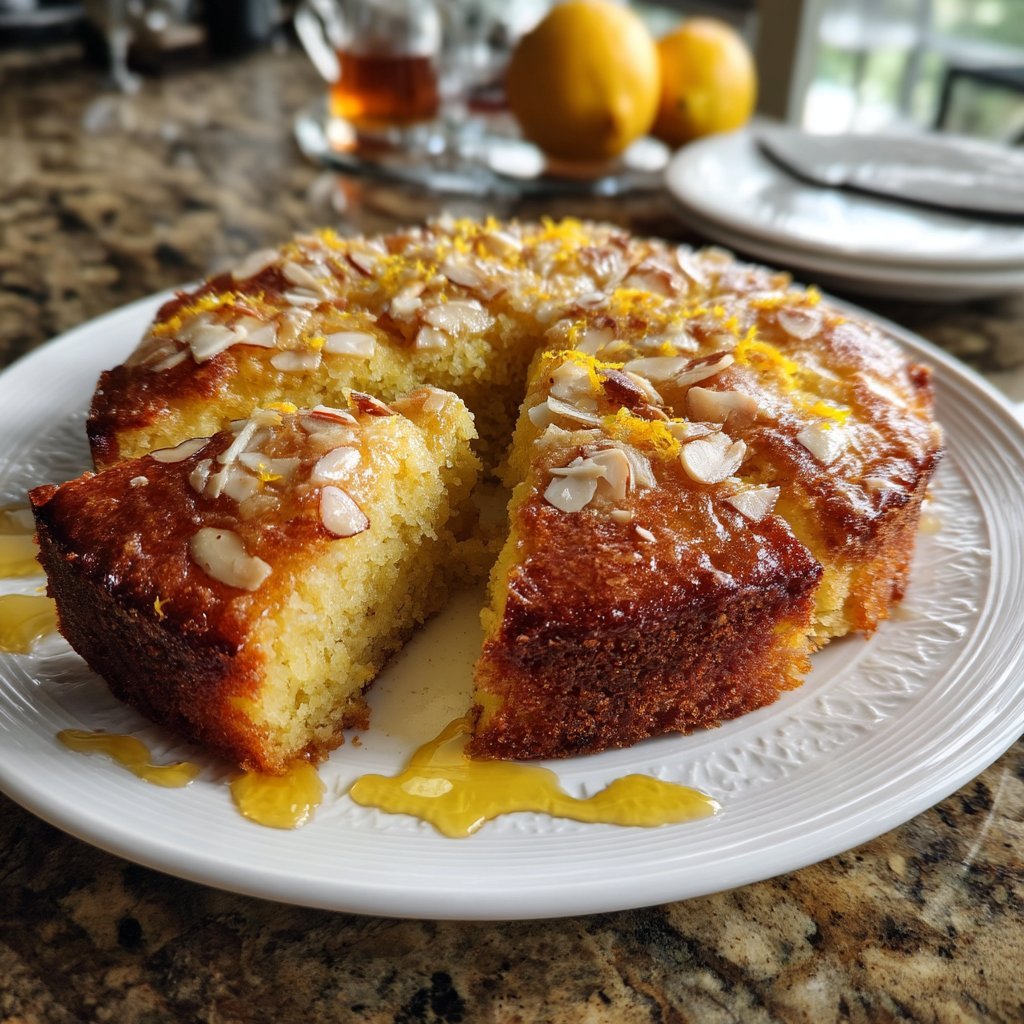
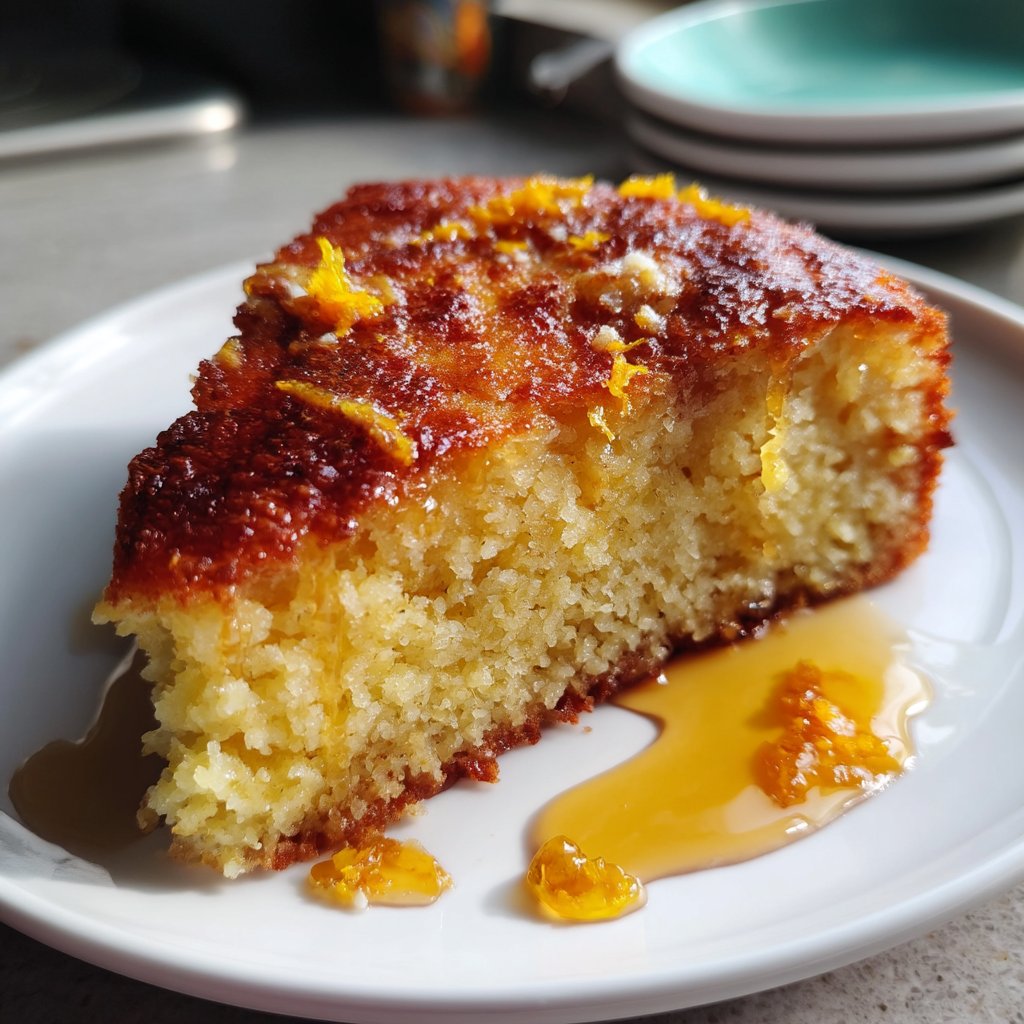
The first bite is tender and a little surprising: a crumb that’s both soft and ever so slightly grainy from semolina, threaded through with the warm, nutty whisper of almond and brightened by a drizzle of citrus that makes the whole kitchen smell like sunlight. One-Bowl Almond Semolina Cake with Citrus Syrup has that cozy, homey texture that reminds you of teatime with neighbors and slow afternoons when you had time to sit and talk. The syrup seeps into the warm cake and gives each forkful a gentle, sticky shine that keeps you going back for another taste.
This is the kind of dessert you bring to family gatherings because it feels like comfort and celebration at once. It pairs beautifully with simple sides — a bowl of soup, a platter of fresh fruit, or a scoop of yogurt — and it’s forgiving enough that you can make it ahead and still have it feel freshly made. If guests are coming over, I like to set it on the table while the living room still smells like coffee, and the cake becomes the quiet centerpiece, something everyone reaches for between stories and laughter. For a similar almond-citrus mood, you can also peek at my almond-lemon ricotta cake with lemon glaze which shares that lemony warmth but with a different texture.
This version is simple and truly foolproof, great for days when you want something good without fuss. The recipe calls for pantry basics and a single mixing bowl, so there’s hardly any washing up — a blessing if, like me, you’d rather be visiting with friends than rinsing dishes. The steps are straightforward, and even if you’re making it for the first time you’ll find the batter forgiving. It’s the sort of cake you can pull out when a neighbor drops by, or when you want to treat yourself after a long week. If you like a little variation, consider serving it with something creamy on the side, but the cake stands proudly on its own.
Why this recipe works
What makes this cake come together so well is the balance of textures and the modest, compatible ingredient list. Semolina brings a subtle grain that holds onto syrup beautifully; it gives the crumb a pleasant tooth without being coarse. Almond flour adds fat and softness, and because almond flour is naturally tender it keeps the cake moist even after it sits for a day or two. Together, semolina and almond flour create a cake that feels both rustic and refined — the semolina provides structure while the almond flour gives that rich, nutty flavor we all love.
Eggs and yogurt in the batter do different jobs that complement each other. Eggs give lift and a touch of stability, while yogurt introduces acidity and moisture. The acid in the yogurt interacts with the baking powder, helping the cake rise and creating a light crumb. Vegetable oil keeps the texture silky and makes the cake more forgiving to overbaking than butter would; oil-based cakes stay moist longer, especially when glazed with a syrup. The simple citrus syrup — just citrus juice and sugar — is crucial because it soaks into the warm cake and amplifies both aroma and flavor without making the cake soggy. The zests are small magic: tiny flecks of orange and lemon lift the aroma and make every bite taste fresh.
Ease of cooking is another reason this recipe is a winner. Mixing dry ingredients with wet in a single bowl minimizes steps and keeps things tidy. Because you’re not creaming butter and sugar or switching between bowls, it’s less likely you’ll overwork the batter. The cake bakes evenly, and a toothpick test is usually all you need to know it’s done. Those two simple elements — textures that play well together and an uncomplicated method — are why so many women come back to this kind of recipe again and again. If you want a slightly different finish, try sprinkling a bit of toasted almond on top after the syrup goes on; it adds crunch and echoes the almond flour inside. If you’re curious about another almond-citrus approach, you might enjoy my almond-lemon ricotta cake with lemon glaze, which shares the same bright spirit but with a creamier base.
How to prepare One-Bowl Almond Semolina Cake with Citrus Syrup
Before you begin, gather your bowls and the ingredients so everything feels calm and easy. The most satisfying part of the process is watching the simple batter come together into something silky and fragrant — mixing until smooth and then seeing it spread into the pan. That moment when you pop the pan into the oven and the kitchen fills with warm citrus and almond is a small, lovely ritual.
Work patiently: whisk the wet ingredients until they are blended, then stir them into the dry ingredients. You’ll notice the batter is thicker than a typical butter cake but still easy to pour. While it bakes, make the syrup and let it sit hot and ready so it can be poured over the warm cake as soon as it comes from the oven. That quick step is the secret to a glossy, tender finish. Below the walkthrough is the clear recipe card with ingredient amounts and step-by-step instructions.
Ingredients
- 1 cup semolina
- 1 cup almond flour
- 1 cup sugar
- 1 cup yogurt
- 1/2 cup vegetable oil
- 3 large eggs
- 1 teaspoon baking powder
- 1 teaspoon vanilla extract
- Zest of 1 orange
- Zest of 1 lemon
- 1/2 cup citrus juice (orange or lemon)
- 1/2 cup sugar for syrup
Instructions
- Preheat the oven to 350°F (175°C).
- Grease a cake pan.
- In a large bowl, mix together the semolina, almond flour, and sugar.
- In another bowl, whisk together yogurt, oil, eggs, baking powder, vanilla extract, and zests.
- Combine the wet ingredients with the dry ingredients.
- Mix until smooth.
- Pour the batter into the prepared cake pan.
- Bake for 30-35 minutes.
- Test with a toothpick; it should come out clean.
- While the cake is baking, prepare the citrus syrup by heating the citrus juice and sugar in a saucepan.
- Stir until the sugar dissolves.
- Once the cake is done, let it cool slightly.
- Pour the syrup over the warm cake.
- Allow to cool completely before serving.
Serving ideas
This cake is lovely on its own or with a few simple companions:
- A scoop of plain or vanilla yogurt for a creamy contrast.
- A platter of fresh berries and sliced stone fruit to echo the citrus notes.
- A light green salad with a citrus vinaigrette to balance sweetness.
For drinks, pair the cake with an herbal tea such as chamomile or a light black tea with a splash of milk. A chilled glass of sparkling water with a twist of lemon also makes a refreshing match if you prefer something non-caffeinated.
Storing this recipe
Store leftover cake wrapped tightly in plastic wrap or in an airtight container in the refrigerator. It will keep well for up to 4 days; the syrup helps preserve moisture. For longer storage, slice the cake into portions and freeze them on a baking sheet until firm, then transfer to a freezer bag for up to 3 months. Thaw overnight in the refrigerator and bring to room temperature before serving, or warm gently in a low oven for about 10 minutes.
When reheating, cover the slice with foil and warm in a 325°F oven for 8–10 minutes, or microwave a single serving for 20–30 seconds on medium power. If the cake seems a little dry after refrigeration, a quick brush of warmed citrus syrup before serving brings it back to life.
Simple tips for success
Mind the semolina texture. Semolina gives this cake its character, but if it sits for too long in the batter before baking it can absorb extra liquid and make the crumb heavier. Mix the wet and dry ingredients and get the pan into the oven within 10 to 15 minutes. If you like a slightly softer crumb, let the batter rest for just five minutes to let the semolina soften a touch, but don’t delay too long.
Watch the syrup timing. The syrup should be poured over the warm cake so it soaks in slowly and evenly. If the cake is too hot it may become overly saturated; if it’s cold the syrup will sit on the surface. Aim to pour the syrup when the cake has cooled just enough to touch but is still warm. Heat the syrup until the sugar just dissolves; you don’t need to boil it hard.
Balance the citrus. The zests and juice are both important. Zest carries bright aroma and oils, while juice brings body and tang. If you prefer a stronger orange note, use more orange zest and less lemon in the syrup. Taste the syrup before pouring to check the sweetness and acidity balance. If your citrus is very tart, add a touch more sugar to the syrup so the cake isn’t puckeringly sour.
Three additional practical pointers: measure your almond flour by spooning it into the cup and leveling it off so you don’t pack it down; if your kitchen is humid, store almond flour in the fridge to keep it fresh; and resist the urge to overmix once wet meets dry — mix until smooth but stop once the batter looks combined. These small habits will help you get a consistent result every time, and they’re the same little tricks that make home baking feel less like a chore and more like a comfort.
Recipe variations
- Add a splash of orange liqueur to the syrup for grown-up flavor. Stir it in after the syrup has cooled slightly so the alcohol aroma remains.
- Fold in a half cup of chopped dried apricots or cranberries for a chewy contrast and extra sweetness.
- Top with toasted almond slivers and a light dusting of powdered sugar for a pretty finish before serving.
Frequently asked questions
Q: Can I use all-purpose flour instead of almond flour?
A: You can, but the texture and flavor will change. Almond flour gives a moist, tender crumb and nutty taste. If you swap in all-purpose flour, reduce it slightly and consider adding a tablespoon of extra oil for moisture.
Q: What citrus juices work best for the syrup?
A: Fresh orange or lemon juice both work well. Orange gives a sweeter, rounder syrup while lemon adds a bright, sharper tang. You can also mix the two for balance.
Q: Can I make this cake dairy-free?
A: Yes. Use a non-dairy yogurt like coconut or almond yogurt and a neutral oil. Keep in mind coconut yogurt may add a subtle coconut flavor.
Q: How do I know when the cake is fully baked?
A: The toothpick test is reliable — insert into the center and it should come out mostly clean with a few moist crumbs. The top should spring back lightly when touched.
Conclusion
This One-Bowl Almond Semolina Cake with Citrus Syrup is the kind of simple, comforting dessert that becomes part of family rhythm — easy to make, easy to share, and gentle enough to bring to any table. If you enjoy citrus and almond together, you might like to read a related riff on this flavor profile at Lavender-Lemon Almond-Semolina Cakes – Fix Feast Flair. Treat yourself to a slice warmed slightly; it’s small kindnesses like this that make ordinary days feel a little brighter, especially when a cake as friendly as One-Bowl Almond Semolina Cake with Citrus Syrup is waiting on the counter.
PrintOne-Bowl Almond Semolina Cake with Citrus Syrup
- Total Time: 45 minutes
- Yield: 8 servings
- Diet: Vegetarian
Description
A tender and slightly grainy cake with warm almond notes and a bright citrus syrup.
Ingredients
- 1 cup semolina
- 1 cup almond flour
- 1 cup sugar
- 1 cup yogurt
- 1/2 cup vegetable oil
- 3 large eggs
- 1 teaspoon baking powder
- 1 teaspoon vanilla extract
- Zest of 1 orange
- Zest of 1 lemon
- 1/2 cup citrus juice (orange or lemon)
- 1/2 cup sugar for syrup
Instructions
- Preheat the oven to 350°F (175°C).
- Grease a cake pan.
- In a large bowl, mix together the semolina, almond flour, and sugar.
- In another bowl, whisk together yogurt, oil, eggs, baking powder, vanilla extract, and zests.
- Combine the wet ingredients with the dry ingredients.
- Mix until smooth.
- Pour the batter into the prepared cake pan.
- Bake for 30-35 minutes.
- Test with a toothpick; it should come out clean.
- While the cake is baking, prepare the citrus syrup by heating the citrus juice and sugar in a saucepan.
- Stir until the sugar dissolves.
- Once the cake is done, let it cool slightly.
- Pour the syrup over the warm cake.
- Allow to cool completely before serving.
Notes
The cake pairs well with yogurt or fresh fruit. Store leftovers in the refrigerator or freeze for future enjoyment.
- Prep Time: 15 minutes
- Cook Time: 30 minutes
- Category: Dessert
- Method: Baking
- Cuisine: Mediterranean