
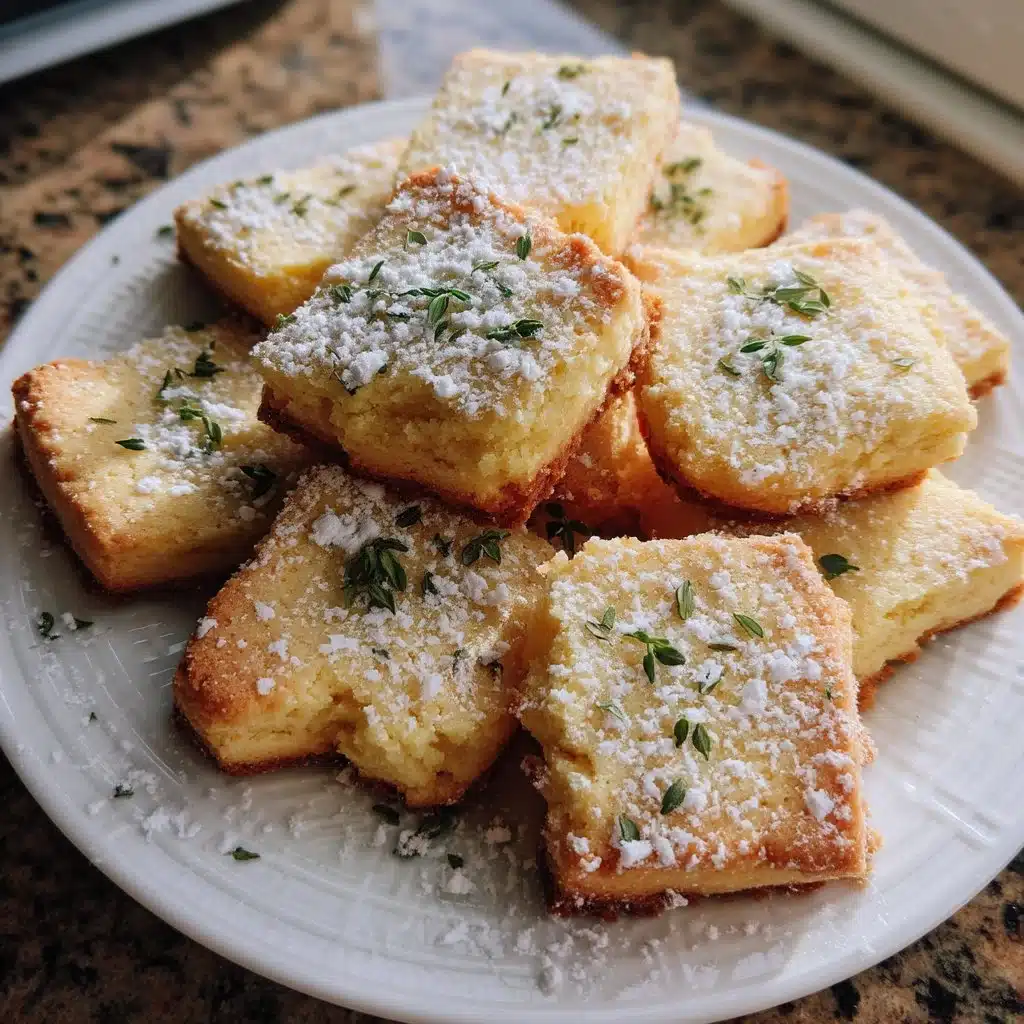
The first bite is all buttery crumble and bright lemon, with little pops of herb that remind you of a sunny windowsill in spring that’s Lemon Thyme Shortbread with Powdered Sugar, a delicate cookie that melts on your tongue and leaves a soft, sweet lemon scent in the air. The powdered sugar dusting catches in the little ridges and makes each piece look like a tiny snowdrift, while the thyme adds a gentle, savory lift so the cookie never feels too sweet. It’s the kind of treat that pulls you back to cozy afternoons with a cup of tea, wrapped in a shawl and swapping stories.
This shortbread is comfort food in the best sense: simple, familiar, and made to share. It’s perfect for family gatherings because it’s easy to make in a batch, it keeps well in a tin, and it pairs wonderfully with a bowl of soup or a plate of fresh fruit for a casual afternoon spread. When company comes, these cookies sit on the platter looking like you spent all morning fussing, when really they ask only a few quiet minutes of attention. If you want something a touch more special without the fuss, try a slice of lemon cake alongside them for contrast; the two make a very pleasing pairing for an afternoon with friends or a holiday coffee hour. I also like to tuck a visit to a favorite recipe page into my planning when I’m thinking ahead for gatherings and that little nudge helps me decide what else to set out.
This version is simple and truly foolproof, meant for hands that remember how to roll dough by feel and hearts that love a straightforward recipe. You won’t need any fancy equipment, and the steps are kind to busy days. The dough chills while you put a pot of tea on, and when the cookies come out of the oven you’ll know you did something right. Keep a spare jar of powdered sugar for dusting, and don’t forget to breathe in that lemon-thyme scent as they cool.
Why this recipe works
Texture is the soul of a great shortbread, and this one hits the right notes because of its ingredients and the gentle handling they require. The cup of unsalted butter, softened but not melted, gives the cookies a tender, almost sandy feel that flakes apart as you bite. Powdered sugar, rather than granulated, dissolves into the butter and creates a finer crumb. The two cups of all-purpose flour provide structure without toughness; you’re not aiming for chewiness here but for a delicate snap that yields to a buttery melt.
The lemon zest brings brightness without adding extra moisture, so the flavor is intense and fresh but the dough stays firm enough to slice neatly. Fresh thyme leaves are subtle and fragrant; when mixed into the dough they release tiny bursts of savory, floral aroma that stop the cookie from being cloyingly sweet. A quarter teaspoon of salt rounds everything out, waking up both the lemon and the thyme and balancing the richness of the butter.
Ease of cooking is another reason this recipe succeeds. The steps are short and forgiving: you cream butter and sugar until light, fold in dry ingredients until just combined, chill, slice, and bake. Chilling the log makes clean, even slices possible and prevents spreading in the oven. Baking for 12–15 minutes ensures a pale golden edge while keeping the centers tender. A light dusting of powdered sugar at the end adds the look and hint of sweetness that feels nostalgic and homemade. Because the technique is straightforward, even cooks who haven’t made shortbread before can expect consistent results. Little memories form around the process: rolling the dough on waxed paper, the soft scrape of a knife, the scent that fills the kitchen. That’s why this recipe keeps finding its way into the platter at family gatherings and neighborhood teas.
How to prepare Lemon Thyme Shortbread with Powdered Sugar
Start by getting everything ready: soften the butter so it’s easy to beat, zest the lemons, and pick the thyme leaves from their stems. The most satisfying part of this recipe is when the butter and powdered sugar turn pale and fluffy under the beaters it feels like you’ve already made something luxurious. Another sweet moment is rolling the dough into a neat log. It’s almost like wrapping a little present, then tucking it into the fridge to chill. The chill time is a small pause that rewards you with tidy slices and that lovely shortbread texture.
When you slice the dough, use a sharp knife and steady pressure for even rounds. Lining the baking sheet with parchment paper keeps cleanup simple and helps the bottom of the cookies stay pale and tender. Watch the edges as they bake; you want the slightest warmth of color, not deep browning. Once out of the oven, the cookies still look fragile, and that’s the charm dust them with powdered sugar while they’re warm but not hot, so the sugar sticks in the nooks and makes each cookie look like a little confection. This walk-through keeps the language plain and actions clear: mix until smooth, chill until firm, bake until edges color. The rest is patience and pleasure.
Ingredients
- 1 cup unsalted butter, softened
- 1/2 cup powdered sugar
- 2 cups all-purpose flour
- 1 tablespoon fresh lemon zest
- 1 tablespoon fresh thyme leaves
- 1/4 teaspoon salt
- Additional powdered sugar for dusting

To make sure you have everything at hand, gather the butter out of the fridge early so it softens at room temperature. Fresh thyme is preferable to dried; it offers a brighter, greener taste. When measuring flour, spoon it into the cup and level it off rather than scooping directly from the bag that keeps your dough from getting too stiff. A little extra powdered sugar sits nearby for that final, sweet snowing over the shortbread.
Instructions
- Preheat the oven to 350°F (175°C).
- In a mixing bowl, beat together the softened butter and powdered sugar until light and fluffy.
- Gradually add the flour.
- Add the lemon zest.
- Add the thyme leaves.
- Add the salt.
- Mix until a dough forms.
- Roll the dough into a log.
- Wrap it in plastic wrap.
- Chill in the refrigerator for about 30 minutes.
- Slice the chilled dough into 1/4-inch thick rounds.
- Place the rounds on a baking sheet lined with parchment paper.
- Bake for 12–15 minutes.
- Remove when the edges are lightly golden.
- Allow to cool slightly.
- Dust with additional powdered sugar before serving.
Splitting the steps keeps each action clear and easy to follow. If your kitchen is warm, a slightly longer chill will help. For neatness, slice with a sharp, thin knife and wipe it between cuts. The step of dusting at the end is what makes each cookie feel finished and special.
Serving ideas
Shortbread is a gentle companion for many dishes. For a small family gathering, try serving these cookies with a bowl of fresh berries. The bright tartness of strawberries, raspberries, or blueberries is lovely against the buttery cookie. Another pleasant pairing is a plate of sliced pears or baked apples; the soft fruit balances the shortbread texture. For a savory contrast, offer a small selection of cheeses alongside a soft, mild cheese makes a warm, comforting plate.
For drinks, a pot of hot tea is the classic choice: Earl Grey or a floral green tea complements the lemon and thyme notes without overwhelming them. Coffee works well too if your crowd prefers a bolder cup. For a warm day, a chilled herbal iced tea can be refreshing and keeps the dessert plate light. When you set the table, place the cookies on a shallow dish and sprinkle a little extra powdered sugar over the top right before serving. It makes the platter look cared for and inviting.
As you serve, encourage people to take a moment to breathe in the aroma it’s part of the pleasure. These pairings are simple and meant to enhance the shortbread, not compete with it.
Storing this recipe
To keep your shortbread fresh, store cooled cookies in an airtight tin or container at room temperature for up to five days. They hold their texture well because powdered sugar and butter make a stable crumb. If you need to keep them longer, you can freeze the baked cookies: arrange them in a single layer on a tray and flash-freeze for an hour, then stack with parchment paper between layers in a freezer-safe container for up to three months.
If you’ve frozen slices of the log instead of baked cookies, wrap the log tightly in plastic and foil. Thaw in the refrigerator overnight before slicing and baking. When reheating previously baked cookies, warm them for a few minutes in a 300°F oven to refresh the butter and lift the aroma; watch closely so they don’t brown. Microwaving is not recommended, as it can soften the texture too much. Room-temperature shortbread is pleasant, but a light toast brings back some crispness without changing the flavor.
Helpful tips
First, don’t overwork the dough. The tender texture comes from gentle mixing. Once you add the flour, stir only until the dough comes together. Overmixing develops gluten and will make the cookies tougher. Use a soft touch when folding the thyme leaves and lemon zest in; you want little flecks dispersed through the dough, not a paste.
Second, chilling is your friend. If the butter is too warm, the cookies will spread and lose their neat edges. After rolling the dough into a log, chill for at least thirty minutes. If your kitchen is warm or you prefer firmer slices, chill for an hour or even overnight. Chilled dough slices cleanly and keeps the oven time predictable.
Third, measure with care. Powdered sugar compacts differently than granulated, and flour is easily overpacked. Spoon flour into your measuring cup and level it for accuracy. If you live at high altitude or in a very dry climate, you may need to adjust the baking time by a minute or two and watch for the edges to take on just a hint of color.
A few more practical notes: use fresh lemon zest rather than bottled lemon oil; the bright citrus comes from fresh peel. Strip thyme leaves off the stems by pinching down the stem with your fingers and pulling the leaves away. If you’d like a glossier finish, melt a touch more butter and brush it lightly before dusting with sugar. Keep a few extra cookies set aside to leave on the counter for guests; they disappear faster than you expect.
Recipe variations
- Make it lemon-poppy: Add a tablespoon of poppy seeds to the dough for a pleasant crunch and a little visual contrast. Poppy seeds pair beautifully with lemon and keep the thyme as a subtle background note.
- Make it nutty: Replace 1/2 cup of the all-purpose flour with finely ground almonds for a tender, slightly chewy shortbread. The almond adds warmth and pairs well with the lemon zest. Be sure to label these if you have guests with nut allergies.
- Make it citrus-herb: Stir in 1/2 teaspoon of finely chopped rosemary with the thyme for a more aromatic herb profile. Or swap the lemon zest for orange zest for a sweeter, rounder citrus note. Each tweak shifts the character slightly while keeping the familiar shortbread base.
These variations are easy to try and give you options for different seasons and guests. Keep the method the same and change only one element at a time so you can learn how each change affects texture and flavor.
Frequently asked questions
Q: Can I make the dough ahead of time?
A: Yes you can roll the dough into a log, wrap it tightly, and keep it in the refrigerator for up to 48 hours. Chill longer if your kitchen is warm. If you need to keep it longer, freeze the wrapped log for up to three months and thaw in the fridge overnight before slicing and baking.
Q: Can I use dried thyme instead of fresh?
A: You can, but use about one-third the amount. Dried herbs are more concentrated and lack the bright, fresh aroma of the leaves. Fresh thyme gives the shortbread its subtle, lively lift.
Q: What if my shortbread spread too much while baking?
A: That usually means the butter was too warm or the dough needed more chilling. Next time, chill the log longer and slice slightly thicker rounds. Also be sure your oven is at the correct temperature before baking.
Q: How can I make the powdered sugar stick better?
A: Dust the cookies when they are warm but not hot; the slight warmth helps the sugar adhere. If you want a firmer hold, brush a light coating of melted butter on each cookie first, then sift the powdered sugar over them.
Conclusion
These cookies bring simple pleasures to the table and are a small, sweet way to show care for family and friends. If you want another take on lemon baking for a gathering, you can compare notes with a tried recipe online like lemon thyme shortbread – devil’s food kitchen. When you’re arranging your next tea or holiday plate, Lemon Thyme Shortbread with Powdered Sugar will be the little memory everyone asks for again.
PrintLemon Thyme Shortbread with Powdered Sugar
- Total Time: 30 minutes
- Yield: 24 cookies
- Diet: Vegetarian
Description
A delicate cookie with a buttery crumble and bright lemon flavor, elevated by fresh thyme.
Ingredients
- 1 cup unsalted butter, softened
- 1/2 cup powdered sugar
- 2 cups all-purpose flour
- 1 tablespoon fresh lemon zest
- 1 tablespoon fresh thyme leaves
- 1/4 teaspoon salt
- Additional powdered sugar for dusting
Instructions
- Preheat the oven to 350°F (175°C).
- Beat together the softened butter and powdered sugar until light and fluffy.
- Gradually add the flour.
- Add the lemon zest.
- Add the thyme leaves.
- Add the salt.
- Mix until a dough forms.
- Roll the dough into a log.
- Wrap it in plastic wrap.
- Chill in the refrigerator for about 30 minutes.
- Slice the chilled dough into 1/4-inch thick rounds.
- Place the rounds on a baking sheet lined with parchment paper.
- Bake for 12–15 minutes.
- Remove when the edges are lightly golden.
- Allow to cool slightly.
- Dust with additional powdered sugar before serving.
Notes
For neat slices, use a sharp knife and steady pressure. Chilling is crucial to prevent spreading.
- Prep Time: 15 minutes
- Cook Time: 15 minutes
- Category: Dessert
- Method: Baking
- Cuisine: Baking