
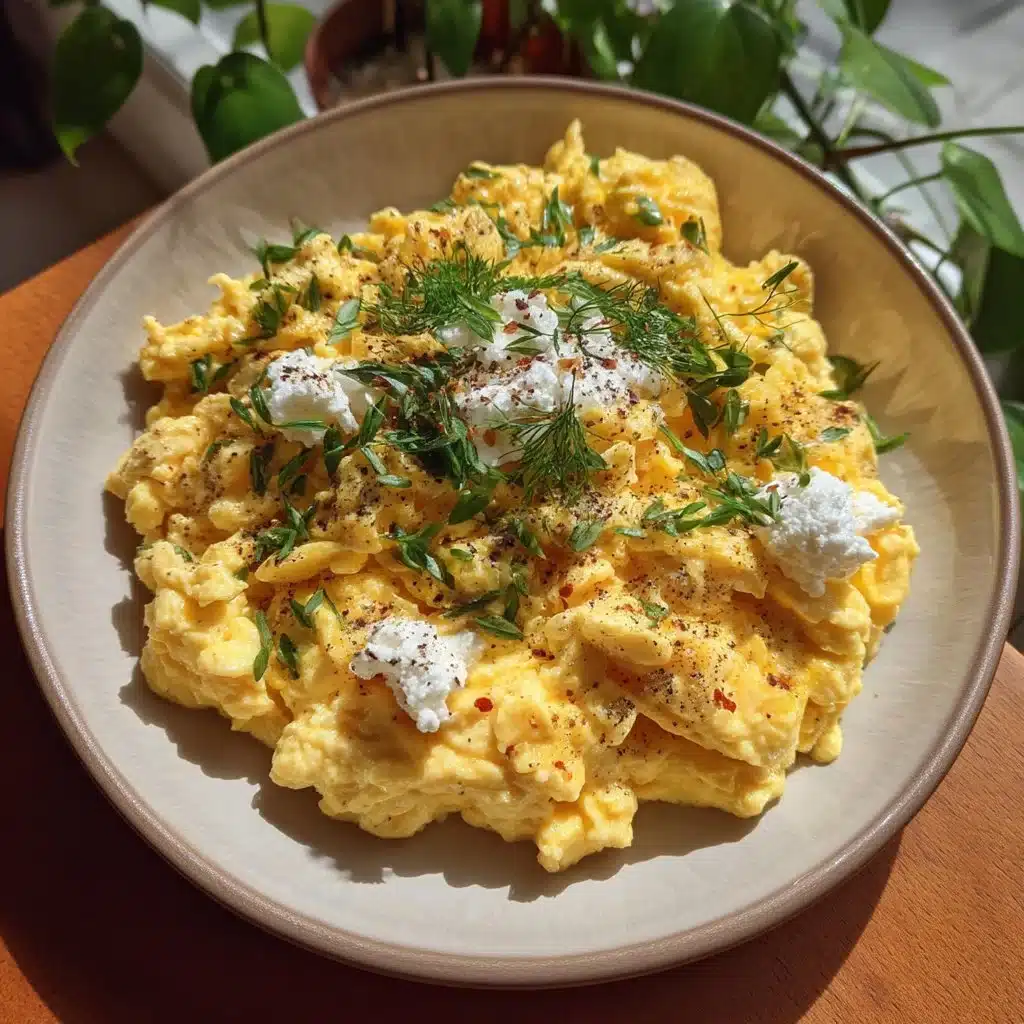
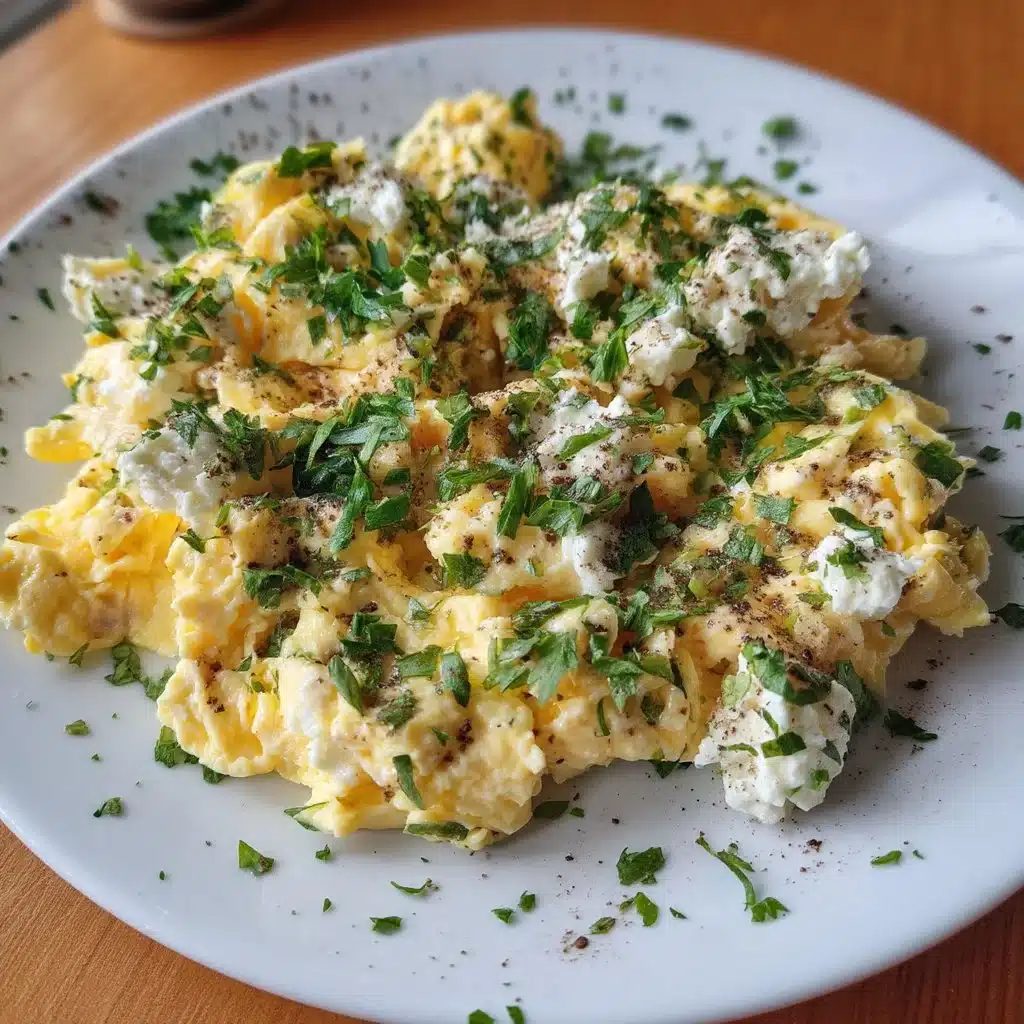
There is nothing quite like the soft steam and milky tang that lifts from a pan when you make Ricotta Scrambled Eggsthe curds stay tender and the ricotta gives each bite a whisper of creaminess that feels like a warm kitchen hug.
This gentle dish becomes a classic comfort food because it eats like a small celebration at the table. It’s the kind of breakfast that fills the kitchen with familiar smells and invites conversation, whether you’re feeding sleepy teenagers home from college or gathering daughters and friends for a slow morning. Serve it beside simple sidesa buttered slice of bread, a warm bowl of soup, or a quick saladand the meal stretches into a memory. If you enjoy ricotta in lighter preparations, you might also like a crunchy ricotta bite for a different texture; that idea is an easy way to add a crisp companion to softer eggs: crispy ricotta bites.
This particular version is wonderfully simple and truly foolproof. A small handful of ingredients and a steady hand at the stove are all you need to make it sing. The eggs come together quickly, and because the ricotta does the heavy lifting for creaminess, you don’t need cream or long coaxingjust patience as they finish off the heat. It’s the kind of recipe you can hand off to a younger relative and still trust the result to be tender and comforting.
Why this recipe works
There are two big reasons this recipe always turns out well: texture and harmony of ingredients. The texture is the heart of the dish. Eggs on their own can be silky or rubbery depending on heat and timing, but when you fold in ricotta the curd structure changes. Ricotta adds tiny pockets of moisture and a delicate, almost grainy cream that keeps the curds from tightening up. That makes the finished eggs feel pillowy and luxurious without needing extra butter or cream. The contrast between the warm, custardy eggs and the ricotta’s soft tang is what gives each bite depth. You get a little protein comfort and a little dairy brightness together.
Ease of cooking matters, too. This is a recipe that forgives gentle stirring and modest heat. Eggs coagulate at relatively low temperatures, and ricotta buffers that process. The butter in the pan gives a non-stick, slightly savory sheen so the eggs slide instead of cling. Salt brings out the dairy sweetness, while a turn of black pepper adds a small peppery warmth to balance the cream. If you like fresh herbs, a sprinkle at the end adds perfume without altering texture.
Because the ingredient list is short, each element must do work. Whole eggs provide structure, ricotta softens and adds fat, butter keeps things from clinging and adds flavor, and simple seasoning finishes the profile. You don’t need fancy techniques: low heat, patient stirring, and timing are what make the magic. This is also why the recipe fits busy mornings and relaxed brunches alikeminimal fuss, maximal comfort. The method makes it simple to serve a crowd, and the lightness of the dish pairs well with both sweet and savory sides.
How to prepare Ricotta Scrambled Eggs
There’s a small, satisfying rhythm to making these eggs that feels almost like a ritual. Start by having everything measured and at hand. Mixing the eggs and ricotta at room temperature helps them come together smoothly, and the process of whisking is calmingyou’ll see the mixture go from separated to a unified pale gold. Heat the butter gently so it melts evenly without browning. The most satisfying part is when you see the curds begin to form: they’ll be soft and billowy, and you stop cooking just as they come together. Then you remove the pan and watch the residual heat finish the job, giving you a creamy result that still holds a little shape.
Keep the language simple: whisk, melt butter, stir gently, and rest briefly. When you whisk, make sure to mix until smooth so the ricotta blends evenly with the eggs. The sensation of the spatula scraping the pan and folding the soft curds is one of home cooking’s small pleasuresslow it down and enjoy that moment. As you serve, a scattering of herbs is optional but lovely, and the aroma alone is worth the five minutes at the stove.
Ingredients
- 4 large eggs
- 1/4 cup ricotta cheese
- Salt to taste
- Pepper to taste
- 1 tablespoon butter
- Fresh herbs (optional for garnish)
Instructions
- In a bowl, whisk together the eggs, ricotta, salt, and pepper until combined.
- Heat the butter in a non-stick skillet over medium heat.
- Pour the egg mixture into the skillet.
Cook, gently stirring, until the eggs are softly set and creamy.
This should take about 2–3 minutes. - Remove from heat and garnish with fresh herbs if desired.
- Serve warm.
Serving ideas
- A slice of warm, buttered toast is a simple, homey match that soaks up any soft curds.
- A fresh bowl of mixed fruit brightens the plate and balances the richness.
- A crisp green salad with a light vinaigrette gives a refreshing contrast to the creamy eggs.
For a sweet-savory combination for a brunch spread, consider a nut-forward ricotta hand pie idea as a companion; it brings sweetness and texture to the table: nutty ricotta hand pies.
Pair the meal with hot black tea or a glass of fresh orange juice for a classic breakfast feel, or choose a light white wine if you’re serving these at a leisurely brunch.
Storing this recipe
These eggs are best eaten right away, but you can keep leftovers for short-term use. Store cooled eggs in an airtight container in the refrigerator for up to 48 hours. Because the ricotta adds moisture, freezing is not recommendedthe texture will change and the eggs can become watery when thawed.
When reheating, do it gently. Place the eggs in a skillet over low heat with a small pat of butter or a splash of milk. Warm slowly, stirring once or twice, until just heated through. Avoid high heat or the microwave on high power, which can overcook and dry them out quickly. If you must use a microwave, heat in short 10–15 second bursts, stirring between each burst to keep the texture tender.
Helpful tips
Tip 1 Low and slow wins: Keep the pan at medium or medium-low heat. High heat makes eggs firm and rubbery very quickly. Patience means you’ll have soft curds that still hold a little shape. If your pan runs hot, lower the flame and give the eggs time to set gradually. The butter should foam but not brown. If the butter is browning, pull the pan off the heat for a moment and let it cool slightly before finishing.
Tip 2 Timing the finish: Remove the pan from heat when the eggs are still slightly wetter than you want. They continue to cook in the residual heat of the pan. This carryover cooking is gentle and keeps them from becoming dry. If you’re serving for company, finish them in a warm pan and transfer to a warm plate to hold. A last stir and a minute of resting under a lid yields a creamier final texture.
Tip 3 Balance the ricotta: Too much ricotta can water down the eggs and make them loose, while too little won’t give that signature creaminess. The quarter cup in this recipe is a happy middle ground for four eggs. When you whisk, mix until smooth so the ricotta is evenly distributed. Taste as you goadd a pinch more salt if the ricotta mutes the flavor, and finish with pepper or a little lemon zest for brightness if you like.
Extra practical notes: use a non-stick skillet and a soft spatula for the best experience. Fresh ricotta makes a difference; if yours is very wet, blot it gently on paper towel before mixing. Fresh herbs added at the endchives, parsley, or a little dillbring color and fragrance without changing texture. When feeding family, let everyone customize their plate with simple toppings like sliced avocado, a sprinkle of grated cheese, or a spoonful of tomato jam.
Flavor variations
- Make it spicy: Fold in a pinch of red pepper flakes or a small spoonful of harissa for a gentle kick. Add diced tomatoes for freshness.
- Green and garlicky: Stir in a handful of baby spinach or arugula at the end and finish with chopped chives and a touch of lemon zest.
- Cheesy upgrade: Add a tablespoon of grated Parmesan or crumbled feta while the eggs finish in the pan for a saltier, richer profile.
Common questions
Q: Can I use low-fat ricotta?
A: Yes, but it may be less creamy. If using low-fat ricotta, consider adding a small splash of milk or a tiny bit more butter to keep the texture lush.
Q: Can I make this without butter?
A: You can, though butter adds a gentle richness and helps the eggs slide. A neutral oil will work in a pinch, but the flavor will be slightly different.
Q: How can I make these eggs for a crowd?
A: Cook in batches and keep warm in a low oven (about 200°F) on a baking sheet. Finish each batch just before serving so the texture stays tender.
Q: Is it okay to add vegetables?
A: Yes. Lightly sauté vegetables like mushrooms or peppers first so they’re tender, then fold them into the finished eggs to avoid extra moisture in the pan.
Conclusion
These Ricotta Scrambled Eggs are a small, everyday pleasure that feels thoughtful and comforting. For a quick read on one simple way to make scrambled eggs even creamier, see this 1-ingredient upgrade for better scrambled eggs. Give them a try on a quiet morning, and you’ll have a new staple for family breakfasts and slow weekend brunches.
PrintRicotta Scrambled Eggs
- Total Time: 8 minutes
- Yield: 2 servings
- Diet: Vegetarian
Description
Soft and creamy scrambled eggs with ricotta, perfect for a comforting breakfast or brunch.
Ingredients
- 4 large eggs
- 1/4 cup ricotta cheese
- Salt to taste
- Pepper to taste
- 1 tablespoon butter
- Fresh herbs (optional for garnish)
Instructions
- In a bowl, whisk together the eggs, ricotta, salt, and pepper until combined.
- Heat the butter in a non-stick skillet over medium heat.
- Pour the egg mixture into the skillet.
- Cook, gently stirring, until the eggs are softly set and creamy, about 2–3 minutes.
- Remove from heat and garnish with fresh herbs if desired.
- Serve warm.
Notes
These eggs are best eaten right away but can be stored in the refrigerator for up to 48 hours. Reheat gently to preserve texture.
- Prep Time: 5 minutes
- Cook Time: 3 minutes
- Category: Breakfast
- Method: Stovetop
- Cuisine: Italian