
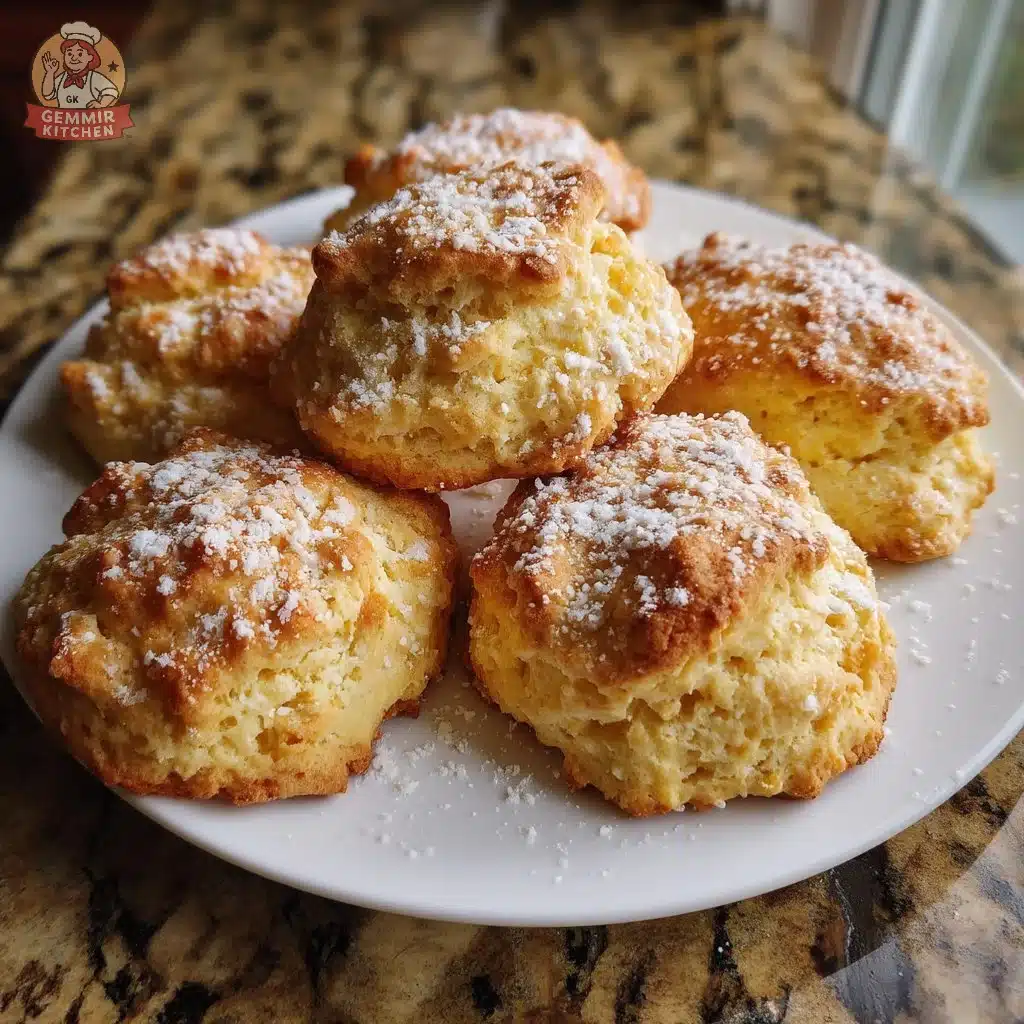
These Limoncello Ricotta Scones are everything a great scone should be — deeply golden on the outside, tender and pale yellow inside, with a crumb that splits open at the edges to show exactly how soft the ricotta has kept it. No rolling pin. No pastry cutter. No wedge shapes. Just drop spoonfuls of dough onto a tray and let the oven do the rest.
The limoncello brings a warm, citrus-forward fragrance that fills the kitchen while they bake. The ricotta keeps the crumb impossibly moist — miles from the dry, crumbly scones that need to be eaten the moment they come out of the oven. These stay tender through day two, and they are just as good cold as they are warm. A dusting of powdered sugar before serving is all they need.
Why Drop Scones Are Better for This Recipe
Traditional scones are patted and cut — a process that works beautifully for plain or fruit scones but requires cold handling, minimal mixing, and confident speed. The ricotta in this dough changes everything. Ricotta makes the dough softer, more yielding, and slightly stickier than a classic scone dough — it does not pat or cut cleanly.
Drop scones work with that softness rather than against it. You scoop, you drop, you bake. The dough spreads into naturally irregular rounds with craggy tops and edges — exactly what you see in the photo. Each Limoncello Ricotta Scone looks slightly different, which is exactly the homemade character that makes them so appealing piled on a plate.
Ingredients
- 2 cups (250 g) all-purpose flour
- ½ cup (100 g) granulated sugar
- 1 tablespoon baking powder
- ½ teaspoon fine salt
- ½ cup (115 g) unsalted butter, very cold, cut into small cubes
- 1 cup (250 g) whole milk ricotta cheese, well drained
- ¼ cup (60 ml) limoncello liqueur
- 1 large egg, cold
- Zest of 1 large lemon
- 1 teaspoon vanilla extract
- Powdered sugar for dusting just before serving
Makes: 8–10 drop scones depending on scoop size
The Role of Each Ingredient
Cold butter is the foundation of scone texture. When cold butter is worked into flour, it creates small pockets of fat that steam during baking — these are what produce the flaky, layered interior. Warm or melted butter produces a dense, cake-like texture with no lift or layering. Keep butter in the freezer for 10 minutes before using if your kitchen is warm.
Drained ricotta provides moisture, structure, and that pale yellow crumb visible in the photo. The key word is drained — whole milk ricotta straight from the container is often too loose and will make the dough sticky and the scones spread too flat. Twenty minutes in a strainer before mixing is the single most important step.
Limoncello is both the flavoring and part of the liquid base. It contributes fragrance, a subtle sweetness, and a gentle alcoholic note that bakes off in the oven leaving only the citrus character behind. Combined with fresh lemon zest, it makes these Limoncello Ricotta Scones smell extraordinary.
Lemon zest provides the sharp, fresh citrus punch that limoncello alone cannot. The zest contains essential citrus oils that sit in a different flavor register from the liqueur — together they create depth.

Step-by-Step Instructions
Prep time: 15 minutes | Chill time: 20 minutes (for ricotta drain + optional dough chill) | Bake time: 18–22 minutes | Yield: 8–10 scones
1. Drain the ricotta. Spoon ricotta into a fine-mesh strainer set over a bowl. Let drain for 20 minutes. Press gently with a spatula to release any pooling liquid. Discard the drained liquid.
2. Preheat the oven. Set to 375°F (190°C). Line a large baking sheet with parchment paper.
3. Combine the dry ingredients. In a large bowl, whisk together flour, sugar, baking powder, and salt until well distributed.
4. Cut in the butter. Add the cold butter cubes to the flour mixture. Using your fingertips or a pastry blender, work the butter into the flour until the mixture resembles coarse, uneven crumbs — some pieces as small as sand, some as large as a pea. The variation in size is intentional and creates the layered crumb you see in the photo. Work quickly; you do not want the butter to warm up.
5. Mix the wet ingredients. In a separate bowl, whisk together the drained ricotta, limoncello, egg, lemon zest, and vanilla extract until smooth and combined.
6. Bring the dough together. Add the wet ricotta mixture to the flour-butter mixture. Stir with a spatula or wooden spoon until just combined — the dough should be thick, slightly sticky, and shaggy. Stop mixing as soon as no dry flour streaks remain. Overworking develops gluten and produces tough, dense Limoncello Ricotta Scones rather than the tender, open crumb in the photo.
7. Optional chill. If the dough feels soft and warm, cover the bowl and refrigerate for 15 minutes. This firms the butter back up and helps the scones hold their dome shape better during baking.
8. Drop the scones. Using a large spoon or ¼-cup scoop, drop generous mounds of dough onto the prepared baking sheet, spacing them at least 2 inches apart. Do not press or smooth them — the rough, uneven surface creates the craggy, irregular top that characterizes these Limoncello Ricotta Scones in the photo.
9. Bake. Bake for 18–22 minutes until the tops and sides are deep golden brown — deeper than you might expect. The color in the photo is the goal: amber-golden all the way around with a few darker caramelized patches at the edges. Under-baked scones are pale and doughy inside. These need full color.
10. Cool and dust. Transfer to a wire rack. Allow to cool for at least 10 minutes — the crumb is still setting during this time. Dust generously with powdered sugar through a fine sieve just before serving.
Getting That Deep Golden Color
The most important visual detail in the photo is the deeply golden, almost amber crust on every scone — sides, bottom, and top all showing the same rich color. This is not an accident. A few things ensure you achieve it:
Full oven temperature. 375°F is the minimum. Some ovens run cool — if your scones are pale after 20 minutes, your oven is likely 25–50°F under temperature. An oven thermometer is a worthwhile investment for consistent scone results.
No parchment overhang on the sides. Parchment that folds up around the sides of the scones traps steam and prevents browning. Cut parchment to fit flat across the tray.
Do not open the oven before 15 minutes. Early oven opening causes a drop in temperature that collapses the steam pockets giving the scones their lift and color.
The egg in the dough contributes to browning — the proteins and sugars in egg yolk caramelize in the oven and create that warm amber color. This is why ricotta scones brown more richly than plain scones made with cream alone.
Tips for the Best Limoncello Ricotta Scones
Freeze the butter. Ten minutes in the freezer before grating or cubing ensures the butter stays cold all the way through the mixing process. Cold fat is the difference between a flaky, layered scone and a flat, bready one.
Measure flour correctly. Spoon flour into the measuring cup and level off — do not scoop directly with the cup. Scooping compacts the flour and can add up to 25% more than the recipe requires, producing dry scones.
Zest before juicing. If you are using the same lemon for both zest and any fresh lemon juice (in variations), zest first while the lemon is whole — it is much easier than trying to zest a squeezed lemon.
Consistent scoop size. All scones the same size bake in the same time. A spring-loaded ice cream scoop gives the most consistent portions and the cleanest dome shape.
Variations
Blueberry Limoncello Ricotta Scones: Fold ¾ cup of fresh or frozen (not thawed) blueberries into the dough after combining wet and dry ingredients. The blueberries burst during baking, creating pockets of jammy fruit throughout the pale yellow crumb. Frozen blueberries work better than fresh as they are colder and less likely to bleed purple into the dough during mixing.
Lemon Poppy Seed Scones: Add 2 tablespoons of poppy seeds to the dry ingredients. The poppy seeds add a gentle crunch and a classic pairing with lemon that feels bakery-elegant. The Lemon Poppy Seed Mascarpone Muffins explore the same flavor combination in a muffin format.
White Chocolate Chip Limoncello Scones: Fold ½ cup of white chocolate chips into the dough. White chocolate and lemon is a surprisingly balanced combination — the sweetness of the white chocolate softens the citrus sharpness of the limoncello without masking it.
Limoncello Glaze Finish: Instead of powdered sugar, drizzle a simple limoncello glaze over the warm scones — stir 1 cup of powdered sugar with 2 tablespoons of limoncello until smooth and drizzle immediately. The glaze sets as it cools. For more limoncello dessert inspiration, the Limoncello Ricotta Layer Cake uses limoncello as both a soak and a filling in a more elaborate format.
Orange Ricotta Scones: Replace limoncello with 2 tablespoons of fresh orange juice + 1 tablespoon of Cointreau and swap lemon zest for orange zest. The flavor shifts from sharp and bright to warmer and rounder — a perfect autumn and winter version of the same recipe.
Savory Ricotta Scones: Remove the sugar, limoncello, lemon zest, and vanilla. Add ½ cup shredded cheddar, 2 tablespoons of chopped fresh chives, and a pinch of black pepper to the dry ingredients. These savory drop scones use the exact same cold-butter-and-ricotta method and make a remarkable accompaniment to soups. The Savory Ricotta Scones with Cheddar & Chives takes this idea in full detail.
Serving Suggestions
Limoncello Ricotta Scones are versatile enough for breakfast, brunch, afternoon tea, or a casual dessert with coffee. Here is how to serve them well:
- Warm with clotted cream and lemon curd — the classic British tea pairing translated to an Italian flavor profile
- Split open with a spoonful of ricotta and honey — a double ricotta approach that plays beautifully with the limoncello in the scone
- As a brunch centerpiece alongside the Limoncello Ricotta Mousse Cups and fresh fruit for a fully limoncello-themed spread
- As dessert with a scoop of lemon mascarpone sorbet — the warm scone against cold sorbet is a simple, stunning contrast
- With espresso or Americano — the bitterness of good espresso is a natural counterpoint to the sweet citrus of the scone
Storage & Make-Ahead
Room temperature: Store Limoncello Ricotta Scones in an airtight container at room temperature for up to 2 days. The ricotta keeps the crumb moist far longer than a standard butter scone, which would be best eaten the day it’s baked.
Refreshing next-day scones: Warm individual scones at 300°F for 5–7 minutes. They regain their crisp outer crust and warm crumb in minutes. Re-dust with powdered sugar after warming.
Refrigerator: Refrigerate for up to 4 days. Always warm before serving — cold scones feel dense. Bring to room temperature first (15 minutes), then warm briefly in the oven.
Freezing baked scones: Freeze completely cooled scones in a single layer, then transfer to a zip-lock bag for up to 2 months. Reheat from frozen at 350°F for 12–15 minutes until heated through and the crust crisps up again.
- Freezing unbaked dough: Drop scooped dough mounds onto a tray and freeze until solid (about 1 hour), then transfer to a freezer bag. Bake directly from frozen at 375°F for 22–26 minutes — no thawing required. This is the best make-ahead strategy for Limoncello Ricotta Scones: always have fresh-baked scones 25 minutes away.
Frequently asked questions

Can I make these without limoncello?
Yes. Replace the ¼ cup limoncello with 2 tablespoons of fresh lemon juice and 2 tablespoons of whole milk. You lose the alcoholic warmth but keep the citrus character. Adding an extra ½ teaspoon of lemon extract deepens the lemon flavor without the liqueur.
Why are my scones not rising?
Two common causes: baking powder is old (test it by dropping a teaspoon in hot water — if it doesn’t bubble vigorously, it’s expired), or the butter warmed up too much during mixing. Cold fat creates steam pockets that push the dough up; warm fat melts into the dough and produces no lift.
Can I add an egg wash for extra browning?
Yes — brush the tops lightly with a beaten egg or cream just before baking. This accelerates surface browning and gives a slightly shinier, more formal finish than the matte, rustic look in the photo. Either approach works; the photo shows the natural finish without egg wash.
My dough is too sticky to scoop cleanly — what should I do?
Refrigerate the dough for 20–30 minutes. The butter firms back up, the ricotta tightens, and the dough becomes noticeably easier to scoop into round portions. Alternatively, wet the scoop lightly with cold water between portions — moisture prevents sticking.
Can I use lemon juice instead of zest?
Zest and juice are not interchangeable in this recipe. Zest contains essential citrus oils that provide a sharp, concentrated lemon aroma and flavor. Juice adds moisture and acidity but no fragrance. Always use both for the fullest lemon character in these Limoncello Ricotta Scones.
Can I make mini scones for a cookie tray?
Yes — use a tablespoon instead of a ¼-cup scoop and reduce bake time to 12–14 minutes. Mini scones are charming on a platter alongside the Limoncello Ricotta Cookie Sandwiches and Soft Ricotta Almond Biscuit Twists for a fully Italian limoncello-themed cookie spread.
Conclusion
If you love a scone that’s soft, citrus-bright, and memorably comforting, Limoncello Ricotta Scones are a keeper for your recipe box. For a different take that still honors the lemon and ricotta spirit, I sometimes browse an external example like Lemon Ricotta Scones – Baker by Nature to spark ideas before I make a batch for the family.
Print
Limoncello Ricotta Scones
- Total Time: 37 minutes
- Yield: 8–10 servings
- Diet: Vegetarian
Description
Deliciously soft and citrus-forward scones made with ricotta and limoncello, perfect for breakfast or brunch.
Ingredients
- 2 cups (250 g) all-purpose flour
- ½ cup (100 g) granulated sugar
- 1 tablespoon baking powder
- ½ teaspoon fine salt
- ½ cup (115 g) unsalted butter, very cold, cut into small cubes
- 1 cup (250 g) whole milk ricotta cheese, well drained
- ¼ cup (60 ml) limoncello liqueur
- 1 large egg, cold
- Zest of 1 large lemon
- 1 teaspoon vanilla extract
- Powdered sugar for dusting just before serving
Instructions
- Drain the ricotta. Spoon ricotta into a fine-mesh strainer set over a bowl. Let drain for 20 minutes. Press gently with a spatula to release any pooling liquid. Discard the drained liquid.
- Preheat the oven. Set to 375°F (190°C). Line a large baking sheet with parchment paper.
- Combine the dry ingredients. In a large bowl, whisk together flour, sugar, baking powder, and salt until well distributed.
- Cut in the butter. Add the cold butter cubes to the flour mixture. Using your fingertips or a pastry blender, work the butter into the flour until the mixture resembles coarse, uneven crumbs.
- Mix the wet ingredients. In a separate bowl, whisk together the drained ricotta, limoncello, egg, lemon zest, and vanilla extract until smooth.
- Bring the dough together. Add the wet mixture to the flour-butter mixture. Stir until just combined — the dough should be thick and slightly sticky.
- Optional chill. If the dough feels warm, cover the bowl and refrigerate for 15 minutes.
- Drop the scones. Using a large spoon or ¼-cup scoop, drop mounds of dough onto the baking sheet, spacing them at least 2 inches apart.
- Bake for 18–22 minutes until the tops and sides are deep golden brown.
- Cool and dust. Allow to cool for at least 10 minutes and dust with powdered sugar before serving.
Notes
For a different flavor twist, consider adding blueberries or poppy seeds to the scone mixture.
- Prep Time: 15 minutes
- Cook Time: 22 minutes
- Category: Breakfast
- Method: Baking
- Cuisine: Italian