
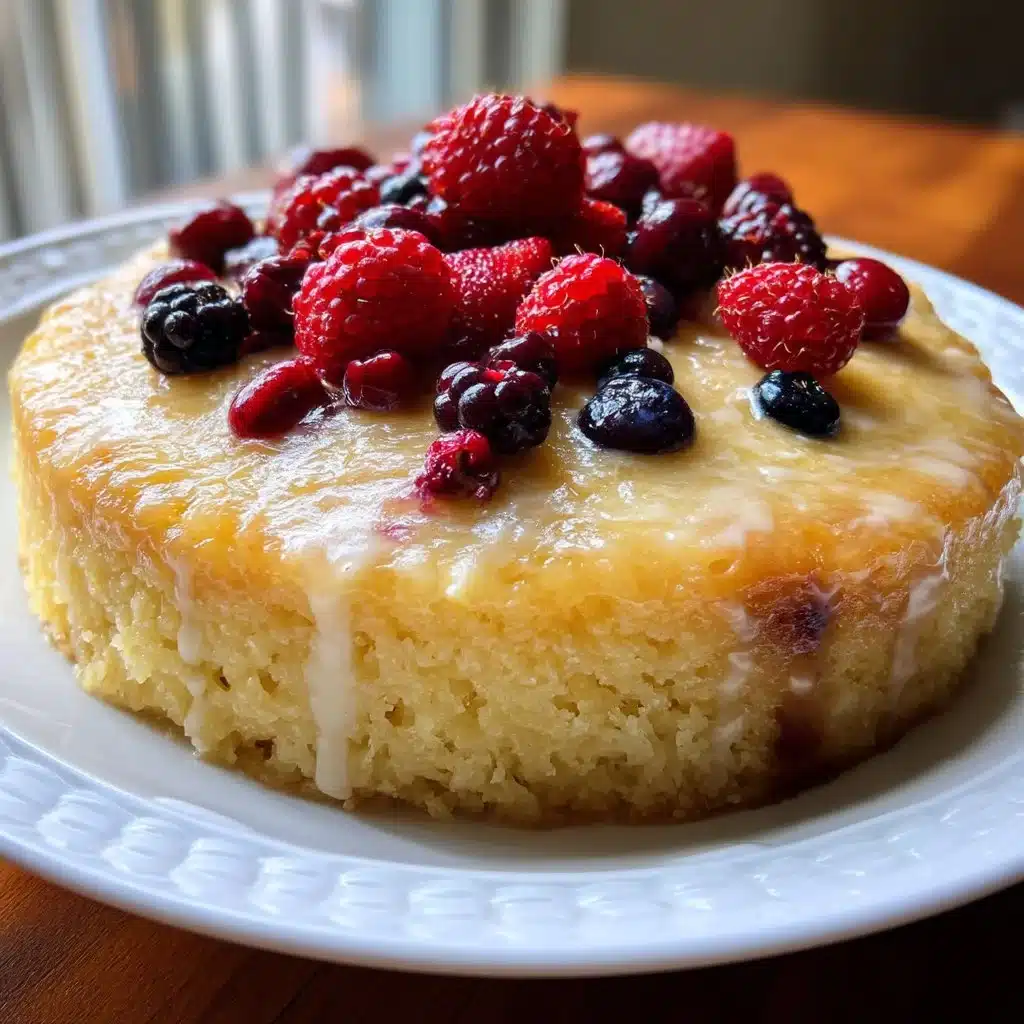
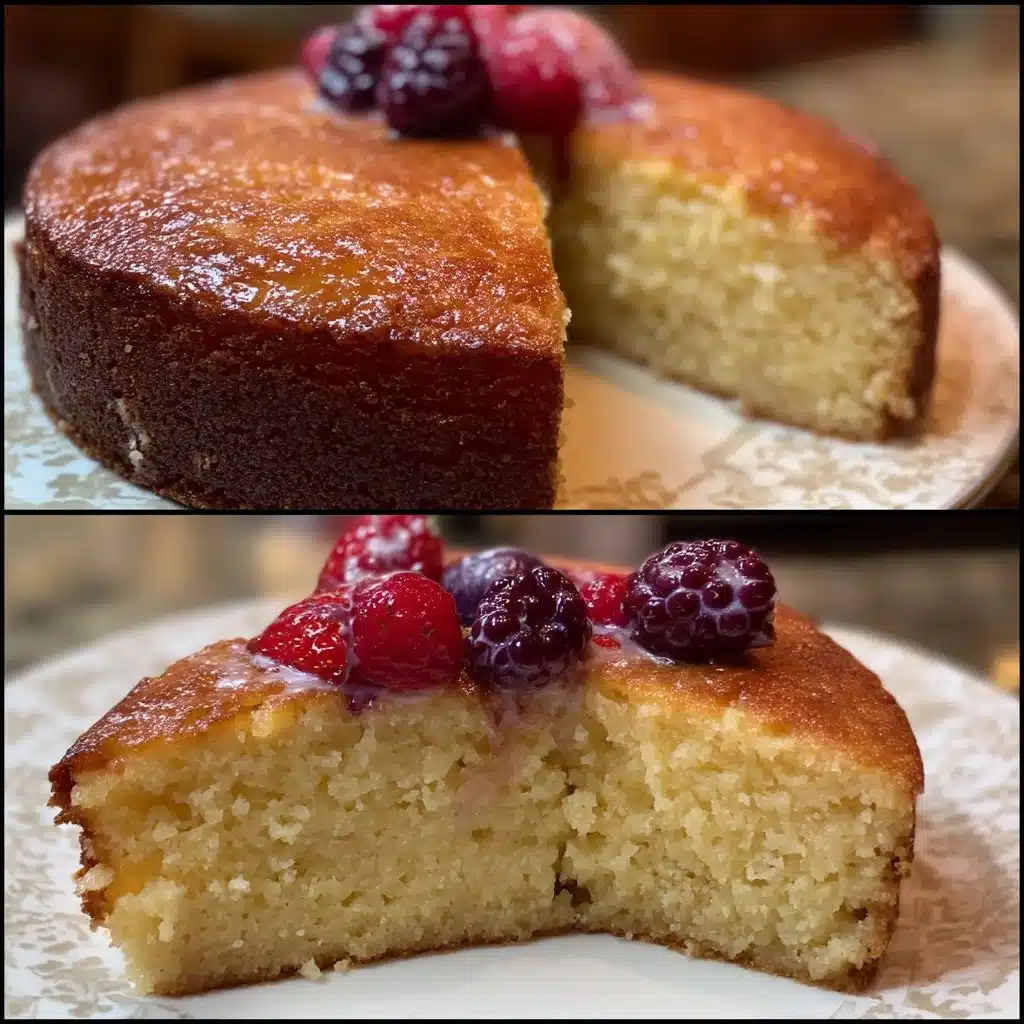
The crumb is tender with a little bit of grit from the cornmeal, the butter scent warm and comforting, and the top browns to a pale gold that gives way to cottony crumbs when you slice in this is what happens when you bake a Creamy Buttermilk Cornmeal Cake with Fresh Fruit and let it cool just enough to keep the edges soft but sliceable. The buttermilk keeps the cake bright and tangy against the natural sweetness of summer berries or sliced peaches, and when the fruit is piled on top the contrast of textures makes every forkful feel like a small celebration.
This cake is the kind of classic comfort food that belongs on every family table. It’s not fussy; it sits happily beside a bowl of soup, joins a brunch spread with simple spreads and cheeses, or becomes the centerpiece for an afternoon picnic. There’s a gentle, familiar quality to it that reminds you of kitchens where people paused long enough to share the story behind a recipe. Because the recipe is forgiving, you can make a pan for a small family or scale up for a gathering without losing that homely charm. If you like, pair a slice with a cup of tea and a little lemon curd, or serve it with a scoop of vanilla ice cream and a scattering of fresh fruit.
This version is simple and downright foolproof. The steps are approachable and the ingredients are straightforward pantry staples, yet the result feels special. While the cake bakes, your kitchen will fill with a scent that invites neighbors to stop by. For a lighter citrus note, try a slice after a squeeze of lemon; for sweeter days, top it with ripe berries or warm roasted peaches. If you enjoy a tender crumb with a touch of rustic texture, this is a cake you’ll come back to again and again, and it plays wonderfully alongside other simple cakes like an almond lemon ricotta cake try a look at an almond lemon ricotta cake for another cozy option.
Why this recipe works
This cake hits a sweet spot between tender and sturdy because of the balance of cornmeal, flour, butter, eggs, and buttermilk. Cornmeal brings a pleasant grainy texture that gives the cake character; it’s not dense like a bread but it has enough structure to hold up under fresh fruit. The all-purpose flour supplies the gluten needed for lift and a soft crumb, while the baking powder and baking soda work together to give a reliable rise. Baking powder provides an even, gentle lift throughout the batter, and the baking soda reacts with the buttermilk’s acidity to boost lift and create a more open, tender crumb.
Butter and eggs add richness and moisture. Beating the butter and sugar until light incorporates air that helps with a lighter texture, and the eggs stabilize that aeration while enriching the flavor. Buttermilk is a crucial ingredient for both tang and texture; its acidity tenderizes the crumb and reacts with baking soda for lift, plus it keeps the cake moist for days. The sugar not only sweetens but also contributes to the browning that gives the crust a gentle caramel note, which pairs beautifully with fruit toppings.
Ease of cooking is part of why this recipe is so comforting. There’s no need for tempering or complicated techniques mix the dry ingredients, cream the butter and sugar, add eggs, and alternate the dry mix with buttermilk. Mixing until smooth and not overworking the batter keeps the crumb tender. Timing is forgiving; a few extra minutes in the oven will give a slightly deeper crust without drying the center if you cover it loosely with foil. The cake’s straightforward nature makes it a great weeknight or weekend project: minimal fuss, predictable results, and a dessert that tastes like home.
For texture lovers, the most satisfying part is that first forkful the contrast between soft, slightly grainy crumb and juicy fruit. For those who want simplicity, the recipe fits perfectly into a rhythm of measuring, stirring, and sharing. If you’re serving a crowd, it slices well and presents beautifully when topped with colorful fruit. If you’re making it for yourself, it keeps in the fridge and tastes lovely warmed for breakfast. If you’d like another bright flavor profile at a later date, you might enjoy exploring a different twist on lemon and almonds at this almond lemon ricotta cake.
How to prepare Creamy Buttermilk Cornmeal Cake with Fresh Fruit
Before you start, make sure your butter is softened but not melted, and the eggs are at room temperature so they blend evenly. Preheat the oven and prepare your pan; a light greasing and dusting of flour helps the cake release cleanly. Combine dry ingredients first for an even distribution of leavening, then cream the butter and sugar until the texture is light. Add eggs one at a time, mixing gently after each to avoid breaking the emulsion. When you add the dry ingredients, alternate with buttermilk in small additions; this keeps the batter smooth and easy to fold without overmixing. The most satisfying part of the process is watching the batter transform from a dull blend to a glossy, pale mixture that pours into the pan and develops a golden top in the oven. Once baked and cooled slightly, topping the cake with fresh fruit plump berries or thinly sliced peaches adds color and freshness that makes the whole thing feel celebratory.
Ingredients
- 1 cup cornmeal
- 1 cup all-purpose flour
- 1 cup buttermilk
- 1/2 cup unsalted butter, softened
- 3/4 cup sugar
- 3 large eggs
- 1 tsp baking powder
- 1/2 tsp baking soda
- 1/4 tsp salt
- Fresh fruit for topping (e.g., berries, peaches)
Instructions
Preheat the oven to 350°F (175°C).
Grease a cake pan.
Flour the greased pan.
In a bowl, combine the cornmeal, flour, baking powder, baking soda, and salt.
In another bowl, beat the butter and sugar together until light and fluffy.
Add the eggs one at a time, mixing well after each.
Gradually add the dry ingredients to the wet mixture.
Alternate the dry ingredients with buttermilk. Mix until smooth.
Pour the batter into the prepared cake pan.
Bake for 25-30 minutes or until a toothpick comes out clean.
Let the cake cool in the pan for 10 minutes.
Transfer the cake to a wire rack.
Serve topped with fresh fruit.
Serving ideas
- Serve slices with a simple dollop of whipped cream for a dessert that still feels light.
- Pair the cake with a fresh fruit salad for brunch, letting the fruit on top echo the salad flavors.
- Offer a small bowl of lemon curd or jam on the side so guests can add a tangy smear to a slice.
Drink pairing:
- A pot of strong black tea or a bright, chilled lemonade is lovely. For a relaxed afternoon, a light-bodied white wine or a sparkling water with citrus works well.
Storing this recipe
Store leftovers covered at room temperature for up to 24 hours if your kitchen is cool and dry. For longer storage, refrigerate the cake in an airtight container; it will keep well for 3–4 days. If you plan to freeze, slice the cake first and wrap individual slices tightly in plastic wrap, then place in a freezer bag for up to 2 months. Thaw overnight in the refrigerator and rewarm gently in a low oven (about 300°F) for 10–15 minutes, or microwave a slice for 20–30 seconds to restore its soft texture. If the fruit topping is very juicy, store the fruit separately and add it after reheating to prevent the cake from getting soggy.
Helpful tips
Tip 1 Keep the cornmeal texture in mind: use medium or fine cornmeal rather than coarse if you prefer a softer mouthfeel. Coarse cornmeal gives a more noticeable grainy texture, which some people adore, but if you want a cake that’s almost cake-like with a hint of grit, choose a finer grind. Sift the dry ingredients together to ensure the baking powder and baking soda are evenly distributed; this prevents uneven rise and pockets of baking soda.
Tip 2 Don’t overmix the batter: once the dry ingredients go in, stir just until the batter is smooth. Overmixing develops gluten, which can make the cake tougher than intended. Alternate additions of dry mix and buttermilk in small portions. This keeps the batter easy to fold and helps maintain a tender crumb. When you fold in ingredients, use gentle motions and stop as soon as there are no visible streaks of flour.
Tip 3 Watch the baking time and test for doneness: ovens vary, so start checking at the lower end of the time range. A toothpick inserted in the center should come out clean or with a few moist crumbs not wet batter. If the top is browning too quickly but the center still needs time, tent loosely with foil to prevent over-browning. Let the cake rest in the pan for a short time before turning out; this short rest helps it set so it won’t crumble when you transfer it to a rack.
Extra comfort tips: if your fresh fruit is particularly tart, a sprinkle of sugar or a quick toss with a little honey before topping can balance the flavors. If you’re taking the cake to a gathering, pack the fruit separately and assemble on site so it looks fresh. Finally, for a softer edge, brush the top lightly with a mixture of melted butter and a dash of honey right after baking.
Recipe variations
- Add citrus: Fold in the zest of one lemon or orange to the batter for a bright lift that complements berries nicely.
- Make it nutty: Stir in 1/2 cup toasted sliced almonds or pecans for crunch. Press a few extra nuts on top before baking for a pretty finish.
- Spice it up: Add 1/2 tsp cinnamon and a pinch of nutmeg to the dry ingredients for a warm, cozy flavor that pairs well with roasted fruit.
Frequently asked questions
Q: Can I use regular milk instead of buttermilk?
A: You can, but the cake won’t have the same tang or tender crumb. To mimic buttermilk, add 1 tablespoon of lemon juice or vinegar to a cup of milk and let it sit for 5–10 minutes before using.
Q: Will this cake work in a cast-iron skillet?
A: Yes. Reduce the baking time slightly and keep an eye on the edges; a skillet often gives a crisper crust. Begin checking for doneness a few minutes earlier.
Q: How ripe should the fruit be?
A: Use ripe but firm fruit so it holds its shape on top of the cake. Very soft or overripe fruit can release juices that make the cake soggy if left to sit.
Q: Can I make this gluten-free?
A: Yes, swap the all-purpose flour for a 1:1 gluten-free flour blend that contains xanthan gum. The texture will be slightly different, but it should be enjoyable.
Conclusion
This Cake is a simple pleasure that keeps for days and brings warmth to any gathering serve it warm with fruit or let it cool and enjoy it with tea. For a richer, more boozy peach option you might like to read about a caramelized peach cornmeal skillet cake with bourbon whipped cream; it’s a lovely idea if you want to experiment with fruit toppings and cream. Also remember that the Creamy Buttermilk Cornmeal Cake with Fresh Fruit is easy to adapt and always welcomes a little improvisation. For a related inspiration, see caramelized peach cornmeal skillet cake with bourbon whipped cream.
PrintCreamy Buttermilk Cornmeal Cake with Fresh Fruit
- Total Time: 45 minutes
- Yield: 8 servings
- Diet: Vegetarian
Description
A tender, tangy cake made with cornmeal and buttermilk, topped with fresh fruit, perfect for any gathering.
Ingredients
- 1 cup cornmeal
- 1 cup all-purpose flour
- 1 cup buttermilk
- 1/2 cup unsalted butter, softened
- 3/4 cup sugar
- 3 large eggs
- 1 tsp baking powder
- 1/2 tsp baking soda
- 1/4 tsp salt
- Fresh fruit for topping (e.g., berries, peaches)
Instructions
- Preheat the oven to 350°F (175°C).
- Grease a cake pan.
- Flour the greased pan.
- Combine cornmeal, flour, baking powder, baking soda, and salt in a bowl.
- Beat the butter and sugar together until light and fluffy.
- Add the eggs one at a time, mixing well after each.
- Gradually add the dry ingredients to the wet mixture.
- Alternate the dry ingredients with buttermilk. Mix until smooth.
- Pour the batter into the prepared cake pan.
- Bake for 25-30 minutes or until a toothpick comes out clean.
- Let the cake cool in the pan for 10 minutes.
- Transfer the cake to a wire rack.
- Serve topped with fresh fruit.
Notes
For added flavor, consider adding citrus zest or nuts. Store leftovers in an airtight container for up to 4 days.
- Prep Time: 15 minutes
- Cook Time: 30 minutes
- Category: Dessert
- Method: Baking
- Cuisine: American