
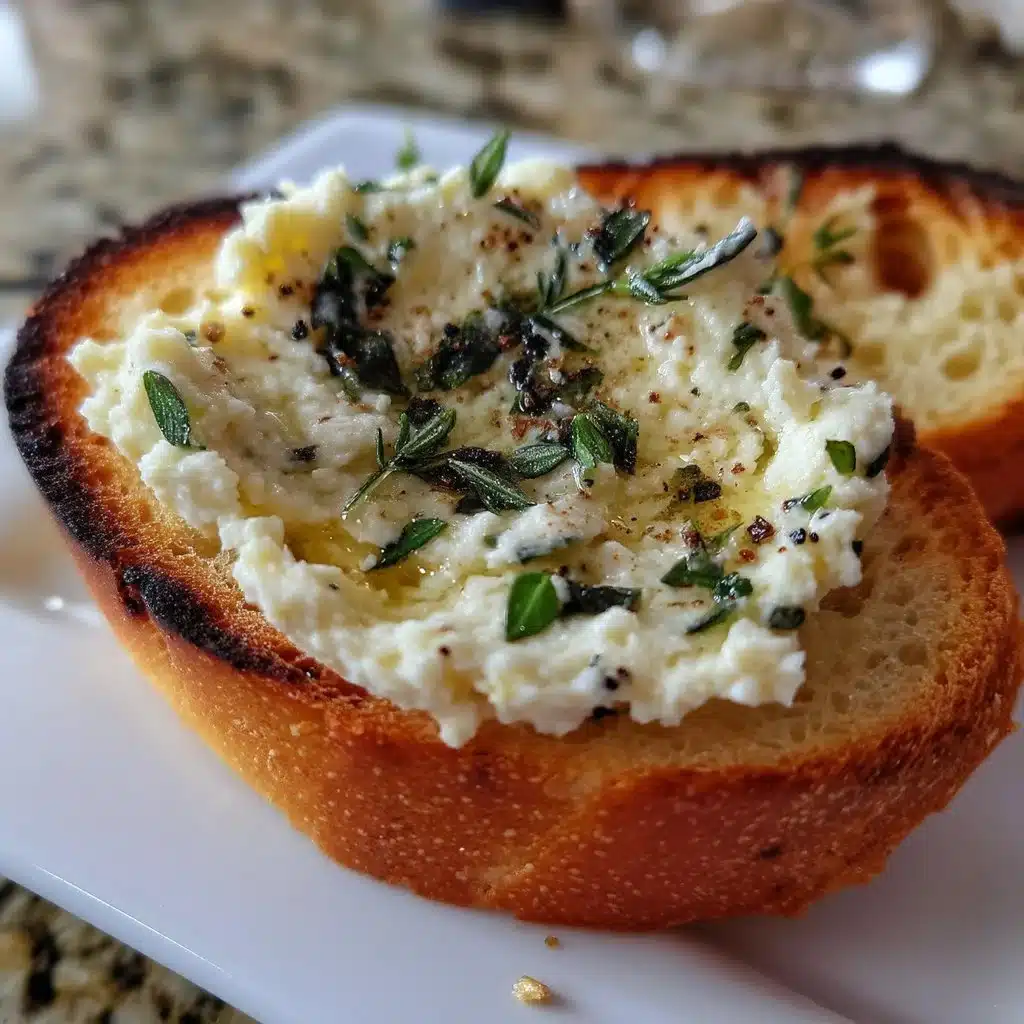
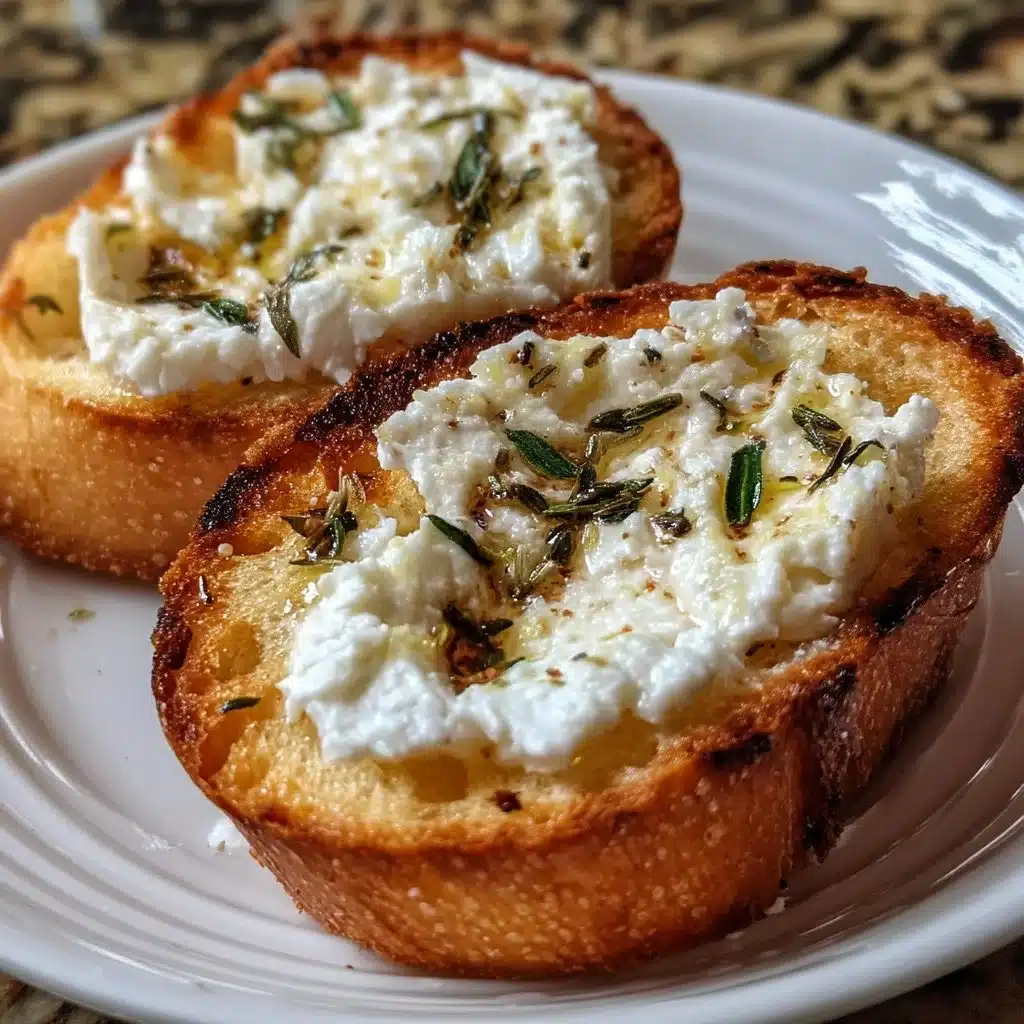
The first spoonful is soft, warm, and just a little indulgent the sweet, mellow tang of ricotta meeting the deep, caramelized notes of roasted garlic, spread thick on a crisp crostini that gives way with a gentle snap. Roasted Garlic Ricotta Spread with Crostini tastes like a kitchen that’s been filling the house with good smells for hours: the garlic sings but never overpowers, the ricotta keeps everything light and creamy, and a little peppered finish brings the whole bite into balance. The texture is everything here airy ricotta that still holds its shape, punctuated by the silk of roasted garlic and the crunch of toasty bread.
This kind of spread is a classic comfort food because it’s unpretentious and made for sharing: put a bowl on the table and everyone gathers, spoons and laughter close at hand. It plays beautifully with simple sides a bowl of soup, a crisp green salad, or a plate of roasted vegetables and it warms the room in the same way a familiar song does. For a heartier evening, pair it with a warm pasta; a creamy ricotta pasta makes a lovely companion that brings the meal together without fuss. The simplicity lets family stories surface while you pass plates around, and it’s forgiving if busy hands are doing the serving.
This version is purposely simple and truly foolproof, made with pantry-friendly ingredients and a straightforward roast-and-mix method that even the busiest hostess can manage. Little hands can help slice the baguette, and someone else can tuck the garlic into foil for the oven. There’s comfort in routine, and this spread offers it: roast the garlic, press it into the ricotta, dress up the crostini, and sit down to savor. If you like a lighter option for snacking, try a complementary lighter dip like a gentle whipped ricotta that keeps the same flavors but in a different texture.
Why this recipe works
Texture is what makes this dish sing. Ricotta brings a luxurious creaminess that’s delicate but not runny; it’s thick enough to hold on a crostini without sliding off, yet soft enough to melt on the tongue. Roasted garlic changes the whole dynamic of raw garlic: the roasting softens and sweetens the cloves, removing that sharp bite and leaving behind a buttery, almost nutty depth. When mashed into ricotta, the garlic becomes part of the spread rather than a stand-alone flavor, so every forkful carries a gentle warmth rather than a punchy heat.
The olive oil here is more than an ingredient it helps carry flavor and gives the ricotta a silky mouthfeel. A modest drizzle binds the texture and adds that subtle fruitiness that rounds the savory notes. Salt and pepper are simple but critical: salt lifts the natural milky sweetness of ricotta and the caramelized garlic, while pepper adds a clean, aromatic lift at the finish. Fresh herbs as a garnish bring a bright, green contrast to the soft, roasted flavors; they trim the richness just enough and add visual charm that makes the bowl irresistible on a table.
Ease of cooking is another reason this recipe thrives at gatherings. Roasting a bulb of garlic requires only wrapping it and popping it into a hot oven; it’s set-it-and-forget-it comfort. While the garlic softens, you can slice and toast the bread, set out bowls and napkins, and pour a glass of something warm. The assembly is quick: squeeze the roasted cloves into the ricotta and mix until smooth. That short, satisfying action mashing fragrant cloves into cool ricotta is the most tactile, rewarding part of the process. Together, these elements create a balance of textures and flavors that feels homey yet a little special, simple to make but impressive to serve.
How to prepare Roasted Garlic Ricotta Spread with Crostini
Begin with the slow, forgiving step of roasting your garlic. It’s comforting to know the oven does much of the work while you prepare the rest: slice the bread, set out bowls, and choose a small bundle of fresh herbs for garnish. The most satisfying moment is when you unwrap the foil and press a soft, caramelized clove into the ricotta it feels like releasing a secret flavor into the bowl. Mixing the roasted garlic into the ricotta is quick: mash the cloves with a fork and stir until the spread feels even and smooth. Toasting the crostini should be done until they’re a warm golden brown so they offer a crisp contrast to the creamy spread. Garnishing with a sprinkle of herbs at the end is optional but so worth it for color and a little fragrance.
This short walkthrough gets you to the plate fast and leaves plenty of time for conversation. If you want to make this ahead, roast the garlic earlier in the day and refrigerate it until you’re ready to mix the flavors actually deepen a bit overnight. When you’re ready to serve, toast the crostini and assemble so the bread remains crisp. For a lighter finish, offer lemon wedges at the side for those who like a citrus lift. And for another creamy variation, you might enjoy a light whipped ricotta dip for a different texture on your appetizer table; a gentle whipped ricotta dip brings similar flavors in a spreadable, airy form that guests will love. Try a light whipped ricotta dip for variety.
Ingredients
- 1 cup ricotta cheese
- 1 bulb garlic
- 2 tablespoons olive oil
- Salt to taste
- Pepper to taste
- 1 Baguette or Italian bread
- Fresh herbs (e.g., thyme or rosemary) for garnish
Instructions
- Preheat the oven to 400°F (200°C).
- Slice the top off the garlic bulb.
- Drizzle the cut top with olive oil.
- Wrap the garlic bulb in foil.
- Roast the garlic for about 30-35 minutes until the cloves are soft.
- In a bowl, squeeze the roasted garlic cloves out of their skins.
- Combine the roasted garlic with the ricotta cheese.
- Season the mixture with salt and pepper.
- Slice the baguette into thin pieces.
- Drizzle the slices with olive oil.
- Toast the baguette slices in the oven until they are golden.
- Serve the ricotta mixture on the crostini.
- Garnish with fresh herbs.
Serving ideas
Serve this spread as a warm, welcoming starter with a small selection of sides that complement its creamy, garlicky profile. Three good, simple pairings are:
- A crisp green salad dressed with a lemon vinaigrette to cut through the richness.
- Roasted seasonal vegetables think carrots or Brussels sprouts for an earthy companion.
- A bowl of tomato-based soup or a simple broth that adds warmth and contrasts nicely with the dairy.
For a drink, consider a light white wine or a sparkling water with lemon; both refresh the palate between bites. Non-alcoholic sips like chilled herbal iced tea or a citrusy spritzer work beautifully if you prefer to keep things alcohol-free. The goal is to balance the soft, rich spread with something crisp and refreshing so each bite feels bright.
Storing this recipe
Leftovers keep well in the refrigerator. Place the spread in an airtight container and it will stay fresh for up to 3 days; the flavors continue to blend beautifully in that time. If you want to freeze it, know that ricotta’s texture changes after freezing it can become a bit grainy so I don’t usually recommend freezing the mixed spread. Instead, you can roast extra garlic and freeze the uncombined cloves for up to 2 months; thaw and mash them into fresh ricotta when needed. To reheat, warm the garlic cloves slightly before mixing to bring back that roasted softness; if the spread itself needs warming, do it gently in short bursts in a microwave or a warm water bath so the ricotta doesn’t separate. Toast fresh crostini just before serving to keep them crisp.
Helpful tips
Tip 1 Roast gently and don’t overdo the oil: Use just enough olive oil to coat the garlic bulb before roasting. Too much oil can make the cloves greasy, while too little won’t allow the garlic to caramelize evenly. The skin acts as a little oven inside the foil, trapping steam while the cloves slowly soften. Check after 30 minutes the cloves should be squeeze-soft and deep golden. If they’re not yet tender, give them a few more minutes rather than increasing the oven temperature; slow roasting is what brings out that mellow, sweet character.
Tip 2 Salt in stages for the best flavor: Salt has two jobs drawing out flavor and seasoning. Salt the ricotta at the end, after you’ve tasted the mix, because roasted garlic is already concentrated and salty if you used a generous drizzle of olive oil. Start with a small pinch, mix, and taste. You can always add more, but you can’t take it out. Freshly cracked black pepper added at the finish gives a gentle lift; avoid heavy pre-grinding that can leave the spread bitter.
Tip 3 Keep the crostini crisp: Toast your baguette slices until they’re just golden and dry. If they soften before serving, pop them back into a warm oven for a few minutes to refresh. For a hands-on party, set crostini and spread separately so guests assemble their own bites; this keeps the bread crisp and gives everyone control over portion size and toppings. If you want to add a little something extra, a light brush of garlic oil on each crostini before toasting adds aroma without overpowering the roasted garlic in the spread.
Avoid common mistakes: don’t over-roast the garlic until it’s hard or bitter; watch it closely at the end. Don’t mix in raw garlic the flavor would be too sharp when you want mellow sweetness. And resist the urge to drown the ricotta in olive oil; a little goes a long way toward silkiness without making the spread oily.
These three tips roast gently, salt carefully, and keep the crostini crisp will ensure your bowl disappears quickly at any gathering.
Recipe variations
- Make it spicy: Fold in a pinch of red pepper flakes or a drizzle of chili-infused olive oil for a gentle heat that pairs well with the sweet roasted garlic.
- Add bright citrus: Stir in a teaspoon of lemon zest and a few drops of lemon juice to brighten the spread and give it a lively finish.
- Make it herby and green: Chop finely some basil or parsley and fold into the ricotta for a fresh green version. You can also stir in a spoonful of pesto for a deeper herb character.
Frequently asked questions
Q: Can I use low-fat ricotta for this spread?
A: Yes, low-fat ricotta will work. The spread will be slightly less rich, but it still tastes lovely, especially with a brighter herb garnish to add contrast.
Q: How do I know when the garlic is fully roasted?
A: The cloves should be very soft when you press them through the skin, with a deep golden color. They will feel buttery and will smash easily with a fork.
Q: Can I prepare this ahead of time for a party?
A: Yes. Roast the garlic ahead and keep it refrigerated. Mix with ricotta just before serving for the best texture, or mix up to a day ahead and refresh the crostini in the oven right before guests arrive.
Q: What can I use if I don’t have a baguette?
A: Any sturdy bread will do sliced Italian, a rustic country loaf, or even sturdy crackers for a different crunch will work well.
Conclusion
This cozy, forgiving Roasted Garlic Ricotta Spread with Crostini is the kind of recipe that becomes a small ritual at gatherings: roast the garlic, mash it into ricotta, toast the bread, and watch neighbors and family arrive with smiles. When you want to dress it up, explore a warm topping like roasted mushrooms and herbs for a ready idea that pairs beautifully with garlic basil ricotta, see this savory take on crostini: Roasted Wild Mushroom Crostini with Easy Garlic Basil Ricotta Spread. Roasted Garlic Ricotta Spread with Crostini is simple, shareable, and always seems to bring everyone a little closer at the table.
PrintRoasted Garlic Ricotta Spread with Crostini
- Total Time: 50 minutes
- Yield: 4 servings
- Diet: Vegetarian
Description
A warm and creamy roasted garlic ricotta spread served with crispy crostini, perfect for sharing and complementing various sides.
Ingredients
- 1 cup ricotta cheese
- 1 bulb garlic
- 2 tablespoons olive oil
- Salt to taste
- Pepper to taste
- 1 Baguette or Italian bread
- Fresh herbs (e.g., thyme or rosemary) for garnish
Instructions
- Preheat the oven to 400°F (200°C).
- Slice the top off the garlic bulb.
- Drizzle the cut top with olive oil.
- Wrap the garlic bulb in foil.
- Roast the garlic for about 30-35 minutes until the cloves are soft.
- In a bowl, squeeze the roasted garlic cloves out of their skins.
- Combine the roasted garlic with the ricotta cheese.
- Season the mixture with salt and pepper.
- Slice the baguette into thin pieces.
- Drizzle the slices with olive oil.
- Toast the baguette slices in the oven until they are golden.
- Serve the ricotta mixture on the crostini.
- Garnish with fresh herbs.
Notes
This spread can be made ahead by roasting garlic earlier and refrigerating. It pairs well with a crisp salad or roasted vegetables.
- Prep Time: 15 minutes
- Cook Time: 35 minutes
- Category: Appetizer
- Method: Baking
- Cuisine: Italian