

I still remember the way my grandmother’s kitchen smelled on a late winter afternoon butter melting on the stove, sugar whispering into batter, and the steady hum of conversation as neighbors stopped by. I pull that memory close whenever I bake, and a batch of St. Patrick’s Day Ricotta Cookies feels like a hug that looks festive and tastes like home.
I’m a 58-year-old home cook from Louisville who learned to stir, fold, and taste beside the women of my church and my mama. Like Maggie Hart at Gemmir Kitchen, I favor simple, cozy dishes that feed families and fit into busy weeknights. My recipes come from hands-on testing in real kitchens, not just pretty photos, and I rely on familiar tools: a trusted skillet, an oven that’s seen many casseroles, and the comfort of a handwritten recipe card. I keep things pork-free, family-friendly, and honest casseroles, slow-cooker dinners, skillet meals, and nostalgic desserts that don’t ask for fancy equipment. When I walk you through a recipe, I use plain language and clear steps so you can feel confident. That same warmth and practicality guides this St. Patrick’s Day Ricotta Cookies recipe: it’s forgiving, quick, and full of that soft, cakey texture ricotta brings to cookies. I love adding small seasonal touches a few drops of green for cheer or a powdered sugar dusting for a snowy look while keeping the base simple enough for busy weeknights or a last-minute school bake sale. If you like ricotta in cookies, you might enjoy my spin on almond ricotta chocolate chip cookies, which I tested the same way I test every family recipe: until it sings. almond ricotta chocolate chip cookies
Why this recipe works
St. Patrick’s Day Ricotta Cookies work because they balance moistness and structure in a way few drop cookies do. Ricotta brings moisture without making the dough greasy, so the cookies stay tender and cakey rather than thin and crisp. The dairy proteins help with lift and give a pleasant custardy note that complements vanilla and sugar. Because the base relies on common pantry ingredients plus ricotta, you avoid specialty flours or long chilling times; the dough comes together quickly and the cookies bake evenly.
This recipe also forgives slight variations in ricotta moisture. If your ricotta runs a bit wetter, the dough still holds up because of the flour and the leavening combination of baking powder and baking soda. That’s why I recommend a straightforward mixing method: beat the ricotta, sugar, and butter until smooth, fold in the eggs, then add dry ingredients just until combined. For St. Patrick’s Day Ricotta Cookies, a few drops of green food coloring make the cookies feel festive, but the flavor shines even without color the powdered sugar dusting gives that classic, bakery-style finish.
These cookies pair well with strong coffee, a glass of cold milk, or tea, and they hold their shape when stacked, making them great for sharing at church suppers or family gatherings. Because they are pork-free and family-friendly, you can serve them at many tables without worrying about menu restrictions. The method suits home cooks who want comfort made simple: minimal fuss, maximum tenderness, and a nostalgic texture that tastes like the kind of sweet you grew up enjoying.
How to prepare St. Patrick’s Day Ricotta Cookies
This section walks you through the hands-on approach I recommend for reliably tender St. Patrick’s Day Ricotta Cookies. Start by prepping your pans and ingredients so you move steadily through the steps without overworking the dough. Measure flour with a spoon-and-level method to avoid dense cookies. Room-temperature eggs and softened butter blend more smoothly into the ricotta, producing a uniform batter that traps air for a lighter crumb. When combining wet and dry ingredients, stir only until the flour disappears; overmixing develops gluten and yields tougher cookies, which you don’t want here.
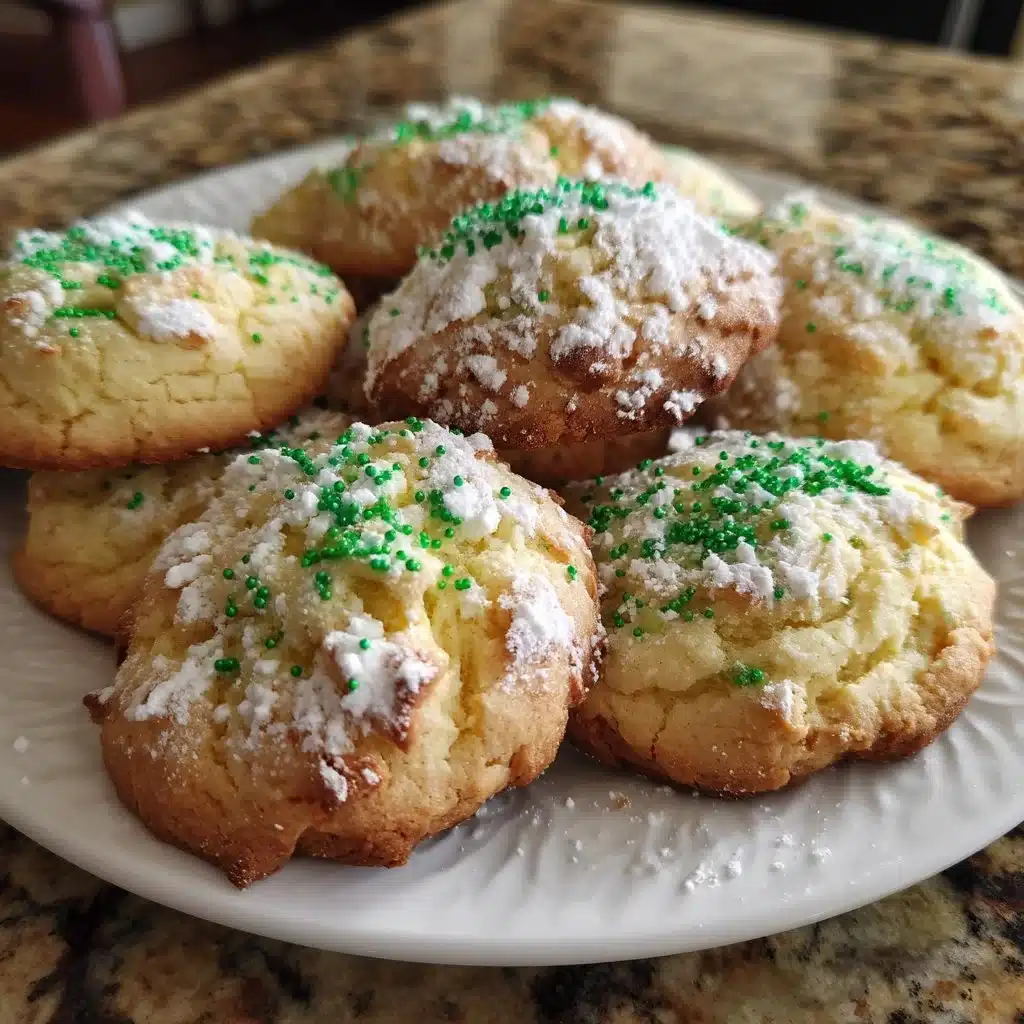
If you decide to color your cookies, add a few drops of green food coloring at the end and fold gently until the color disperses. Too much coloring can affect texture slightly, so a little goes a long way. Use a cookie scoop or spoon to drop evenly sized mounds on the prepared baking sheet, leaving a couple of inches between each cookie so they can spread slightly without sticking. Bake until the edges show a hint of golden color; the centers will still be soft. Let them cool on the pan for a few minutes before transferring to a wire rack to finish cooling that short rest lets them set without losing moisture.
St. Patrick’s Day Ricotta Cookies work well in a single-batch rhythm: bake, cool, dust with powdered sugar, and serve. They keep their tender texture for a day or two at room temperature in a covered container, and you can refresh them with a light toast under a low oven if they firm up too much. This method delivers a reliably soft, slightly cakey cookie that tastes like a homemade treat every time.
Ingredients
- 2 cups ricotta cheese
- 1 cup sugar
- 1/2 cup butter, softened
- 2 large eggs
- 1 teaspoon vanilla extract
- 4 cups all-purpose flour
- 2 teaspoons baking powder
- 1 teaspoon baking soda
- 1/2 teaspoon salt
- Green food coloring (optional)
- Powdered sugar for dusting
Instructions
- Preheat the oven to 350°F (175°C). Line a baking sheet with parchment paper.
- In a large bowl, beat together the ricotta cheese, sugar, and butter until creamy.
- Add eggs and vanilla extract, mixing well.
- In another bowl, whisk together the flour, baking powder, baking soda, and salt.
- Gradually add dry ingredients to the wet mixture, stirring until combined.
- If desired, mix in a few drops of green food coloring.
- Drop spoonfuls of dough onto the prepared baking sheet.
- Bake for 12-15 minutes or until the edges are golden.
- Allow to cool, then dust with powdered sugar before serving.
Serving ideas
When you bring a platter of St. Patrick’s Day Ricotta Cookies to the table, a few simple touches make them feel special. Dust each cookie generously with powdered sugar for a snowy finish that contrasts with light green coloring. Arrange cookies on a tiered platter for a tea service, or stack them in a mason jar for a grab-and-go snack. They look lovely paired with fresh berries or a small bowl of lemon curd for dipping; the bright acidity complements the rich ricotta and cuts through the sweetness.
Serve them at a brunch buffet alongside scones and quiche, or include them in a dessert tray for a family gathering. Kids love the soft texture and the chance to help press a sprinkle or two onto a wet sugar coating that makes these St. Patrick’s Day Ricotta Cookies a fun project for little hands. If you host a potluck, pack them in a single layer in a shallow box with parchment between layers to keep them from sticking.
For beverages, offer strong coffee, an herbal tea, or cold milk. The cookies pair especially well with milder teas that let the ricotta’s creaminess and vanilla shine. If you plan to serve these at a party, prepare them earlier in the day and dust with powdered sugar just before guests arrive to keep the white contrast crisp and pretty.
How to keep leftovers
Leftovers of St. Patrick’s Day Ricotta Cookies keep nicely when you store them correctly. Let the cookies cool completely before sealing them in an airtight container. At room temperature, they remain soft and tender for up to two days. If you want to keep them longer, refrigerate for up to five days; bring them to room temperature before serving so they regain their tender crumb.
For longer storage, freeze cooled cookies in a single layer on a baking sheet until firm, then transfer to a freezer-safe bag or container with parchment between layers. Frozen St. Patrick’s Day Ricotta Cookies last up to three months. To thaw, leave them on the counter for a couple of hours or heat in a low oven for a few minutes to refresh their texture. Avoid thawing in the microwave; it tends to make them rubbery.
If powdered sugar dims in storage, dust again just before serving. For a soft-crisp revival, pop refrigerated or thawed cookies into a 300°F oven for 5–6 minutes to refresh their edges while keeping centers tender. These simple storage methods make it easy to bake ahead for parties or to enjoy a homemade treat each morning with minimal fuss.
Simple tips for success
A few small habits produce consistent St. Patrick’s Day Ricotta Cookies every time. Use whole-milk ricotta for the best texture it brings richness and moisture that low-fat versions lack. Measure flour carefully; spoon it into the cup and level with a knife to prevent dry, heavy cookies. Let the butter reach a spreadable softness before mixing so it blends smoothly with the ricotta and sugar.
When mixing, scrape the bowl down once or twice to catch any pockets of unmixed ingredients. Mix the dry ingredients into the wet in two additions, stirring gently, and stop as soon as the dough comes together to avoid overdeveloping gluten. If the dough feels sticky, chill for 10–15 minutes; slightly chilled dough is easier to portion and yields a neater shape. For a uniform batch, use a small cookie scoop.
Timing matters: bake until the edges just begin to color. The centers will set as the cookies cool. If you want a more pronounced green, use gel food coloring in small amounts so you don’t change the dough’s hydration. These simple steps help you get consistent results with minimal fuss so your St. Patrick’s Day Ricotta Cookies turn out tender and bakery-worthy.
Easy twists you can try
Once you have the basic St. Patrick’s Day Ricotta Cookies down, the recipe invites easy variations. Fold in lemon zest and a tablespoon of lemon juice for a bright lemon-ricotta version. Add a handful of mini chocolate chips or white chocolate chips for extra sweetness; they melt into little pockets of goo that taste wonderful with the ricotta base. For a more rustic take, stir in a half cup of chopped toasted almonds or walnuts for crunch.
If you enjoy almond flavor, try swapping a teaspoon of almond extract for half the vanilla and sprinkle sliced almonds on top before baking. For a colorful presentation, dip half the cooled cookie in melted white chocolate and chill until set, then dust with powdered sugar for a two-tone look. If you love crinkle-style cookies, roll slightly moistened dough in powdered sugar before baking to achieve a crackly, snowy exterior.
For inspiration from other ricotta cookie variations I’ve tested, check out these almond ricotta crinkle cookies that adapt similar techniques for a different texture and flavor experience they make helpful ideas when you want to tweak your St. Patrick’s Day Ricotta Cookies. almond ricotta crinkle cookies

Frequently asked questions
Q: Can I use part-skim ricotta for these cookies?
A: Yes, you can use part-skim ricotta, but whole-milk ricotta gives a richer, moister cookie. If you only have part-skim, the cookies will still work, though they may be slightly less tender. If the dough seems dry, add a tablespoon of milk to reach the right consistency.
Q: How do I make the cookies more green without changing texture?
A: Use gel or paste food coloring rather than liquid. Gel gives strong color with less added moisture, so you keep the dough’s balance. Add a few tiny drops and fold gently until you reach the shade you like.
Q: Can I freeze the dough or baked cookies?
A: You can freeze both. Scoop raw dough onto a tray and freeze, then transfer to a bag for baking later; add a minute or two to bake time from frozen. Baked cookies freeze well in layers separated by parchment for up to three months. Thaw on the counter or refresh in a low oven.
Q: Will these cookies be cakey or chewy?
A: These St. Patrick’s Day Ricotta Cookies fall into the tender, cakey category thanks to the ricotta and the higher proportion of flour and leaveners. If you prefer chewier cookies, reduce baking powder slightly and consider a touch more butter, but know that you’ll shift the cookie’s classic texture.
Q: Can I make these dairy-free?
A: To make a dairy-free version, try a firm dairy-free ricotta alternative and plant-based butter. Texture will differ, so test a small batch first. Keep in mind leavening reacts slightly differently with alternative milks and cheeses.
Conclusion
I hope these St. Patrick’s Day Ricotta Cookies bring a little extra comfort and cheer to your kitchen this season. They bake up soft, tender, and just sweet enough for a family treat or a neighborhood plate to share. If you want to compare methods or explore a different ricotta cookie origin, I like to consult other trusted recipes for ideas for a classic take, see Rae Gun Ramblings ricotta cookies recipe.
Print
St. Patrick’s Day Ricotta Cookies
- Total Time: 30 minutes
- Yield: 24 cookies
- Diet: Vegetarian
Description
These soft, tender St. Patrick’s Day Ricotta Cookies are a festive treat, balanced in moisture and structure, perfect for sharing with family and friends.
Ingredients
- 2 cups ricotta cheese
- 1 cup sugar
- 1/2 cup butter, softened
- 2 large eggs
- 1 teaspoon vanilla extract
- 4 cups all-purpose flour
- 2 teaspoons baking powder
- 1 teaspoon baking soda
- 1/2 teaspoon salt
- Green food coloring (optional)
- Powdered sugar for dusting
Instructions
- Preheat the oven to 350°F (175°C). Line a baking sheet with parchment paper.
- In a large bowl, beat together the ricotta cheese, sugar, and butter until creamy.
- Add eggs and vanilla extract, mixing well.
- In another bowl, whisk together the flour, baking powder, baking soda, and salt.
- Gradually add dry ingredients to the wet mixture, stirring until combined.
- If desired, mix in a few drops of green food coloring.
- Drop spoonfuls of dough onto the prepared baking sheet.
- Bake for 12-15 minutes or until the edges are golden.
- Allow to cool, then dust with powdered sugar before serving.
Notes
Leftovers remain soft for up to two days at room temperature in an airtight container. They can also be frozen for up to three months.
- Prep Time: 15 minutes
- Cook Time: 15 minutes
- Category: Dessert
- Method: Baking
- Cuisine: American