
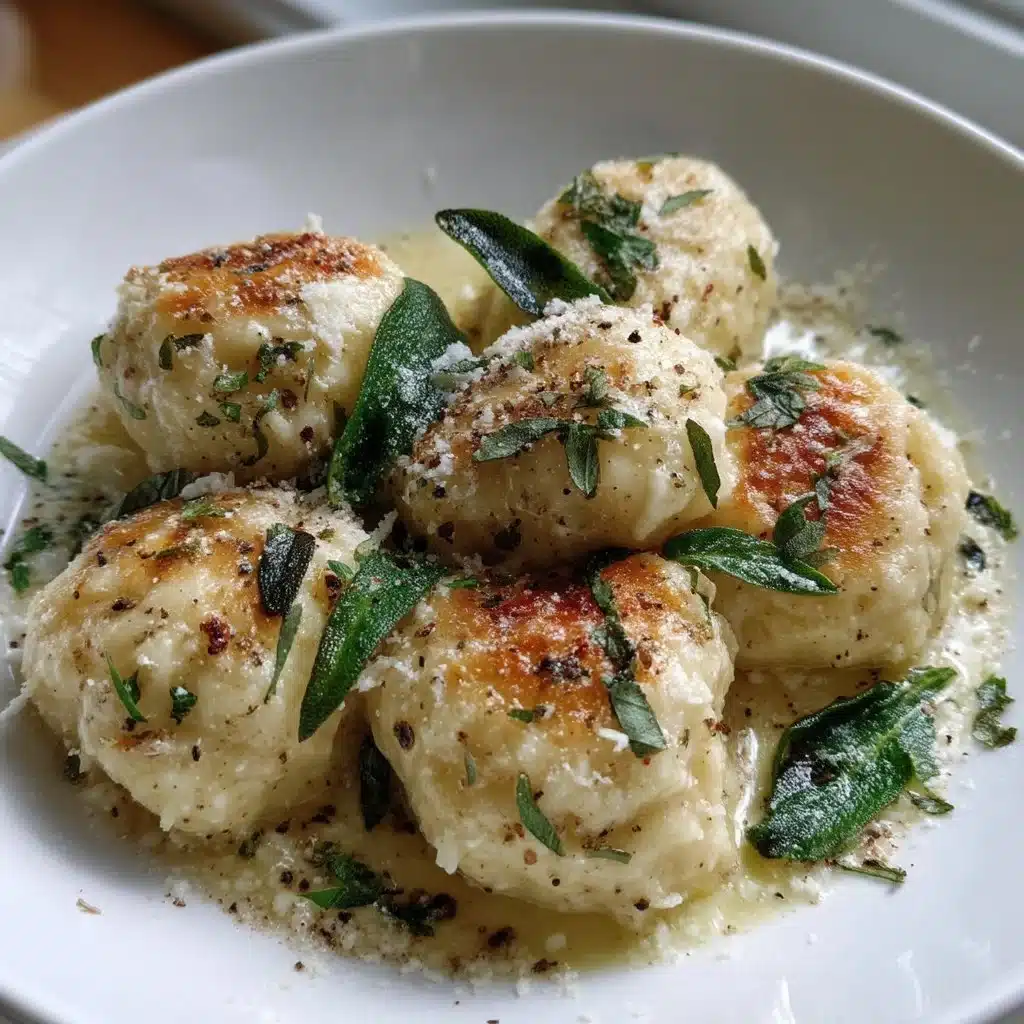
There is nothing quite like the smell of warm butter turning golden and the bright, herb-salty scent of sage filling the kitchen the moment the pan hits the stove; that first bite of Ricotta Gnudi with Brown Butter Sage is pillowy on the tongue, a little tang from the cheese, and then the toasty, nutty butter wraps around each dumpling like a memory. The ricotta gives a delicate creaminess that feels light but comforting, and the crisped sage leaves add a gentle crunch that keeps each forkful interesting. If you’ve ever loved ricotta in desserts, you might enjoy how the same cheese shows up beautifully in savory dishes toothink of the way ricotta helps blondies stay tender when you enjoy a slice of brown butter ricotta blondies from time to time, the texture has that familiar, soft hug.
This is the kind of dish that feels right for a family table, the kind that brings everyone a little closer because it’s both special and quietly familiar. It holds up well alongside a big pot of soup or a crisp green salad, and it’s simple enough to make a weekday dinner feel like an occasion when friends come by. The gnudi are gentle and forgiving, so even kids and pickier eaters tend to find them comforting. Serve a shallow bowl at the center and watch hands reach for second helpings it’s a shared plate that invites conversation and slow lifting of forks. The browned butter and sage give the dish a warm, autumnal vibe without fuss, and because you’re using pantry staples, it often becomes the recipe you turn to when you want something cozy but not heavy.
This version is intentionally simple and almost foolproof, perfect for anyone who loves to cook but prefers not to fuss over technique. The dough comes together quickly, you form little dumplings with your hands, and a brief poach in boiling water cooks them through in minutes. The finishing touch melting butter until it browns and crisping sage leaves is fast, fragrant, and utterly satisfying. If you want a small celebration with little effort, this is a lovely choice. For another cozy ricotta treat that’s easy to make, try a peanut-butter-and-ricotta style dessert that mixes sweet and savory memories in a different way: peanut butter ricotta swirl brownies.
Why this recipe works
This dish thrives because it balances texture and simplicity. The gnudi are essentially cheese dumplings, and the main textural contrast comes from the soft, almost cloudlike interior against the lightly crisped exterior once tossed in brown butter. Ricotta brings a fine, creamy curd structure that keeps the gnudi delicate; pairing it with just enough flour gives them shape without making them dense. The egg acts as a gentle binder, and the Parmesan introduces a savory, salty note and a little umami that makes the center sing. Together they produce a tender bite that still holds together when boiled.
Cooking ease is another reason this recipe is a winner. The dough requires only a brief mixing and gentle shaping, so you don’t need any special tools. Poaching is a forgiving method: the gnudi float when they’re done, which is a clear visual cue that takes the guesswork out of timing. The brown butter and sage sauce is quick to make but rich in flavor; watching the butter darken and smelling the nutty aroma is part of the pleasure of cooking. The butter’s Maillard-like browning creates toasted, caramelized notes that complement the mild tang of ricotta, while crisp sage leaves add a bright, aromatic contrast and a slightly crunchy texture.
Ingredient-wise, each element has a clear job. Ricotta offers moisture and tenderness. A modest amount of flour gives structure without turning the dumplings heavy. Parmesan adds complexity and seasoning so you don’t need much additional salt. The egg binds and helps the gnudi hold their shape during the brief poach. Butter is both a flavor carrier and the source of the sauce’s color and aroma. Sage, with its savory, slightly peppery leafiness, cuts through the butter and brings a fresh herbal lift. The interplay between the soft interior, the nutty butter coat, and the crispy sage is what makes every forkful satisfying, and why this recipe feels both special and simple at the same time. For those who like to finish a busy week with something comforting yet light, this dish delivers on texture, flavor, and ease.
How to prepare Ricotta Gnudi with Brown Butter Sage
Start by gathering your ingredients so everything is within reach; this recipe moves quickly once you begin. In a bowl, you’ll combine ricotta, flour, Parmesan, egg, and a pinch of salt and mix until smooth. That’s the base it won’t be sticky like a bread dough, but it should hold together when you press a little between your fingers. Form small dumplings with gentle hands, making them just big enough to feel substantial, like a small walnut.
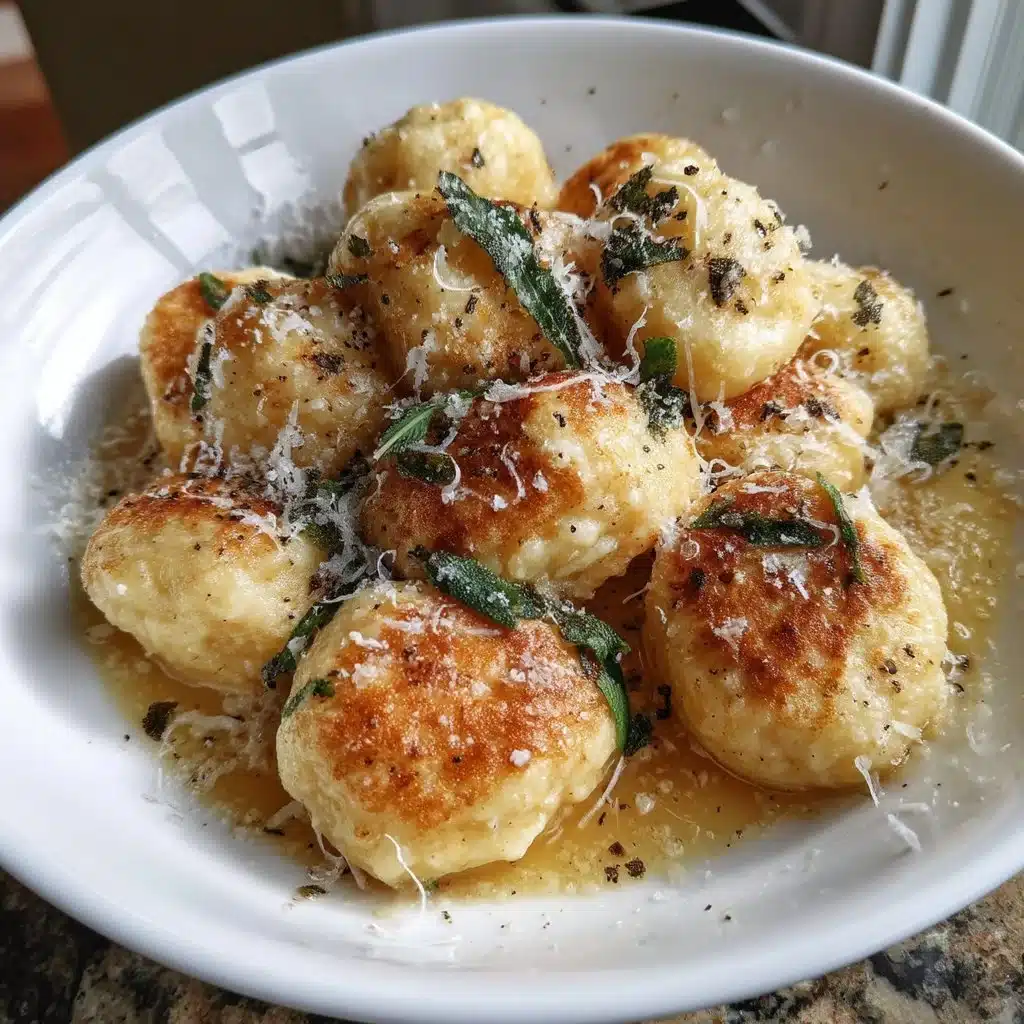
Bring a pot of salted water to a gentle boil. The cooking is fast: when the gnudi float, they’re cooked through. While those are poaching, melt the butter in a skillet over medium heat and let it brown slowly; the scent will change from milky to nutty, and once it takes on a light golden color you’ll add the sage leaves to crisp. The most satisfying part of the process is the final toss seeing the pale gnudi pick up the shiny, amber butter and the bright green of the crisped sage, and hearing that soft sizzle. Plate them simply, grind a little black pepper over the top, and serve warm to enjoy the contrast of textures and flavors at their best.
Ingredients
- 2 cups ricotta cheese
- 1 cup all-purpose flour
- 1/2 cup grated Parmesan cheese
- 1 large egg
- Salt to taste
- 1/4 cup unsalted butter
- Fresh sage leaves
- Black pepper to taste
Instructions
- In a bowl, add ricotta cheese, flour, and grated Parmesan.
- Add the large egg and a pinch of salt.
- Mix until smooth.
- Form the mixture into small dumplings with damp hands.
- Bring a large pot of salted water to a gentle boil.
- Gently drop the gnudi into the boiling water one at a time.
- Cook until they float, about 2 to 3 minutes.
- In a skillet, melt the unsalted butter over medium heat.
- Let the butter cook until it turns a golden brown and gives off a nutty aroma.
- Add fresh sage leaves to the browned butter.
- Cook until the sage becomes crispy.
- Use a slotted spoon to drain the gnudi.
- Toss the drained gnudi in the brown butter and crisped sage.
- Season with freshly ground black pepper and a little extra salt if needed.
- Serve warm.
Serving ideas
Ricotta gnudi are soft and delicate, so pair them with sides that provide color, crunch, or acidity to balance their richness. A crisp green salad dressed with a simple lemon vinaigrette will cut through the butter and refresh the palate. Roasted autumn vegetables think carrots, beets, or squash add earthy sweetness and an oven-roasted depth that looks lovely on the plate. A light, vegetable-forward soup makes a comforting starter and keeps the meal feeling homey.
For a simple menu, try one green salad, one roasted vegetable, and a small bowl of soup, and then present the gnudi as the star. The contrast of textures and temperatures makes the meal feel intentional without lots of effort. For beverages, a lightly chilled white wine such as a Pinot Grigio or a dry Riesling pairs nicely, their acidity balancing the butter. If you prefer non-alcoholic options, a sparkling water with a squeeze of lemon or a mild, unsweetened iced tea is refreshing and won’t overpower the flavors. These pairings help the gnudi shine while keeping the table approachable and warm for conversation.
Storing this recipe
Leftover gnudi will keep well in the refrigerator for 2 to 3 days when stored in an airtight container. To retain the best texture, place a piece of parchment between layers to prevent sticking and pour any extra brown butter sauce on top before sealing; it helps keep them moist and flavorful. If you plan to reheat within a day, a gentle stovetop toss in a warm skillet with a pat of butter will bring them back to life beautifully. Heat slowly so you don’t overcook them.
For longer storage, you can freeze uncooked gnudi. Place them on a baking sheet in a single layer and flash-freeze until firm, then transfer to a freezer-safe bag for up to 1 month. When ready to use, do not thaw; drop the frozen dumplings directly into boiling salted water and cook a minute or two longer than fresh gnudi, until they float and are heated through. Avoid freezing gnudi that have already been cooked and dressed in sauce; the texture suffers when thawed. When reheating cooked gnudi from the fridge, use a skillet over low heat with a bit of butter to warm gently. A microwave will work in a pinch but may make the texture gummy.
Helpful tips
Handle the dough gently. Overworking the ricotta and flour mixture can make the gnudi tough. Mix just until the ingredients come together and the mixture holds when you press it between your fingers. If the dough feels too sticky, dust your hands and work surface lightly with flour rather than adding large amounts of extra flour to the mixture; too much flour will make the final dumplings heavy.
Watch the water temperature. A rolling boil is too aggressive and can break the gnudi apart. Keep the water at a gentle boil or lively simmer so the gnudi cook steadily and float when done. Use a slotted spoon and don’t crowd the potcook in batches if necessary. Overcrowding drops the water temperature and increases the chance they stick together.
Brown the butter carefully. Butter can go from perfectly browned to burned quickly. Use medium heat and watch for a light amber color with a nutty aroma. Once it reaches that point, add the sage immediately because the leaves crisp fast and you want them crisp, not wilted. If the butter starts to smoke, it’s gone too far; toss it and start again with fresh butter.
Additional practical tips: work in a cool kitchen if possible, as ricotta can be softer in warm environments and harder to shape. Use a small scoop or two spoons to portion uniform gnudi so they cook evenly. If you want to add an extra savory note, a little cracked black pepper in the dough can be lovely, but taste before adding more salt since Parmesan brings its own saltiness. If you’d like a sweeter take for a fall gathering, a light drizzle of honey after plating and a scattering of toasted nuts can be a surprising, pleasant contrast just keep this variation separate from the savory plate so guests can choose.
For an idea that plays on ricotta in a different direction, you might enjoy the creamy, nutty flavor pairing used in other ricotta desserts like the brown-butter chocolate chip ricotta blondies brown butter chocolate chip ricotta blondies. It’s a lovely reminder of how versatile ricotta can be in both sweet and savory cooking.
Flavor variations
Make it spicy: Add a pinch of red pepper flakes to the brown butter as it heats. The heat brightens the buttery flavor and gives the dish a warm kick. You can also stir a little chili oil into the sauce after removing from heat for a glossy, spicy finish.
Herbed ricotta: Fold finely chopped fresh herbs (such as parsley, chives, or a touch of thyme) into the ricotta mixture for green, aromatic notes in every bite. This adds fresh flavor without overpowering the simplicity of the butter and sage.
Lemon and greens: Zest a lemon into the dough and finish with a squeeze of lemon juice over the plated gnudi. Serve the gnudi on a bed of sautéed baby spinach or wilted arugula for color and a bright, slightly bitter foil to the richness.
Each variation keeps the recipe approachable but lets you tailor the dish to the season or your mood. The base technique remains the same: a tender ricotta dumpling poached quickly and finished in a hot, flavorful sauce. Try one variation at a time until you find the balance you love.
Frequently asked questions
Q: How do I know when the gnudi are cooked?
A: They are done when they float to the surface of the simmering water, usually in 2 to 3 minutes. Floating is the clearest sign that the center has set.
Q: Can I make the dough ahead of time?
A: Yes. You can shape the gnudi and place them on a tray covered in plastic wrap in the fridge for a few hours. If you want to keep them longer, flash-freeze on a tray then transfer to a freezer bag.
Q: My gnudi fell apart in the waterwhat went wrong?
A: The two most common causes are over-soft dough (add a little more flour next time) or too vigorous a boil. Keep the pot at a gentle simmer and handle the pieces gently when dropping them into the water.
Q: Can I make this dairy-free or egg-free?
A: This recipe relies on ricotta and an egg for texture and binding. For dairy-free, try a firm tofu blended smooth as a ricotta substitute and use a flax egg as a binder, but expect a different texture.
Conclusion
This warm, simple dish brings comfort and a touch of elegance to any table; Ricotta Gnudi with Brown Butter Sage is one of those recipes that makes a good night into a memory. For a reference to a trusted version and some technique notes, you can compare approaches with a well-regarded take on the dish at a Serious Eats recipe. Try it when you want something cozy, quick, and full of flavor the brown butter and crisp sage are small details that make the whole plate feel like home. Ricotta Gnudi with Brown Butter Sage stays in my list of simple pleasures for good reason.
Print
Ricotta Gnudi with Brown Butter Sage
- Total Time: 25 minutes
- Yield: 4 servings
- Diet: Vegetarian
Description
Pillowy ricotta dumplings enhanced with nutty brown butter and crispy sage, bringing comforting flavors to your table.
Ingredients
- 2 cups ricotta cheese
- 1 cup all-purpose flour
- 1/2 cup grated Parmesan cheese
- 1 large egg
- Salt to taste
- 1/4 cup unsalted butter
- Fresh sage leaves
- Black pepper to taste
Instructions
- In a bowl, add ricotta cheese, flour, and grated Parmesan.
- Add the large egg and a pinch of salt.
- Mix until smooth.
- Form the mixture into small dumplings with damp hands.
- Bring a large pot of salted water to a gentle boil.
- Gently drop the gnudi into the boiling water one at a time.
- Cook until they float, about 2 to 3 minutes.
- In a skillet, melt the unsalted butter over medium heat.
- Let the butter cook until it turns a golden brown and gives off a nutty aroma.
- Add fresh sage leaves to the browned butter.
- Cook until the sage becomes crispy.
- Use a slotted spoon to drain the gnudi.
- Toss the drained gnudi in the brown butter and crisped sage.
- Season with freshly ground black pepper and a little extra salt if needed.
- Serve warm.
Notes
Handle the dough gently to avoid toughness. Watch the water temperature to prevent breaking the gnudi.
- Prep Time: 15 minutes
- Cook Time: 10 minutes
- Category: Main Course
- Method: Boiling
- Cuisine: Italian