
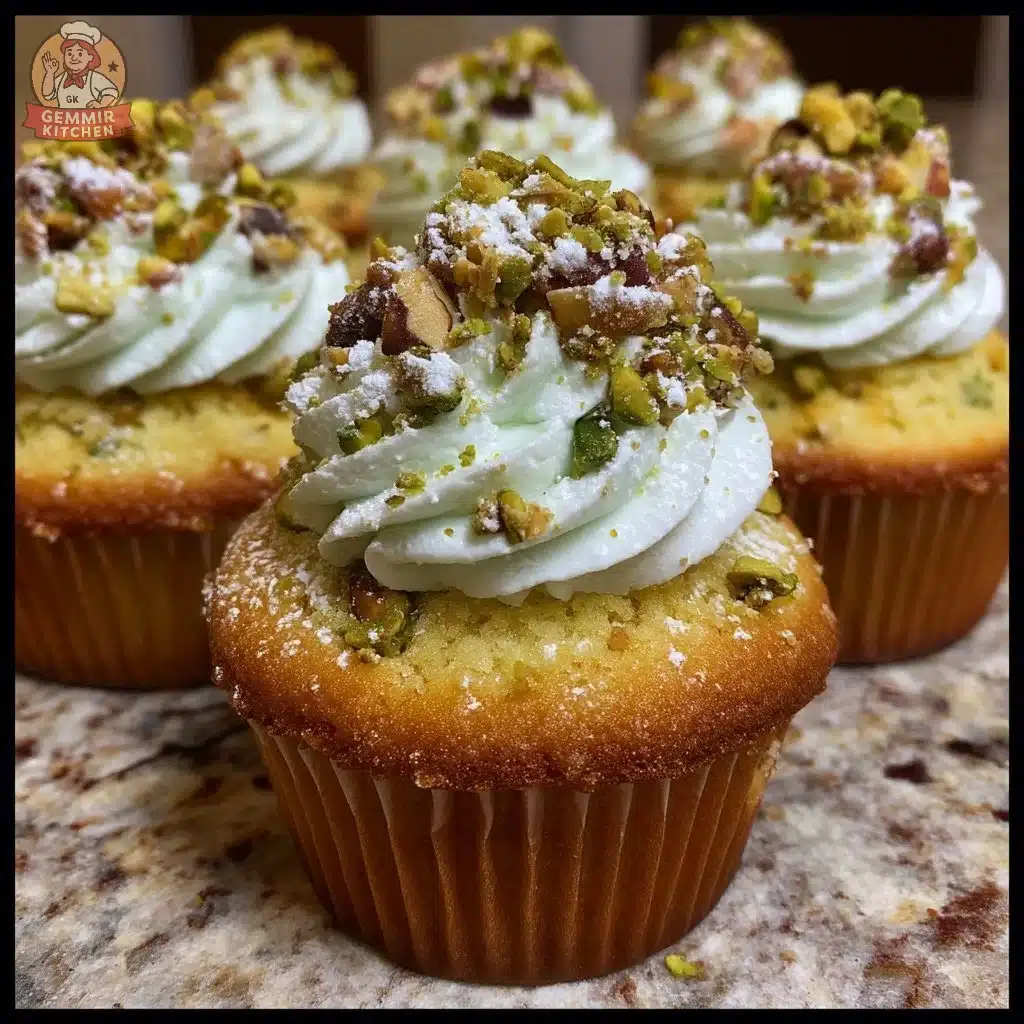
These Pistachio Ricotta Cupcakes are the kind of thing you bring to a table and watch everyone reach for first. A soft, golden ricotta cupcake base — tender and moist all the way through — crowned with a generous swirl of white mascarpone cream cheese frosting, then finished with a scatter of roughly chopped pistachios and golden pistachio streusel crumble. No artificial green coloring, no food dye. Just the honest, vivid green of real pistachios against white cream and a warm golden crust.
The ricotta in the batter is what makes these Pistachio Ricotta Cupcakes different from every other pistachio cupcake recipe. It keeps the crumb impossibly soft without making it dense, adds a subtle milky richness that amplifies the pistachio flavor, and ensures these stay moist and tender for two days without drying out. The frosting is thick, creamy, and just sweet enough to balance the slightly savory earthiness of the pistachios.
What Makes This Recipe Work
Ricotta as the moisture base. Most cupcake recipes rely on butter, oil, or sour cream. Ricotta does everything those ingredients do and adds a structural protein that gives the cupcake a slightly firmer, more cake-like crumb — perfect for supporting a heavy frosting swirl without collapsing.
Ground pistachios in the batter. Finely ground pistachios folded into the batter create flavor throughout every bite — not just in the topping. The pistachio oil released during grinding perfumes the entire cupcake from inside out.
The pistachio streusel topping. The golden-brown crumble visible in the photo is a quick pistachio streusel — butter, flour, sugar, and chopped pistachios baked separately or added before baking. It adds crunch, visual contrast, and a caramelized pistachio flavor that the fresh chopped nuts on top alone cannot provide.
Mascarpone cream cheese frosting. The white frosting in the photo is thick, stable, and holds the tall rosette shape without wilting. A combination of cream cheese and mascarpone gives more body and less tang than cream cheese alone, and pipes into the clean swirl visible in the image.
Ingredients
For the Pistachio Ricotta Cupcakes
- 1½ cups (190 g) all-purpose flour
- ½ cup (60 g) shelled pistachios, finely ground (reserve 2 tablespoons for topping)
- 1½ teaspoons baking powder
- ¼ teaspoon fine salt
- ½ cup (115 g) unsalted butter, softened
- 1 cup (200 g) granulated sugar
- 2 large eggs, room temperature
- 1 cup (250 g) whole milk ricotta cheese, well drained
- 1 teaspoon vanilla extract
- ½ teaspoon almond extract (optional but deeply pistachio-forward)
- ¼ cup (60 ml) whole milk
For the Pistachio Streusel
- 3 tablespoons all-purpose flour
- 2 tablespoons granulated sugar
- 2 tablespoons cold unsalted butter, cubed
- 3 tablespoons roughly chopped pistachios
For the Mascarpone Cream Cheese Frosting
- 4 oz (115 g) full-fat cream cheese, cold
- 4 oz (115 g) mascarpone cheese, cold
- 1½ cups (180 g) powdered sugar, sifted
- 1 teaspoon vanilla extract
- 2–3 tablespoons heavy cream (to adjust consistency for piping)
For the Topping
- ⅓ cup roughly chopped pistachios — mixed sizes, some fine crumbs, some larger pieces
- Reserved pistachio streusel
Makes: 12 standard cupcakes
Step-by-Step Instructions
Prep time: 25 minutes | Bake time: 20–23 minutes | Cool time: 45 minutes | Yield: 12 cupcakes
Make the Streusel First
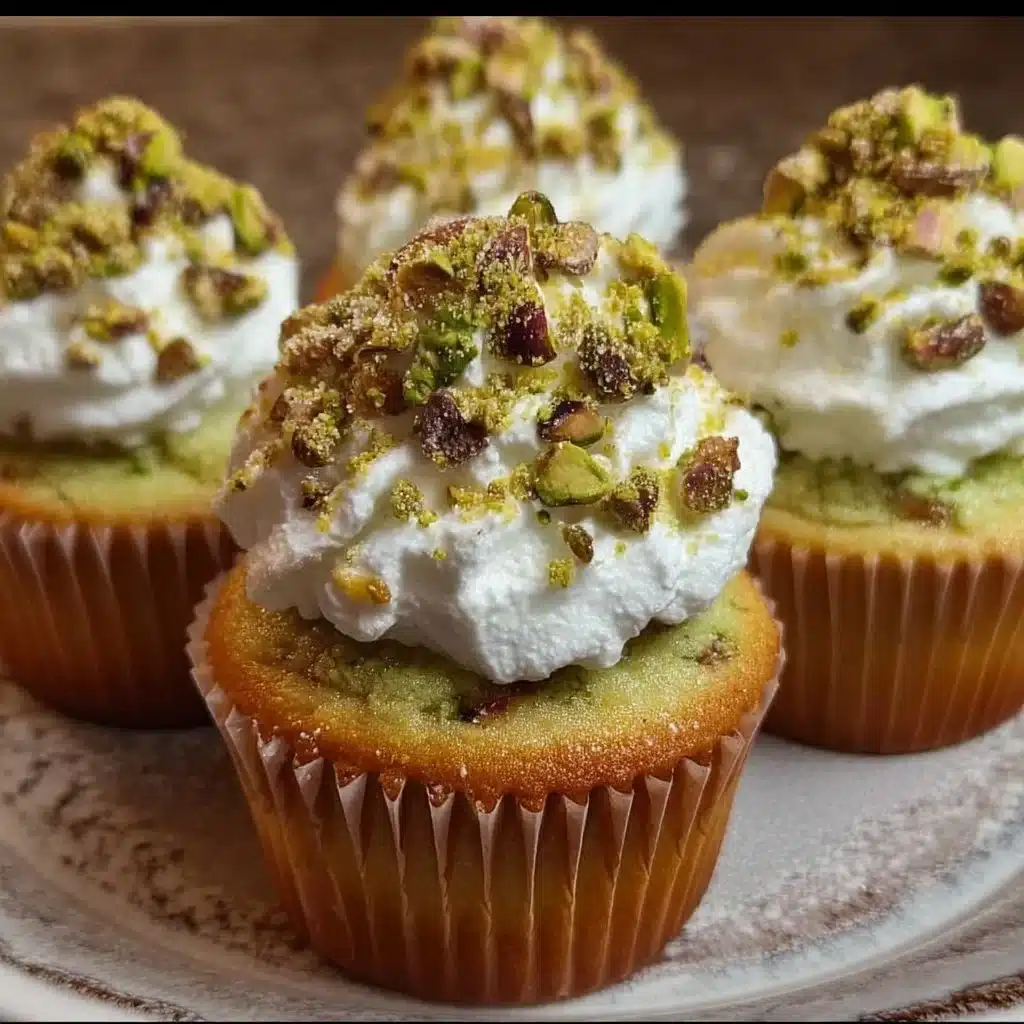
1. In a small bowl, combine flour, sugar, and cold butter. Rub between your fingers until the mixture forms irregular crumbs — some sandy, some pea-sized. Stir in the chopped pistachios. Spread on a small parchment-lined tray and refrigerate while you make the batter. The streusel can be baked separately at 350°F for 10–12 minutes until golden, then cooled and crumbled over the frosted cupcakes — this is what creates the distinct golden-brown crumble visible in the photo. Alternatively, sprinkle it over the raw batter before baking for a built-in crunch on the cupcake surface.
Make the Cupcake Batter
2. Preheat and prepare. Preheat oven to 350°F (175°C). Line a 12-cup muffin tin with white paper liners.
3. Drain the ricotta. Place ricotta in a fine-mesh strainer for 20 minutes. Press gently to release excess liquid. This is essential — wet ricotta makes batter too loose and produces flat cupcakes that don’t dome properly.
4. Combine dry ingredients. In a bowl, whisk together flour, finely ground pistachios, baking powder, and salt.
5. Cream butter and sugar. In a large bowl, beat softened butter and sugar together until light and fluffy — about 3 minutes. The mixture should look pale and almost white.
6. Add eggs. Add eggs one at a time, beating well after each addition. Scrape down the sides of the bowl between additions.
7. Add ricotta and extracts. Add the drained ricotta, vanilla extract, and almond extract. Mix until just smooth — do not overbeat at this stage or the ricotta will break down.
8. Alternate dry and milk. Add the flour-pistachio mixture in three additions, alternating with the milk (flour → milk → flour → milk → flour). Begin and end with flour. Mix until just combined after each addition — a few streaks of flour are fine before the next addition goes in.
9. Fill the liners. Divide batter evenly among the 12 liners, filling each about ¾ full. If using the unbaked streusel method, sprinkle streusel over each cup now. Tap the tin on the counter twice to release air bubbles.
10. Bake. Bake for 20–23 minutes until a toothpick inserted in the center comes out clean and the tops are set and pale golden. The domed top with a slight crack visible in the photo tells you the baking powder did its job. Do not overbake — a dry cupcake cannot be rescued by frosting.
11. Cool completely. Transfer to a wire rack and cool for at least 45 minutes. Frosting applied to a warm cupcake will melt and slide. The Pistachio Ricotta Cupcakes need to be fully at room temperature before piping.
Make the Frosting
12. Beat cold cream cheese and mascarpone together until completely smooth — about 2 minutes. Add sifted powdered sugar in two additions, beating on low speed first to avoid a sugar cloud, then increasing to medium. Add vanilla extract. Add heavy cream one tablespoon at a time until the frosting holds a firm peak but is soft enough to pipe. Refrigerate for 15 minutes if it feels too soft — cold frosting pipes cleaner swirls.
Assemble
13. Pipe the frosting. Fit a piping bag with a large star tip (1M or 2D). Hold the bag directly above the center of each cupcake and pipe a tall rosette in one continuous circular motion, finishing with a peak in the center. The generous, high swirl in the photo requires a full bag of frosting — don’t be conservative.
14. Add the topping. Immediately after piping each cupcake, scatter roughly chopped pistachios generously over the frosting — the frosting is slightly tacky when fresh and holds the pieces in place. Crumble the baked pistachio streusel over the top, letting pieces fall naturally across the frosting and onto the plate.
15. Serve. Arrange on a white plate as shown and serve at room temperature for the best frosting texture and pistachio aroma.
The Frosting — Why Mascarpone + Cream Cheese
The white frosting in the photo is visibly thick, stable, and holds a clean tall swirl with defined ridges — a texture that cream cheese alone achieves but mascarpone improves significantly.
Cream cheese alone can be slightly too tangy and too soft at room temperature for tall piped rosettes — the acidity makes it loose faster in a warm kitchen.
Mascarpone alone is rich and delicious but too soft for structured piping without added support.
Combined 50/50, cream cheese provides the structure and mascarpone provides the richness and neutral sweetness. The result is a frosting that pipes like buttercream, tastes like Italian cream, and holds its shape under the weight of the pistachio and streusel topping. The Mascarpone Frosting base recipe from your site uses the same principle and is worth linking for readers who want the frosting alone.
The Pistachio Streusel — The Visual Signature
The golden-brown crumble mixed with the green pistachios is the detail that elevates these Pistachio Ricotta Cupcakes from “good” to “impressive.” It takes 5 minutes to make and adds three things the chopped nuts alone cannot:
- Texture contrast — the soft frosting, crunchy pistachios, and caramelized crumble create three distinct textures in every bite
- Color depth — the warm amber-gold of the streusel against the white frosting and vivid green pistachios is what gives the photo its richness
- Caramelized flavor — butter and sugar baked together at 350°F creates a toffee-like coating around the pistachio pieces that raw chopped nuts don’t have
If you are short on time, skip the streusel and double the chopped pistachio topping. The cupcakes will still look beautiful — but the streusel version matches the photo exactly.
Tips for Perfect Pistachio Ricotta Cupcakes
Grind pistachios carefully. Pulse shelled pistachios in a food processor in short bursts — 3 seconds on, stop, repeat. Over-processing releases too much oil and turns them into pistachio butter, which changes the batter texture. You want a fine crumb, not a paste.
Use raw unsalted pistachios. Salted or roasted pistachios bring too much salt and a stronger flavor into the batter. Reserve the roasted ones for the topping where their deeper flavor is an asset.
Cold ingredients for the frosting. Both cream cheese and mascarpone must be cold when beaten together — not room temperature. Cold fat emulsifies into a thick, smooth frosting. Warm fat breaks and becomes grainy and loose.
Fill liners to exactly ¾. Overfilled liners spill over the edges and create flat tops with no dome. Underfilled liners produce dense, sunken cupcakes. The ¾ mark consistently gives the beautiful dome visible in the photo.
Variations
Lemon Pistachio Ricotta Cupcakes: Add the zest of 1 lemon to the batter and 1 tablespoon of lemon juice to the frosting. The citrus lifts the pistachio flavor and makes the Pistachio Ricotta Cupcakes feel brighter and more summery. The Lemon Pistachio Ricotta Cloud Cake explores this same combination in a full cake format.
Rose Water Pistachio Cupcakes: Add ½ teaspoon of rose water to the batter alongside the vanilla. Rose and pistachio is a classic Middle Eastern and Italian pairing — the Ricotta Pistachio Rosewater Crescent Cookies uses the same flavor marriage in cookie form.
Pistachio Honey Ricotta Cupcakes: Replace granulated sugar in the batter with ¾ cup honey. Honey-pistachio is a natural combination that gives the cupcake a warmer, more floral sweetness and a slightly denser crumb. Drizzle a little warm honey over the finished pistachio topping just before serving.
Cardamom Pistachio Ricotta Cupcakes: Add ½ teaspoon of ground cardamom to the dry ingredients. Cardamom and pistachio appear together in Persian, Turkish, and Italian baking — the spice adds warmth and a gentle floral complexity that pairs beautifully with the white mascarpone frosting.
Mini Pistachio Ricotta Cupcakes: Divide the same batter into a 24-cup mini muffin tin and bake for 12–14 minutes. Mini versions are perfect for a dessert table display alongside the Pistachio Ricotta Truffle Bites and Best Pistachio Ricotta Cookies for a fully pistachio-themed spread.
Serving Suggestions
Serve Pistachio Ricotta Cupcakes at room temperature — the frosting softens to its best texture and the pistachio aroma is most present when not cold. For a brunch or dessert table, arrange on a white plate as shown in the photo, letting a few chopped pistachios and streusel crumbles fall naturally onto the plate surface.
- With espresso or cappuccino — the bitterness of good espresso is a natural counterpoint to the sweet, nutty cupcake
- As part of a pistachio dessert spread alongside Pistachio Mascarpone Cannoli Dip and Cardamom Pistachio Ricotta Buns
- For St. Patrick’s Day — the natural green of the pistachios makes these perfect for a March 17th table without a drop of food coloring. Link naturally to St. Patrick’s Pistachio Cheesecake Cups and St. Patrick’s Pistachio Crumb Cake for a full holiday dessert lineup
Storage & Make-Ahead
Room temperature: Frosted Pistachio Ricotta Cupcakes can sit at room temperature for up to 4 hours before serving — ideal for a party or brunch setup. Beyond that, the mascarpone frosting begins to soften in warm environments.
Refrigerator: Store frosted cupcakes in an airtight container in the refrigerator for up to 3 days. The ricotta crumb stays moist and the frosting firms beautifully when cold. Remove 20–30 minutes before serving to allow the frosting to soften back to its best texture.
Unfrosted cupcakes: Unfrosted bases store at room temperature in an airtight container for up to 2 days, or refrigerated for 4 days. Frost on the day of serving for the freshest presentation and most stable piping.
Freezing: Freeze unfrosted cupcakes wrapped individually for up to 2 months. Thaw at room temperature for 1 hour, then frost and top just before serving. Do not freeze frosted cupcakes — the mascarpone frosting separates when thawed.
- Make-ahead frosting: The mascarpone cream cheese frosting can be made up to 2 days ahead and refrigerated in an airtight container. Before piping, let it sit at room temperature for 10 minutes and beat briefly to restore smoothness.
Common questions
Can I use pistachio pudding mix instead of ground pistachios?
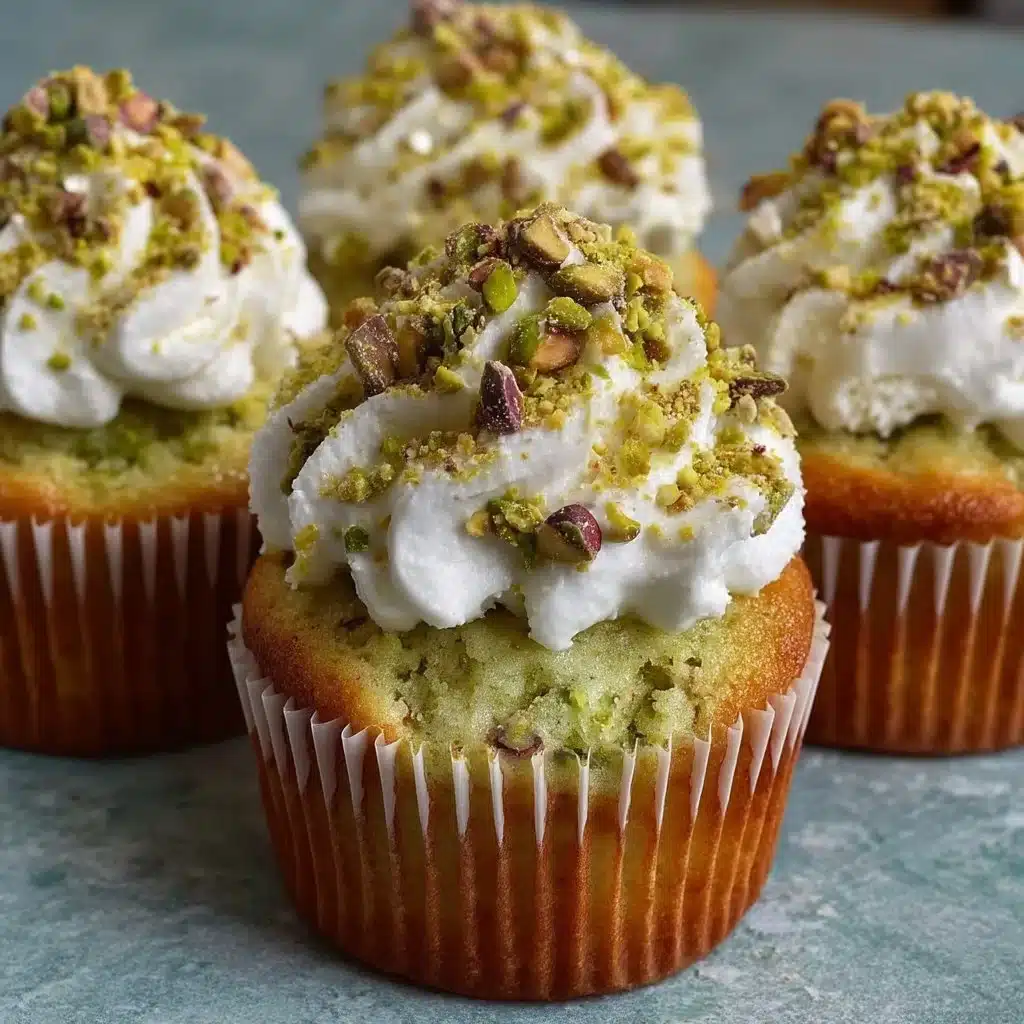
Pistachio pudding mix adds artificial pistachio flavoring and a green tint but contains stabilizers that change the batter texture. For the best flavor and the natural appearance shown in the photo, use real ground pistachios. The authentic pistachio flavor in these Pistachio Ricotta Cupcakes comes entirely from real nuts — in the batter, in the streusel, and on the topping.
Why are my cupcakes not doming?
Three common causes: batter was overmixed (deflates the air bubbles from creaming), liners were overfilled (forces batter to spread sideways rather than up), or oven temperature was too low (batter sets before it can rise). Start checking at 18 minutes and use an oven thermometer to confirm your temperature.
Can I make these without almond extract?
Yes — the almond extract is optional. It deepens the pistachio flavor because almonds and pistachios share similar aromatic compounds, creating a more pronounced nut flavor without adding any almond taste. Without it, the cupcakes are still clearly pistachio-forward. Simply increase vanilla to 1½ teaspoons.
My frosting is too soft to pipe — what do I do?
Refrigerate the frosting bowl for 20 minutes. The mascarpone and cream cheese firm up quickly when cold and the frosting will hold the rosette shape when piped. If it is still too soft after chilling, beat in an extra 2 tablespoons of sifted powdered sugar.
Can I skip the streusel and just use chopped pistachios?
Absolutely. The streusel adds the golden-brown crumble visible in the photo, but the cupcakes are beautiful with just generously scattered rough-chopped pistachios over the white frosting. The green-on-white contrast is striking either way.
How do I get clean, tall rosettes like in the photo?
Three steps: cold frosting, large star tip (1M), and confidence. Hold the bag perfectly vertical above the cupcake center, apply steady even pressure, pipe in a spiral from outside to inside finishing at the center, then stop pressure and lift straight up to create the peak. Practice one on parchment before starting the cupcakes.
Conclusion
These gentle, comforting cakes are a lovely way to celebrate with family and feel like a warm kitchen memory in every bite. For another green pistachio idea that’s perfect for the holiday, try this Shamrock Green Pistachio Muffins for St. Patrick’s Day. Serve your St. Patrick’s Day Pistachio Ricotta Cupcakes with a pot of tea and plenty of smiles.