
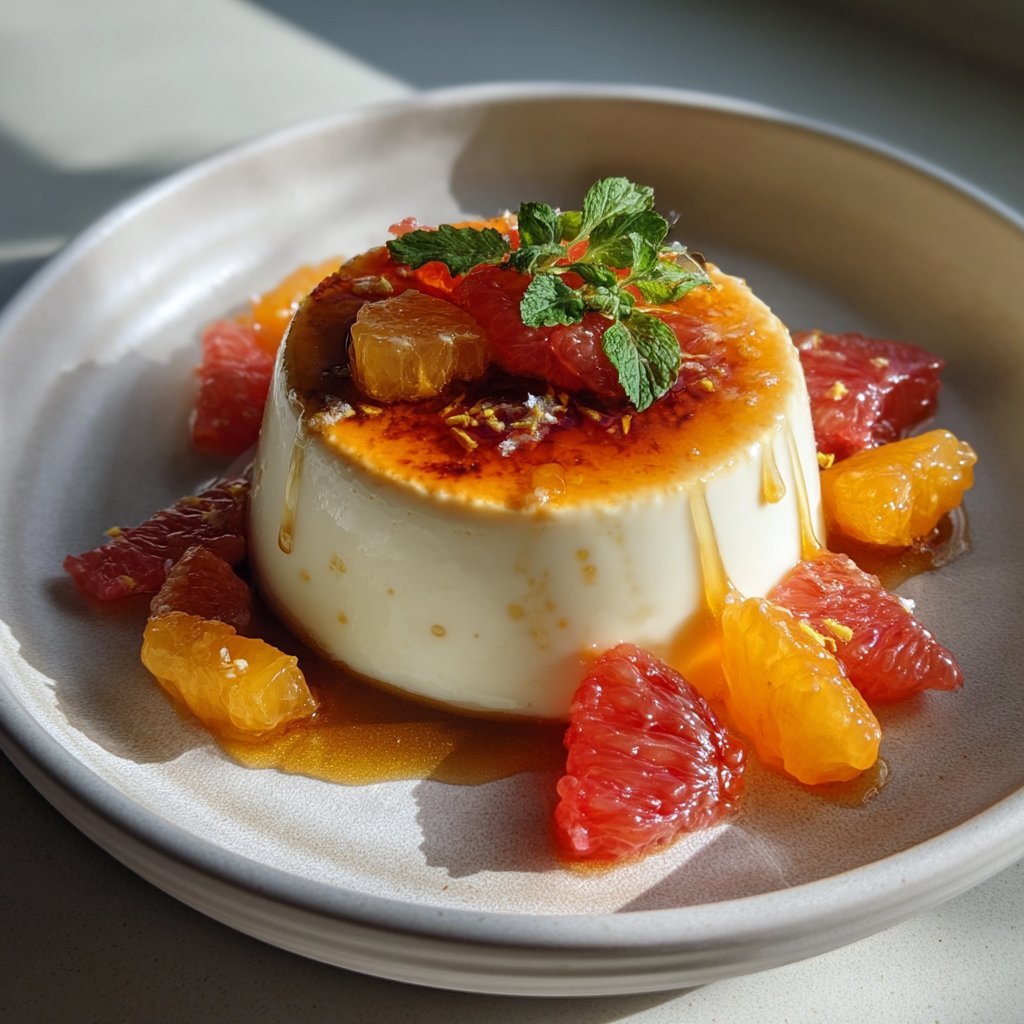
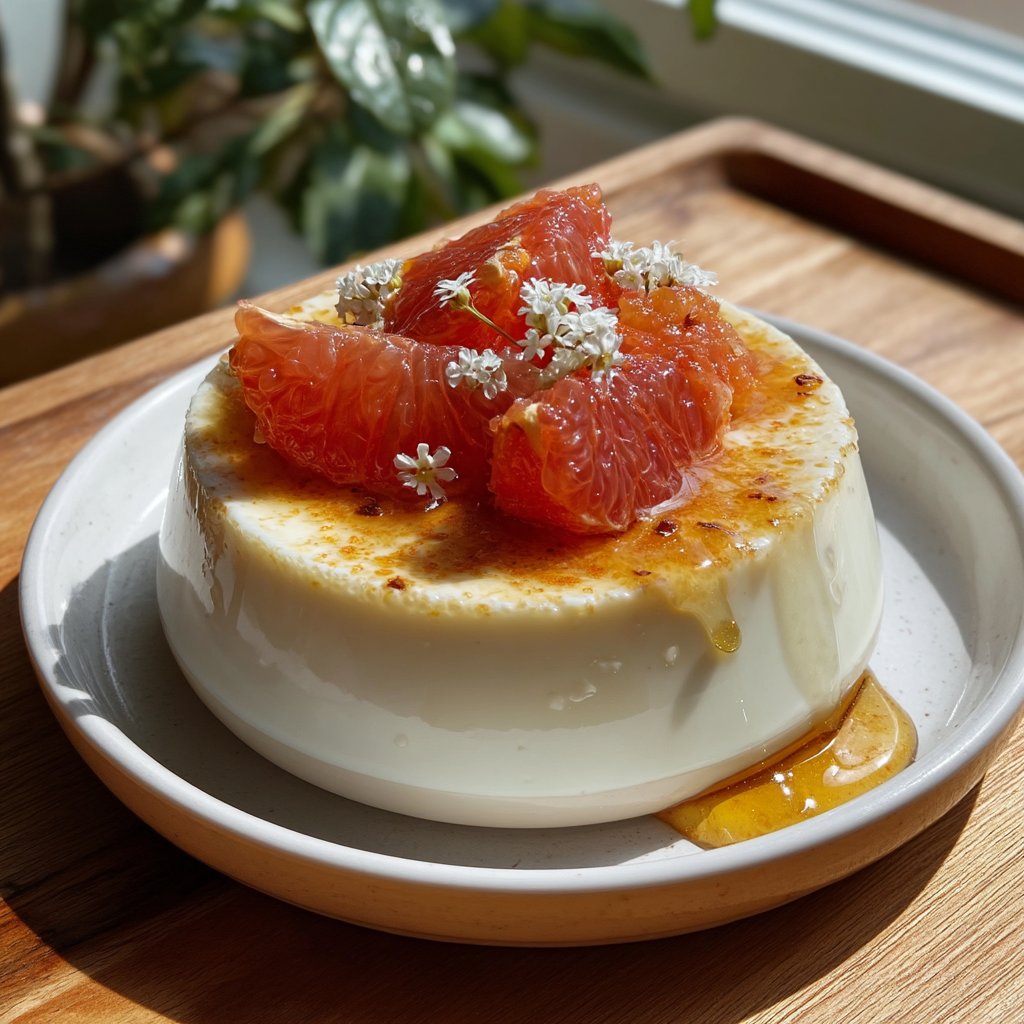
The first spoonful is silk on the tongue, fragrant with a whisper of orange blossom and brightened by a glossy drizzle of honey and citrus segments; Orange Blossom Panna Cotta with Honey Citrus melts between the teeth, cooling and creamy with tiny, perfumed notes that make the kitchen smell like an afternoon tea. This panna cotta has a gentle wobble that feels indulgent without being heavy, the cream and milk creating a tender, velvety body while the orange blossom water leaves a floral kiss on the finish. A ribbon of honey over the top adds just the right amount of sweetness against the citrus, and when the fruit segments burst with juice they cut through the richness like a cheerful hello from summer.
This is the kind of dessert that sits comfortably at a family table, the kind you can serve after a long Sunday meal or tuck into after a weeknight supper when you want something special but not fussy. It pairs well with simple sides—a bowl of soup, a platter of roasted vegetables, or fresh garden greens—and it brings a lifted, slightly nostalgic note to holiday dinners where everyone comes home for the table. Because it’s mild and elegant, even guests with reserved palates will reach for seconds, and children are often smitten by the glossy, jewel-like citrus on top. If you like, offer a gentle side like roasted carrots to complete the plate; a warm vegetable with a soft cheese is a hearty companion to this cool, floral dessert, and you can find ideas for a sweet-savory match in a recipe for honey-roasted carrots that echoes the honey notes here.
I kept this version simple and genuinely foolproof so you can make it without fuss and still impress the people you love. The technique is straightforward—heat, bloom the gelatin, stir and chill—so it’s a good recipe to make when you want a calm, sure result rather than a kitchen experiment. It’s also flexible: you can scale it up for a crowd or make individual portions in pretty glasses. If you have a favorite set of ramekins or pretty little jars, they become part of the charm. For another panna cotta with a nutty twist, take inspiration from a pistachio panna cotta I like to think about, which pairs well with honeyed fruit like those citrus segments you’ll use here: pistachio panna cotta with honeyed strawberries.
Why this recipe works
What makes this dessert sing is the balance of texture and the gentle chemistry between a few simple ingredients. Heavy cream brings the luxurious mouthfeel that panna cotta is known for; it contains fat that coats the palate, creating that lingering, soft sensation. Whole milk lightens the cream slightly so the dessert isn’t overly dense or cloying. The sugar does more than sweeten—it helps the mixture set with a pleasant firmness without becoming rubbery. Gelatin is the setting agent and, when handled properly, it gives the panna cotta that delicate wobble that indicates it’s set perfectly: firm enough to hold its shape, tender enough to yield without resistance.
Orange blossom water is used sparingly because its floral character is potent; it lifts the cream and adds fragrant complexity without overpowering. When paired with citrus segments, the combination plays off each other beautifully—the floral notes bring a perfume while the citrus provides bright acidity and texture through its juice-filled vesicles. Honey on top adds a glossy sweetness with depth; unlike refined sugar, honey has floral and botanical undertones that echo the orange blossom and tie the whole flavor profile together.
From an ease-of-cooking perspective, this recipe is forgiving. The key steps—warming the dairy until the sugar dissolves, properly blooming the gelatin, and stirring it in off the heat—are brief and uncomplicated. Blooming the gelatin allows it to absorb water and expand; if you skip that step, you risk a grainy texture or uneven setting. Heating the cream mixture gently dissolves the sugar without scalding the milk proteins, which keeps the texture smooth. Stirring the bloomed gelatin into warm (not boiling) dairy ensures it dissolves fully and disperses evenly so each ramekin sets the same. Once poured into containers, the panna cotta needs only time in the refrigerator to reach its ideal set, so you can prepare it ahead and free up your evening for conversation and other dishes.
Because every ingredient has a clear purpose and contributes both flavor and structure, this is a dessert that reliably turns out well. The contrast between the rich, mellow custard and the bright citrus keeps the palate interested, and the honey’s sticky sheen is both pretty and delicious. Slip this into your repertoire and you’ll find it becomes a gentle favorite—something you reach for whenever you want a dessert that’s elegant, easy, and quietly special.
How to prepare Orange Blossom Panna Cotta with Honey Citrus
Start by gathering your ingredients and choosing your serving vessels; ramekins or small glasses work beautifully and make the final presentation feel personal. The most satisfying part of the process is pouring the warm cream mixture into the waiting dishes and watching the liquid settle into a smooth surface—it’s a small, calming moment of kitchen care that always makes me smile. Blooming the gelatin is the other quietly satisfying step: you’ll see it plump and thicken in the cold water, which feels reassuring as you move through the recipe.
Work in simple, steady steps: warm the dairy and sugar until the sugar disappears, bloom the gelatin while the cream is warming, then combine and stir until everything is smooth. Add the orange blossom water last, off the heat, so its perfume stays bright. Pour into your ramekins, chill, and then finish with honey and citrus segments just before serving. If you want to make this a day ahead, you can—just wait until right before enjoying to dress with honey and fresh fruit so they look and taste their best. This is a dessert that rewards calm preparation and small touches at the end.
Ingredients
- 2 cups heavy cream
- 1/2 cup whole milk
- 1/2 cup sugar
- 1 tablespoon orange blossom water
- 1 packet (2 1/4 teaspoons) gelatin
- 1/4 cup cold water
- Honey for drizzling
- Citrus segments (like orange and grapefruit) for garnish
Instructions
- In a saucepan, combine the heavy cream, milk, and sugar.
- Heat over medium heat, stirring, until the sugar dissolves.
- Remove from heat.
- In a small bowl, sprinkle the gelatin over cold water.
- Let it sit for 5 minutes until it blooms.
- Stir the bloomed gelatin into the warm cream mixture.
- Mix until smooth and the gelatin is fully dissolved.
- Add the orange blossom water and mix well.
- Pour the mixture into ramekins or serving glasses.
- Refrigerate for at least 4 hours or until set.
- Once set, top with honey and citrus segments before serving.
Serving ideas
This panna cotta is lovely on its own, but it also plays nicely with simple, familiar sides that many of us already keep in the fridge:
- A light green salad with a lemon vinaigrette to refresh the palate.
- Oven-roasted carrots or beets that bring warmth and earthiness to the table.
- A platter of fresh berries and a few crisp cookies for extra crunch.
For a drink pairing, choose a lightly sweet tea or a chilled sparkling water with a slice of lemon to complement the citrus and keep the dessert feeling light. If you prefer something alcoholic, a small glass of sparkling wine or a light Moscato matches the honeyed sweetness without overpowering the floral notes.
Storing this recipe
In the refrigerator, panna cotta will keep for up to 3 days if covered. Store the set ramekins with plastic wrap or an airtight lid to prevent the surface from absorbing other fridge aromas. If you plan to prepare this far ahead, it’s best to wait to add the honey and citrus segments until just before serving—those toppings look freshest and taste best when they’re bright and juicy.
Freezing panna cotta is possible but not ideal; the texture can change when frozen and thawed, becoming more watery or grainy. If you must freeze, do so only as a last resort: place the set panna cotta in an airtight container and freeze for up to one month, then thaw slowly in the refrigerator. Reheating is rarely necessary since this is meant to be served chilled, but if you want the honey slightly runnier for pouring, warm a small spoonful in a microwave-safe dish for a few seconds and drizzle over the panna cotta just before serving.
Helpful tips
Get the gelatin right. Blooming gelatin is a small but crucial step. Sprinkle the gelatin over cold water and let it sit undisturbed for about five minutes; you’ll see it swell and become spongy. If you pour bloomed gelatin into a scalding liquid, it can lose its setting power and create uneven texture. Always stir the gelatin into warm, not boiling, cream so it dissolves completely and the panna cotta sets evenly. If you’re doubling the recipe, bloom the appropriate amount of gelatin in proportion to the liquid—too little and it won’t set; too much and the texture will be overly firm.
Heat gently. Heat the cream, milk, and sugar over medium heat and watch for the sugar to dissolve; you don’t need a simmer. If the mixture boils, the proteins in the milk can change texture and lead to a less silky finish. Remove the pan from the heat before adding the bloomed gelatin so the temperature is warm enough to melt the gelatin but not so hot that it degrades its texture. Stir patiently until the mixture is smooth; this helps incorporate the gelatin evenly.
Flavor with restraint. Orange blossom water is fragrant and can become overpowering if you use too much. Start with the amount called for and taste the base (after it has cooled slightly) before adding more. The honey garnish also adds sweetness and character—use a drizzle rather than a flood so the honey complements rather than masks the floral and citrus notes. For the citrus segments, remove any bitter pith and cut between the membranes to release clean, juicy slices; these add both freshness and a beautiful visual contrast to the creamy panna cotta.
Beyond these three main tips, decorate close to serving time and keep things simple. Small ramekins chill faster and present beautifully, and making the dessert a day ahead frees you to focus on guests rather than last-minute assembly. With a gentle hand and attention to temperature, you’ll have a panna cotta that’s smooth, fragrant, and reliably lovely.
Recipe variations
- Make it lighter: Substitute part of the heavy cream with extra milk (up to 1 cup heavy cream + 1 cup milk) for a less rich panna cotta. Adjust gelatin slightly if needed for a firmer set.
- Infuse with tea: Steep a mild floral tea like chamomile or orange pekoe in the warm cream for a few minutes, strain, and proceed with the recipe to add depth without overpowering the orange blossom.
- Citrus-forward: Stir a tablespoon of finely grated orange zest into the warm cream before adding gelatin for a brighter, more citrus-dominant flavor.
Common questions
Q: How can I tell when panna cotta is fully set?
A: Gently touch the surface with a fingertip; it should have a slight wobble but hold its shape. If it jiggles uniformly and the center no longer looks liquid, it’s set.
Q: Can I make panna cotta without gelatin for a vegetarian option?
A: Yes, you can use agar-agar as a vegetarian alternative, but it sets differently—firmer and less silky—so follow the agar-agar package instructions for quantities and cooking techniques.
Q: What size ramekins should I use, and how many does this recipe make?
A: Standard 4- to 6-ounce ramekins work well; this recipe typically serves 4 to 6 portions depending on the size of your vessels.
Q: Why did my panna cotta turn out grainy or watery?
A: Graininess can come from insufficiently dissolved gelatin or overheating; watery texture may mean too little gelatin was used or the dessert wasn’t chilled long enough. Ensure the gelatin fully dissolves and refrigerate for the full time.
Conclusion
If you’d like a variation on the theme or some inspiration that highlights orange blossom and honey in panna cotta-style desserts, see this thoughtful version at Orange Blossom Honey Panna Cotta – Food52 for ideas you can adapt at home. This Orange Blossom Panna Cotta with Honey Citrus is meant to be an easy, elegant finish to any meal, one that brings comfort and a little floral sunshine to the table.