
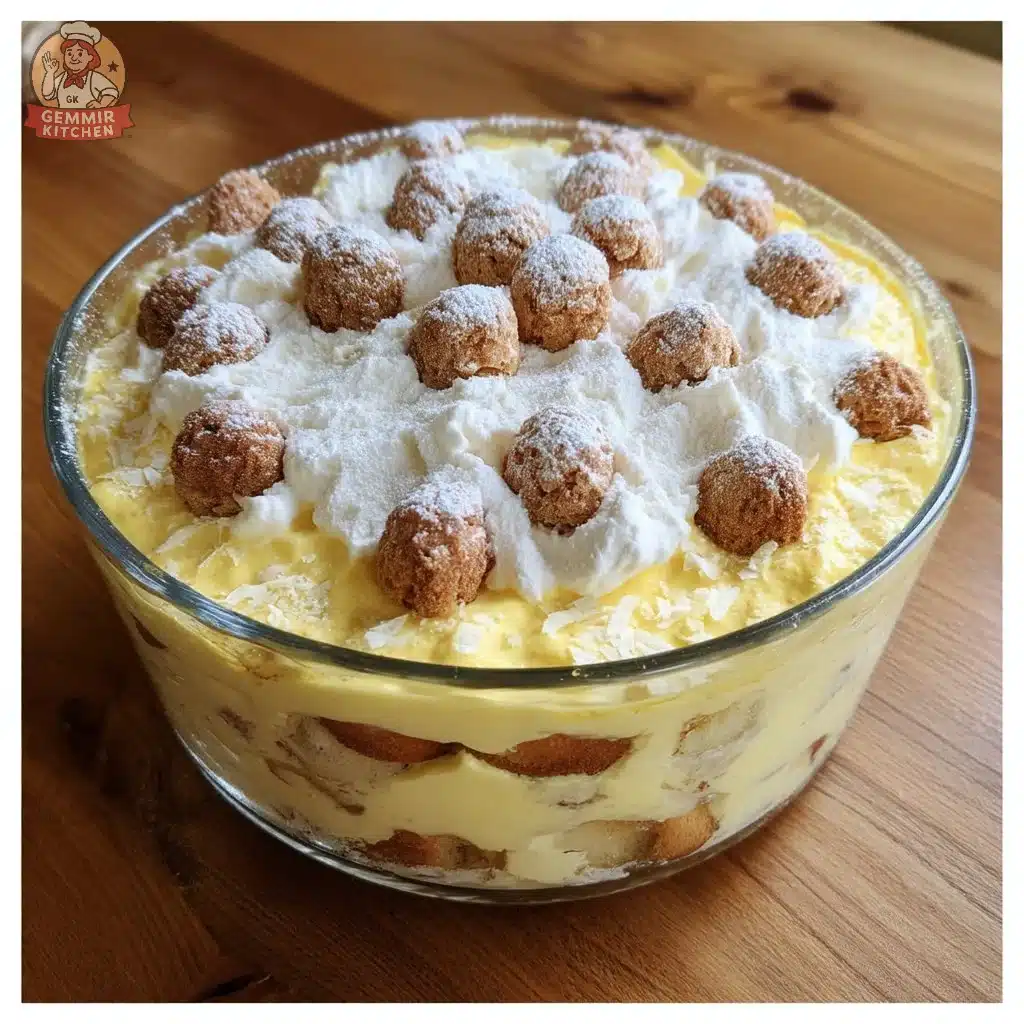
Picture the most beautiful thing you can bring to a summer table — a wide glass bowl revealing golden yellow lemon cream, soft limoncello-soaked ladyfingers, and a billowing white mascarpone cloud on top scattered with powdered-sugar-dusted cookie bites. That is this Limoncello Tiramisu Trifle.
It is everything people love about classic tiramisu — the ladyfingers, the cream, the layers — but reimagined with limoncello instead of espresso, lemon curd woven between every layer, and a presentation that does all the work for you. The glass bowl is the canvas. The yellow and white layers do the talking. There is nothing to frost, nothing to pipe precisely, and nothing to stress about. Fill, layer, chill, dust, and serve.
What Sets This Apart From Regular Tiramisu
Standard tiramisu uses coffee, cocoa, and mascarpone. This Limoncello Tiramisu Trifle goes in a completely different direction:
- Limoncello replaces espresso as the ladyfinger soak — fragrant, slightly boozy, and unmistakably Italian
- Lemon curd layers sit between the cream and the ladyfingers, adding a bright, tart note that cuts through the richness
- The trifle bowl format means visible layers through the glass — the yellow cream, the soft cookies, the white cloud — which makes it one of the most impressive-looking desserts you can serve with almost no skill required
- Powdered-sugar-dusted ladyfinger bites on top replace the traditional cocoa dusting for a presentation that looks rustic, abundant, and completely homemade
Before You Start — Three Things to Know
The cream must be cold to whip. Mascarpone and heavy cream both need to be properly cold. Warm mascarpone will not hold its texture and the cream layer will be loose rather than billowy. Take the mascarpone out only minutes before using, and keep heavy cream refrigerated until the moment you pour it.
Lemon curd consistency matters. Store-bought lemon curd varies widely in thickness. You want a curd that holds its shape when spooned — not pourable like juice, not stiff like cold butter. A medium-bodied curd creates a distinct yellow layer visible through the glass. If yours is too loose, refrigerate it for 30 minutes before assembling.
Limoncello soak strength is a choice. A 1-second dip per side gives a light, delicate limoncello note. A 3-second dip gives a stronger, more pronounced hit of citrus liqueur. The ladyfingers continue absorbing liquid as the trifle chills, so err on the side of lighter — you can always add more limoncello flavor through the cream and curd.
Ingredients
For the mascarpone limoncello cream:
- 2 cups (480 g) mascarpone cheese, cold
- 1 cup (240 ml) heavy whipping cream, cold
- ½ cup (120 ml) limoncello liqueur
- Zest of 1 large lemon
- Powdered sugar to taste (start with 3 tablespoons, adjust for sweetness)
For the layers:
- 1 package (approximately 24) savoiardi ladyfinger cookies
- ½ cup (120 ml) limoncello, for dipping the ladyfingers
- 2 cups (480 g) good quality lemon curd, chilled
For the topping:
- 6–8 ladyfinger cookies, cut into thirds and rolled gently into irregular round bites
- Generous dusting of powdered sugar
- Recommended bowl: Wide, round clear glass trifle bowl — at least 10 inches across and 5 inches deep. The wider the bowl, the more visible the yellow and white layers become.
How to Make Limoncello Tiramisu Trifle
Prep time: 25 minutes | Chill time: 4–12 hours | Servings: 10–14
1. Make the cream. In a large bowl, beat the cold mascarpone on medium speed for 30 seconds until smooth. Add the limoncello, lemon zest, and powdered sugar. Beat briefly to combine. In a separate chilled bowl, whip the heavy cream to stiff peaks. Fold the whipped cream into the mascarpone mixture in three additions — one-third at a time — using a wide spatula and slow folding strokes. The finished cream should be thick, glossy, and hold its shape. Taste and add more powdered sugar if needed. Refrigerate while you prepare everything else.
2. Prepare the ladyfinger soak. Pour limoncello into a wide, shallow bowl. Have the ladyfingers and trifle bowl ready side by side — assembly moves quickly.
3. First layer — ladyfingers. Dip ladyfingers one at a time into limoncello, 1–2 seconds per side. Arrange them in a single layer across the bottom of the trifle bowl, breaking them to fit snugly. Don’t leave gaps — full coverage ensures every spoonful gets a cookie base.
4. First layer — lemon curd. Spoon roughly one-third of the lemon curd over the ladyfinger layer and spread gently. The bright yellow should be visible through the glass sides.
5. First cream layer. Spoon one-third of the mascarpone cream over the lemon curd and spread into an even white layer.
6. Repeat. Add a second layer of limoncello-dipped ladyfingers, then lemon curd, then mascarpone cream. Repeat once more for a third complete layer, finishing with the remaining mascarpone cream spread generously across the very top — this is the white cloud layer visible in the photo.
7. Add the topping. Cut 6–8 ladyfinger cookies into rough thirds. Roll each piece gently between your palms to create irregular round bites — they don’t need to be perfect. Arrange them in rows across the entire surface of the cream, pressing in very lightly so they stay in place.
8. Dust with powdered sugar. Sift powdered sugar generously over the ladyfinger bites and the entire surface of the cream. This is the final look — white cream, golden cookie bites, powdered sugar dusting, all in the glass bowl.
9. Chill. Cover the trifle bowl with plastic wrap and refrigerate for at least 4 hours — overnight preferred. The ladyfingers soften, the lemon curd sets against the cream, and the limoncello flavor deepens through every layer.
The Topping — Why Cookie Bites Instead of Berries
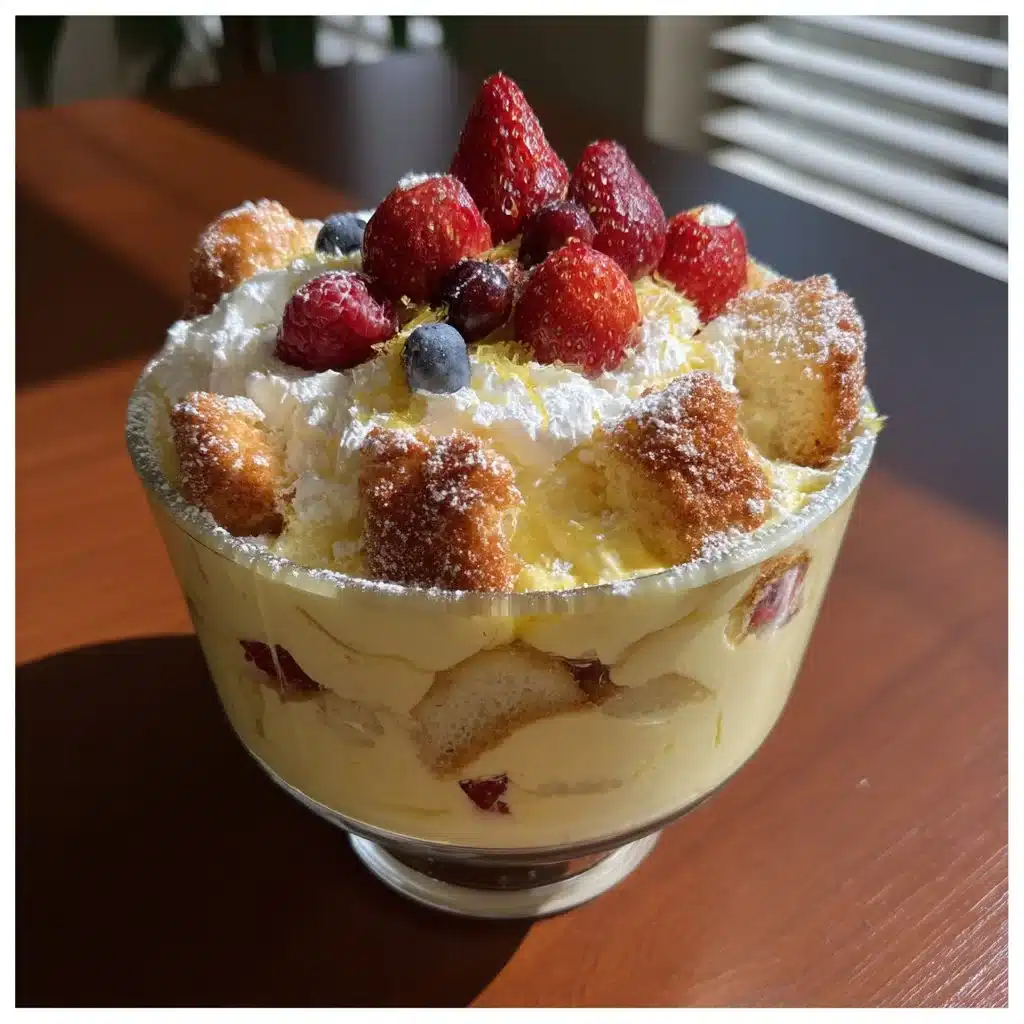
The original recipe suggests fresh berries as a garnish. The presentation in the photo takes a more classic Italian approach — small ladyfinger bites dusted with powdered sugar. Here is why this works better:
It ties the topping to the recipe. Fresh berries add color but feel slightly disconnected from a limoncello-mascarpone dessert. The ladyfinger bites echo exactly what is inside the bowl — the connection is immediate and the presentation feels intentional rather than decorative.
It holds up during chilling. Fresh berries release liquid as they sit, which can stain the white cream and make the surface look messy after several hours in the fridge. Ladyfinger bites stay dry and hold their dusted appearance until serving.
It creates visual contrast. The warm golden-brown of the cookie bites against the white cream and yellow edges creates a striking, distinct look that photographs beautifully and signals abundance the moment you set it on the table.
If you prefer berries, scatter them just before serving — not before chilling — to avoid the liquid problem.
Tips for the Visible Yellow Layer
The defining visual of this Limoncello Tiramisu Trifle is the bright yellow lemon curd visible through the glass. To maximize it:
- Use a wide, straight-sided bowl rather than a curved one — straight sides show more of each individual layer
- Chill the lemon curd before using — cold curd stays distinct and doesn’t merge into the cream above it
- Spread curd with the back of a large spoon using confident, level strokes — don’t press hard or it will mix with the ladyfinger layer below
- The yellow is most visible from the side and at the bottom third of the bowl — position your bowl on a raised surface (a cake stand or board) when serving so guests see the layers from the side as well as the top
For a more dramatic yellow contrast, you can double the lemon curd to 3 cups and use it more generously in each layer. The Limoncello Mascarpone Eclairs use the same lemon curd and mascarpone pairing in a completely different format if you want to see this flavor combination taken in a pastry direction.
Variations
Coffee-Limoncello Hybrid: Dip half the ladyfingers in espresso and half in limoncello. Layer the espresso-dipped ones at the bottom and the limoncello-dipped ones in the middle. The flavor moves from rich and dark at the base to bright and citrusy at the top. A beautiful Italian twist on two classic combinations.
Berry Compote Instead of Lemon Curd: Swap lemon curd for a quick raspberry or strawberry compote (berries + sugar, cooked 5 minutes until jammy). The deep red against the white cream is visually striking and the berry-limoncello pairing is naturally brilliant.
Limoncello Lemon Curd Cups: Divide the same assembly into 8–10 individual glasses or mason jars instead of one large bowl. Perfect for dinner parties where you want a no-fuss individual dessert that looks elegant. Each jar shows the layers and guests can take their own glass straight from the table.
More Limoncello Kick: Stir an extra tablespoon of limoncello into the lemon curd before spreading. The curd becomes looser and more fragrant — the limoncello flavor runs through every layer of the trifle rather than just the soaked ladyfingers.
This Limoncello Tiramisu Trifle sits naturally alongside two other recipes in the same citrus-mascarpone family — the Limoncello Tiramisu for a more traditional plated format, and the Ricotta Tiramisu Trifle for a ricotta-based cream version using coffee — all three make a stunning trio on a dessert table.
Storage & Make-Ahead
This is the ideal make-ahead dessert. Assembled the night before, the Limoncello Tiramisu Trifle reaches peak flavor the next day — the ladyfingers soften completely, the lemon curd merges slightly at its edges with the cream, and the limoncello deepens throughout every layer.
Refrigerator: Covered tightly, the assembled trifle keeps for up to 3 days. The texture actually improves through day 2. After day 3, the ladyfinger layers become very soft — still delicious, but less textured.
Topping tip: Add the ladyfinger bites and final powdered sugar dusting on the day of serving, not before. This keeps the topping fresh and the powdered sugar bright white rather than absorbed into the cream overnight.
Do not freeze. The mascarpone cream and lemon curd both change texture when frozen — the cream separates and the curd becomes grainy. This is a refrigerator-only dessert.
Transporting: If you need to transport this Limoncello Tiramisu Trifle, cover the bowl with plastic wrap pressed directly against the cream surface, then stretch a second layer of wrap over the top of the bowl. Transport flat. Add the ladyfinger bites and powdered sugar dusting at the destination.
Frequently Asked Questions

Can I make this without alcohol?
Yes. Replace the limoncello in the cream with 2 tablespoons of fresh lemon juice and 1 teaspoon of lemon extract. For dipping the ladyfingers, use a mixture of fresh lemon juice, a splash of lemon simple syrup, and a little water to dilute the sharpness. The flavor is less complex but still clearly citrus-forward.
My cream is too loose — what happened?
Almost always one of two causes: mascarpone was too warm when beaten (it separates when overworked at room temperature), or the heavy cream was not whipped to stiff peaks before folding. If the assembled cream looks loose, refrigerate it for 30 minutes before layering — it will firm up enough to spread cleanly.
How many layers should the trifle have?
With this quantity of ingredients in a standard trifle bowl, three complete sets of layers (ladyfingers + lemon curd + cream) is ideal. This gives the visible column of yellow and white that makes the Limoncello Tiramisu Trifle so recognizable when presented at the table.
Can I use store-bought lemon curd?
Absolutely — and it works extremely well in this recipe. Choose a thick, rich lemon curd rather than a thin, pourable variety. Lemon curds from specialty or Italian food stores tend to have a better texture and more intense flavor than supermarket versions.
What is the best way to serve it?
Use a large serving spoon and go straight down through all the layers when scooping — don’t drag horizontally. Each serving should contain all three layers: cookies, lemon curd, and cream. The wide base of a trifle bowl means every scoop naturally captures the full depth of the dessert.
Can I add ricotta to the cream?
Yes — fold ½ cup of well-drained ricotta into the finished mascarpone cream for a slightly tangier, denser layer that references the classic Italian ricotta-mascarpone pairing. This bridges the gap between this recipe and the Ricotta Tiramisu Trifle and gives the cream a richer, more complex flavor with almost no extra effort.
Conclusion
When family and friends are coming, Limoncello Tiramisu Trifle is a bright, comforting finish that feels like a small celebration. If you want a reference recipe with a slightly different take on the flavor profile, see this inspiring Limoncello Tiramisu – Lord Byron’s Kitchen for ideas that may spark your own twists. Limoncello Tiramisu Trifle will become one of those go-to desserts you bring out when you want everyone to leave the table smiling.
Print
Limoncello Tiramisu Trifle
- Total Time: 240 minutes
- Yield: 10-14 servings
- Diet: Vegetarian
Description
A bright and comforting Limoncello Tiramisu Trifle featuring layers of limoncello-soaked ladyfingers, creamy mascarpone, and tangy lemon curd, all beautifully presented in a clear trifle bowl.
Ingredients
- 2 cups (480 g) mascarpone cheese, cold
- 1 cup (240 ml) heavy whipping cream, cold
- ½ cup (120 ml) limoncello liqueur
- Zest of 1 large lemon
- Powdered sugar to taste (start with 3 tablespoons)
- 1 package (approximately 24) savoiardi ladyfinger cookies
- ½ cup (120 ml) limoncello, for dipping the ladyfingers
- 2 cups (480 g) good quality lemon curd, chilled
- 6–8 ladyfinger cookies, cut into thirds and rolled into irregular round bites
- Generous dusting of powdered sugar
Instructions
- Make the cream. In a large bowl, beat the cold mascarpone on medium speed for 30 seconds until smooth. Add the limoncello, lemon zest, and powdered sugar. Beat briefly to combine. In a separate chilled bowl, whip the heavy cream to stiff peaks. Fold the whipped cream into the mascarpone mixture in three additions. Refrigerate while preparing everything else.
- Prepare the ladyfinger soak. Pour limoncello into a shallow bowl.
- Dip ladyfingers into limoncello, 1–2 seconds per side, and arrange them in a single layer across the bottom of the trifle bowl.
- Spoon roughly one-third of the lemon curd over the ladyfinger layer and spread gently.
- Add one-third of the mascarpone cream over the lemon curd and spread into an even layer.
- Repeat the layering process twice more, finishing with the remaining mascarpone cream on top.
- Roll ladyfinger bites gently and arrange them on top of the cream layer.
- Dust with powdered sugar over the ladyfinger bites and the entire surface.
- Chill for at least 4 hours, preferably overnight.
Notes
Make-ahead dessert. Topping should be added on the day of serving to keep it fresh.
- Prep Time: 25 minutes
- Cook Time: 0 minutes
- Category: Dessert
- Method: Chilling
- Cuisine: Italian