
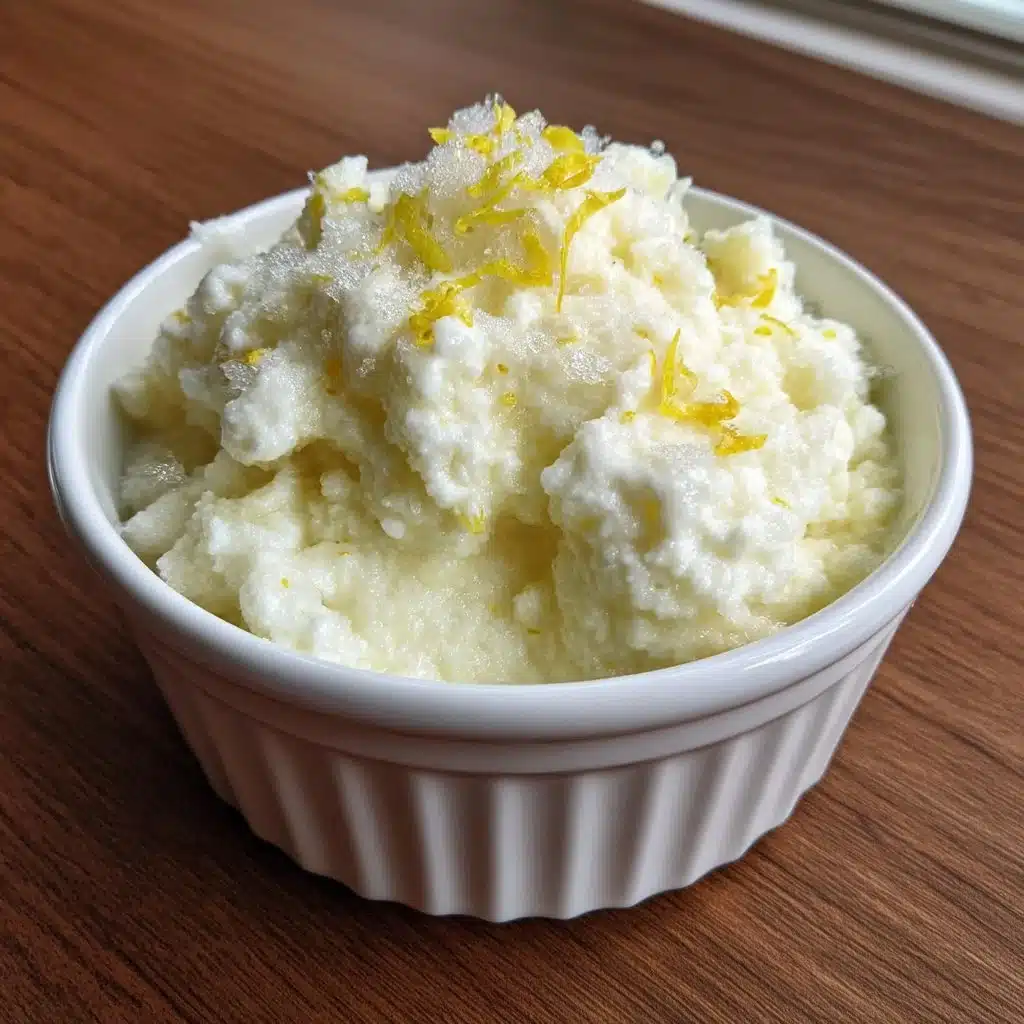
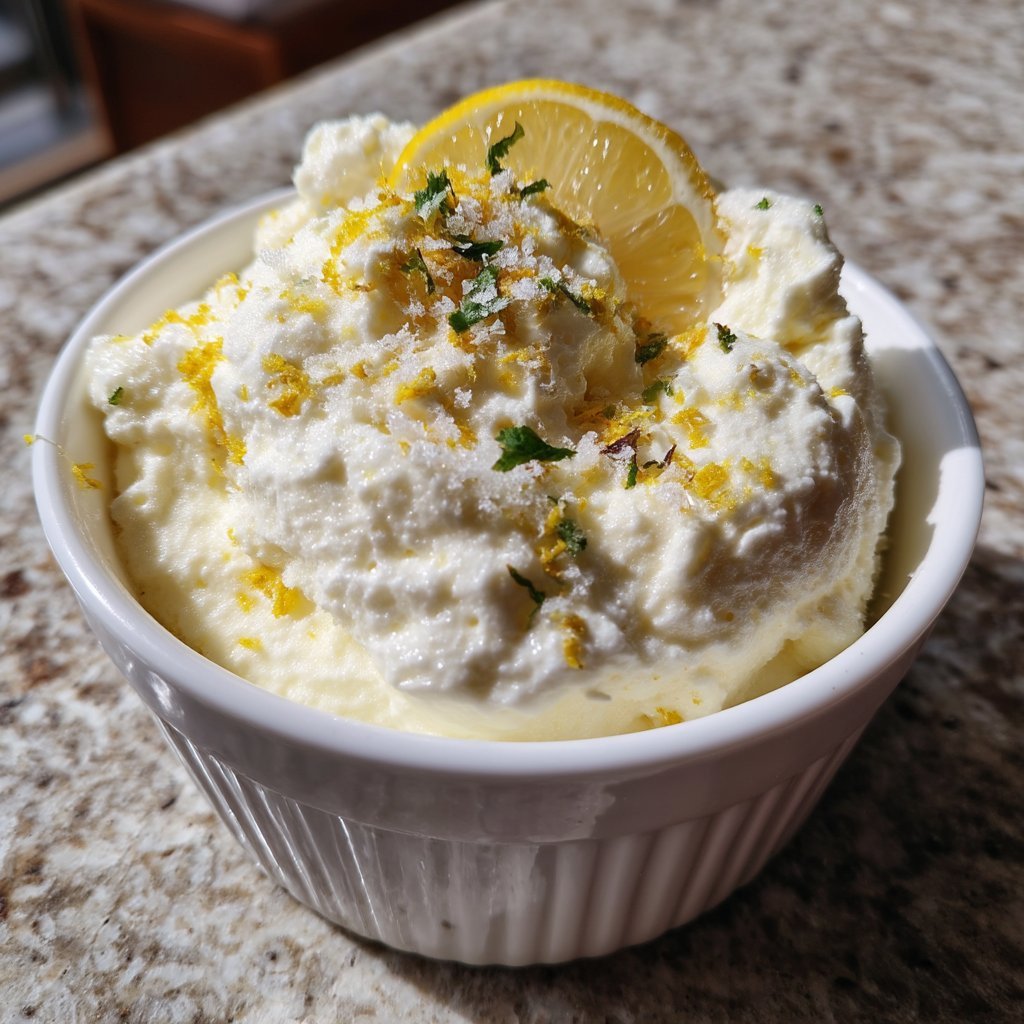
There is nothing quite like the bright, clean kiss of lemon on the tongue, the cool, slightly grainy glide of icy ricotta flakes, and the soft hint of liqueur that rounds the edges this is the pleasure of Limoncello Ricotta Granita in a glass. The first spoonful wakes up memories of sunlit kitchens, summer visits with grown children, and lazy afternoons on the porch. The aroma is lemon peel scraped across warm sugar, a little boozy perfume from the limoncello, and the gentle dairy warmth of ricotta that turns into a refreshingly light, textured dessert as it freezes.
This dessert is comfort food in the gentlest sense: it soothes with simple flavors and gathers people without fuss. It sits right at the end of a weekday supper or becomes the graceful finish to a family holiday meal. You can serve it after a bowl of soup, alongside a slice of lemon cake, or as the cool close to a heavier main. If you want a lemon-scented companion for a brunch spread, try pairing it with a warm cake or light pastries; it plays well with familiar dishes and helps everyone linger a little longer around the table. A good, family-style dessert like this often sparks conversation and shared forks, and that quiet joy is what I love most about it. If you like richer ricotta desserts, you might also enjoy checking out a tender, oven-baked ricotta cake for another lemony finish at gatherings: a lemon-scented ricotta cake.
This version is simple and almost foolproof. A stove-top syrup, a gentle folding of ricotta and limoncello, and a patient scrape while it freezes give delightful, flaky ice crystals every time. You don’t need special equipment; a shallow dish, a fork, and a freezer are your tools. It’s the kind of recipe that invites you to breathe through it, to chat while you scrape, and to feel proud as you serve something both elegant and homey.
Why this recipe works
The magic of this dessert comes down to texture and simplicity. The grainy, feathery texture of a good granita depends on creating many small ice crystals rather than a single solid block. That starts with the sugar syrup: when sugar dissolves into water and cools, it lowers the freezing point and helps crystals form slowly and evenly. Adding limoncello further lightens the freeze because the alcohol interferes with ice formation, making the final result scoopable yet still delicately icy.
Ricotta adds another layer of brilliance. Unlike heavy cream or milk, ricotta brings a soft, almost cloud-like body without heaviness. When you fold ricotta with the lemon and limoncello, you create pockets of creamy richness that break up the ice crystals and make each spoonful feel luxurious without being cloying. The lemon juice gives a bright, tart backbone that contrasts beautifully with the sweet syrup, while lemon zest offers those little bursts of citrus oil that perfume the dish and lift the flavors.
This recipe is easy because each element is straightforward. The syrup is a single step on the stove. Combining the flavors requires only a bowl and a whisk. Freezing in a shallow dish increases the surface area exposed to cold, so ice crystals form more quickly and can be scraped into the granular texture that defines a granita. Scraping every hour encourages the flaking action that produces the signature, flaky mouthfeel. Because the process is forgiving, you can step away between scrapes, and small timing differences won’t ruin the result they only change how flaky or dense the granita becomes.
The balance of sugar, lemon, ricotta, and limoncello is mild enough to appeal to many palates. The sugar tames the tartness, the lemon juice keeps it fresh, the limoncello gives personality, and the ricotta softens and rounds every bite. For gatherings, this means a dessert that won’t overpower lighter mains, and its texture makes it feel special, not fussy. The approach is adaptable if your guests prefer less alcohol, reduce the limoncello slightly and lengthen the freezing time. If you want more zip, add a touch more lemon zest. The ingredient list is short, but the interplay between sweetness, acidity, and dairy is where the charm sits.
How to prepare Limoncello Ricotta Granita
Start by making the sugar syrup and letting it cool. Then bring the gentle, citrusy mix of ricotta and limoncello together in a bowl. The most satisfying part of the process is the scraping: you’ll see the mixture change from a slushy sheet to soft, feathery crystals that shimmer like frost. That hour-by-hour scrape is when the granita’s personality appears, and it’s a quiet, hands-on ritual that connects you to the dessert.
Work simply and slowly. Cooling the syrup before adding it to the ricotta keeps the textures right and prevents the ricotta from tightening. Mixing until smooth is important here you want a homogenous, even base, but be gentle so the ricotta remains light. Pour into a shallow dish to encourage even freezing. Every hour, run a fork through the icy surface and lift loose flakes into a soft pile. As those piles grow, they keep the granita flaky instead of solid. When it’s finished, spoon it into chilled glasses or bowls and let your guests admire that frost-kissed texture before the first spoonful.
Ingredients
- 2 cups ricotta cheese
- 1 cup limoncello
- 1 cup sugar
- 1 cup water
- Juice of 2 lemons
- Zest of 1 lemon
Instructions
- Combine the water and sugar in a small saucepan.
- Heat the saucepan over medium heat.
- Stir the mixture until the sugar dissolves.
- Remove the saucepan from heat.
- Let the sugar syrup cool completely.
- Place the ricotta cheese in a mixing bowl.
- Add the limoncello to the ricotta.
- Add the lemon juice to the bowl.
- Add the lemon zest to the bowl.
- Gradually pour the cooled sugar syrup into the ricotta mixture.
- Mix until smooth.
- Pour the mixture into a shallow dish.
- Place the dish in the freezer.
- Freeze for about 3 to 4 hours.
- Every hour, scrape the surface with a fork to create flakes.
- After 3 to 4 hours, serve the granita in chilled glasses.
Serving ideas
This dessert pairs beautifully with simple, familiar sides that let the lemon sing.
- A bowl of plain fresh berries offers a juicy contrast and adds color on the plate.
- A slice of warm bread or light sweet cake provides a cozy, comforting partner.
- A small scoop of vanilla gelato beside the granita gives a rich-and-icy contrast for those who want both textures.
- For a drink pairing, offer a light herbal tea or sparkling water with a lemon slice to echo the citrus notes. If you enjoy a savory snack alongside dessert, a plate of crispy ricotta bites works well; try serving them warm so the contrast of temperatures is delightful: crispy ricotta bites.
Storing this recipe
In the fridge, this granita is best enjoyed within a day if kept in a covered container because the texture will soften and lose its flake over time. For longer storage, transfer the mixture to an airtight container and freeze. Granita can be kept well in the freezer for up to one month, though the texture will slowly become denser the longer it sits.
When you’re ready to serve frozen granita that’s been stored, let it sit at room temperature for 5 to 10 minutes and then fork it to loosen crystals before spooning into glasses. Avoid reheating granita is meant to be served cold and reheating would destroy the icy texture. If it becomes too hard from deep freezing, give it more time at room temperature and work the surface with a fork until it flakes again.
Helpful tips
Keep your syrup cool before adding to the ricotta. Adding warm syrup will make the ricotta firm up and change the texture. Let the syrup come to room temperature so it blends in smoothly and you can mix until smooth without overworking the dairy.
Use a shallow, wide dish for freezing. A shallow pan creates more surface area, which helps the mixture freeze faster and form many tiny crystals. That’s what creates the classic granular texture. Glass or metal pans both work; metal chills a bit faster, but either will give you good results when you scrape regularly.
Don’t skip the hourly scrapes. The ritual of scraping with a fork every hour is the most important step. Each pass breaks up forming ice and lets the granita develop that light, flaky structure. If you leave it untouched for the full freeze time, you’ll end up with a block of ice instead of the delicate flakes you want. Be patient and enjoy the process it’s a gentle, hands-on part of making this dessert feel homemade and personal.
Taste as you go. The balance between lemon and sugar should feel bright but not sharp. If your lemons are especially tart, add a touch more sugar to the syrup before cooling. If you prefer a boozier note, add a tablespoon more limoncello, but remember that alcohol slows freezing; small changes are best.
Choose the right ricotta. A creamy, fresh ricotta will give the best texture. If your ricotta is very watery, drain it briefly in a fine sieve or cheesecloth to remove excess liquid before mixing. This keeps the texture light rather than overly loose when frozen.
Recipe variations
Make it berry: Stir in a spoonful of crushed raspberries or mashed strawberries into the mixture before the first freeze. The fruit adds color and a gentle tartness that plays nicely with the lemon.
Make it herbal: Add a couple of fresh mint leaves or a sprig of rosemary to the syrup while it cools. Remove the herb before mixing. This gives an aromatic lift and a grown-up twist.
Make it non-alcoholic: Replace the limoncello with an equal part lemon juice mixed with a teaspoon of lemon extract or a splash of clear fruit juice. The texture will freeze a bit firmer, so allow a few extra minutes of scraping to get perfect flakes.
Common questions
Q: How long should I freeze the granita before scraping the first time?
A: Freeze it for about one hour before the first scrape. The surface should be beginning to firm but still slushy; that’s the right moment to break the forming ice into flakes.
Q: Can I make this ahead for a dinner party?
A: Yes. Freeze it in advance and do a final scrape just before guests arrive. If it becomes too firm, let it sit at room temperature for 5 to 10 minutes and fork it again to fluff.
Q: What if my mixture is too icy or too soft?
A: If it’s too icy, try stirring it more frequently during freezing to create finer flakes. If it’s too soft, check that your syrup had enough sugar and that the dish was cold enough; a colder freezer or slightly less limoncello will firm it up.
Q: Can I use store-bought ricotta?
A: Absolutely. Choose a fresh, creamy ricotta. If it seems watery, drain it briefly to prevent a runny mixture before freezing.
Conclusion
If you want a reference for a slightly different take on lemon and ricotta ice desserts, you can compare techniques with a classic lemon ricotta granita recipe and then make this softer, brighter version your own. Serve it chilled, scrape it into delicate cups, and let the family taste the light, lemon-scented finish a simple pleasure called Limoncello Ricotta Granita.
Print
Limoncello Ricotta Granita
- Total Time: 240 minutes
- Yield: 4 servings
- Diet: Vegetarian
Description
A refreshing and textured dessert featuring ricotta cheese, lemon, and limoncello, perfect for summer gatherings and meals.
Ingredients
- 2 cups ricotta cheese
- 1 cup limoncello
- 1 cup sugar
- 1 cup water
- Juice of 2 lemons
- Zest of 1 lemon
Instructions
- Combine the water and sugar in a small saucepan.
- Heat the saucepan over medium heat.
- Stir the mixture until the sugar dissolves.
- Remove the saucepan from heat.
- Let the sugar syrup cool completely.
- Place the ricotta cheese in a mixing bowl.
- Add the limoncello to the ricotta.
- Add the lemon juice to the bowl.
- Add the lemon zest to the bowl.
- Gradually pour the cooled sugar syrup into the ricotta mixture.
- Mix until smooth.
- Pour the mixture into a shallow dish.
- Place the dish in the freezer.
- Freeze for about 3 to 4 hours.
- Every hour, scrape the surface with a fork to create flakes.
- After 3 to 4 hours, serve the granita in chilled glasses.
Notes
Serve with fresh berries, a slice of warm cake, or vanilla gelato. Store covered in the fridge for up to a day or freeze for a month.
- Prep Time: 15 minutes
- Cook Time: 10 minutes
- Category: Dessert
- Method: Freezing
- Cuisine: Italian