

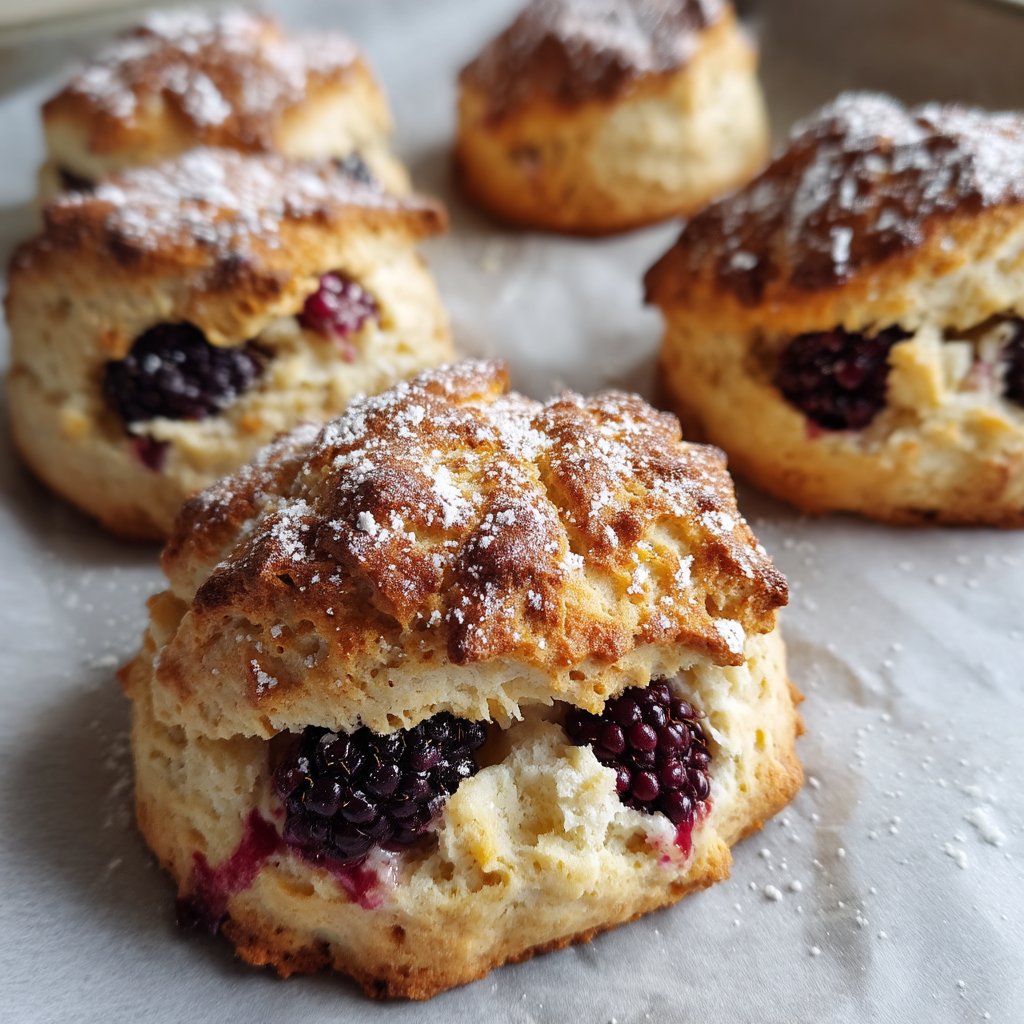
Warm, buttery edges give way to a tender, slightly crumbly center, with juicy pops of blackberry and a gentle almond perfume that stays with you this is what a perfect morning should taste like when you bite into Blackberry Almond Scones with Coarse Sugar. The coarse sugar on top snaps softly under your teeth and sends little sparks of sweetness through the almond-scented crumb; when they come out of the oven the aroma fills the kitchen like a warm memory.
These scones have that classic comfort feel that brings family back to the kitchen. They’re easy to drop into a picnic basket, to serve at a casual brunch, or to place on the counter when company arrives. They pair beautifully with a simple bowl of soup, a fresh salad, or a plate of soft cheeses for a light supper. I often keep a card nearby for a favorite almond-blackberry cake I make on holidays if you like that, you’ll find these scones hit the same sweet spot for texture and flavor, and they’re wonderfully forgiving when you’re baking with friends or grandchildren. For a gentle reminder of those flavors, I keep a version of that cake recipe bookmarked at a blackberry almond cake with crunchy sugar.
This particular version is simple and foolproof, made to be approachable whether you’re an old hand at baking or stepping back into the kitchen after a long break. The steps are straightforward: keep the butter cold, mix until the dough just comes together, and don’t fuss with the berries. I’ll show you the easy parts and point out what’s most satisfying the crack of coarse sugar on the top and the way the scones look when they’re golden and slightly split. If you enjoy hands-on baking that rewards you with comforting results, you’ll love this recipe.
Why this recipe works
There are a few small techniques and ingredient choices that make these scones reliably delicious, and understanding them will help you get consistent results every time. Texture is the star here: cold butter cut into the flour creates tiny pockets of fat. When the scones bake, those pockets melt and leave behind flaky layers. Using 1 tablespoon of baking powder gives a gentle lift, so these scones puff up without becoming cake-like. The 1/3 cup sugar in the dough balances the tartness of the berries without making the scones overly sweet, and the 1/4 teaspoon salt brightens the flavors so the almond and blackberry notes come through.
The almond milk and 1 teaspoon almond extract work together to give subtle almond flavor and just enough moisture. Almond milk keeps the dough slightly lighter than whole dairy might, and the extract is more aromatic than heavy; together they pair beautifully with real berries. Blackberries are juicy and tender; folding them in gently preserves their shape so they burst in little pockets through the scone instead of turning the whole dough purple. The coarse sugar sprinkled on top does more than add sweetness it creates a pleasant crunch that contrasts with the tender interior.
Ease of cooking is another reason this recipe works for busy mornings or relaxed gatherings. The ingredients are pantry-friendly, and the method is forgiving: you cut in butter until the mixture looks like coarse crumbs, stir in liquid until the dough just holds, and pat it out. You don’t need a stand mixer. Because the butter stays cold and the dough isn’t overworked, you’ll consistently get scones that are tender and flaky rather than tough. That satisfying balance of crisp top, crumbly edges, and tender center is why these simple techniques yield scones everyone will reach for.
How to prepare Blackberry Almond Scones with Coarse Sugar
Start by keeping your butter very cold. Chop it into small cubes and return it to the fridge while you measure the dry ingredients. When you cut the butter into the flour and sugar, pay attention to the texture aim for coarse crumbs and a handful of pea-sized butter bits. That’s where the flaky texture comes from. Stir in the almond milk and almond extract just until the dough begins to come together. It will be slightly shaggy; that’s perfect.
Gently fold in the blackberries to keep them intact. The most satisfying part of the process is patting the dough into a round and seeing the berries peek through the surface. Sprinkle the coarse sugar right before baking so it stays crunchy. Baking for 15–20 minutes gives golden edges and a soft center. Let the scones cool a bit so they set properly; the coarse sugar will still have a lovely crack when you bite in. This hands-on approach is quick and soothing, and the visual payoff sparkling sugar, golden tops, and little jewel-like berries is worth every minute.
Ingredients
- 2 cups all-purpose flour
- 1/3 cup sugar
- 1 tablespoon baking powder
- 1/4 teaspoon salt
- 1/2 cup cold butter, cubed
- 1/2 cup almond milk
- 1 teaspoon almond extract
- 1 cup blackberries
- 1/4 cup coarse sugar for topping

Instructions
- Preheat oven to 400°F (200°C).
- Line a baking sheet with parchment paper.
- In a bowl, mix flour, sugar, baking powder, and salt.
- Cut in butter until mixture resembles coarse crumbs.
- Stir in milk and almond extract until just combined.
- Gently fold in blackberries.
- Turn dough onto a floured surface and pat into a 1-inch thick round.
- Cut into wedges and place on baking sheet.
- Sprinkle coarse sugar on top.
- Bake for 15-20 minutes or until golden.
- Let cool before serving.
Serving ideas
- A bowl of warm tomato or vegetable soup makes a cozy, savory pairing that contrasts nicely with the sweet scones.
- A simple green salad with a light vinaigrette keeps the meal fresh and bright alongside the almond-scented pastries.
- A small dish of yogurt or clotted cream with a spoonful of jam lets guests customize each bite.
For drinks, a pot of Earl Grey or a nutty, gently brewed tea carries the almond notes without overpowering the fruit. If you prefer coffee, a light roast with a splash of warm milk complements the scones’ texture.
Storing this recipe
Store scones at room temperature in an airtight container for up to two days. If your kitchen is warm, pop them in the fridge in a sealed container; they’ll keep for up to three days chilled. For longer storage, freeze scones individually wrapped in parchment and then placed in a freezer bag this helps them keep their shape and prevents freezer burn. Frozen scones are best within two months.
To reheat, thaw at room temperature or microwave briefly for 10–15 seconds to warm. For a crisp top, warm the scones in a 300°F oven for 5–8 minutes; the lower oven heat helps them warm through without drying out. If you froze them unbaked, bake from frozen adding a few extra minutes to the bake time.
Helpful tips
Keep the butter cold and work quickly. One of the most common mistakes is letting the butter soften too much before mixing. Cold butter creates steam as it melts in the oven, which lifts the dough and gives those flaky layers. If you find your kitchen is warm, pop the measured butter back in the fridge for a few minutes before cutting it in. Use a box grater to grate frozen butter directly into the flour for speed and minimal handling.
Don’t overmix the dough. Overworking develops gluten and yields tough scones. Stir the wet ingredients in until the dough just comes together. It will look a little shaggy that’s correct. When you transfer the dough to your work surface, fold it gently and pat it into a round without aggressive kneading. If you need to gather stray crumbs, press them together lightly rather than kneading.
Handle the berries with care. Blackberries are delicate and can bleed into the dough if crushed. Gently fold them in with a silicone spatula or use your hands very lightly. If you’re using very ripe berries, consider tossing them in a tablespoon of flour before folding them in this helps absorb excess juice and keeps the dough from becoming overly wet.
Watch your oven and the coarse sugar. The coarse sugar on top should remain sparkly and add crunch; it also browns quickly. Position your scones on the middle rack and remove them when the tops are golden and the edges show a deeper tan. Baking times can vary with ovens, so start checking a few minutes before the lower end of the recommended time.
Adjusting for altitude or humidity. If you live in a humid area, flour can absorb moisture, so you may need a touch more flour to keep the dough from being too sticky. Conversely, in very dry climates, a tablespoon extra almond milk can help. Keep notes after your first batch so you can make small tweaks the next time.
These practical tips reduce the chance of soggy bottoms, flat scones, or crushed berries, and they’ll help you make beautiful, tender scones every time. With a little practice you’ll find the rhythm of the recipe cold butter, quick mixing, gentle folding and it becomes a lovely ritual.
Recipe variations
- Lemon-Blueberry: Swap blackberries for blueberries and add 1 teaspoon lemon zest to the dough for a bright twist.
- Almond Streusel Top: Mix 2 tablespoons softened butter with 2 tablespoons brown sugar and 2 tablespoons flour, crumble over scones before baking for a crisp streusel finish.
- Ginger-Orange: Add 1/2 teaspoon ground ginger and 1 teaspoon orange zest to the dough and use raspberries instead of blackberries for a spice-forward version.
Common questions
Q: Can I use frozen blackberries?
A: Yes. Toss frozen berries in a little flour to prevent bleeding, fold them into the dough gently, and bake straight from frozen; you may need an extra minute or two in the oven.
Q: Can I make these dairy-free?
A: The recipe already uses almond milk and can be made dairy-free by ensuring the butter substitute is firm and cold and suitable for baking. Stick to a block-style vegan butter for best flaky results.
Q: How can I prevent the scones from getting soggy?
A: Keep the butter cold, don’t overmix, and fold in berries gently. Also, drain any overly juicy berries on a paper towel briefly before folding them in.
Q: What’s a good coarse sugar substitute?
A: If you don’t have coarse sugar, use raw cane sugar or turbinado sugar. They provide similar crunch and sparkle on top.
Conclusion
Make a batch on a slow morning and let the house fill with the scent of almonds and warm berries; you’ll soon see why friends and family come back for a second. For a variation from another cook’s table and extra inspiration, try this Recipe: Blackberry Almond Scones by Thomas – Farmer Bailey. These Blackberry Almond Scones with Coarse Sugar will remind you of cozy mornings and small, joyful rituals shared around the kitchen table.
Print
Blackberry Almond Scones with Coarse Sugar
- Total Time: 35 minutes
- Yield: 8 servings
- Diet: Vegetarian
Description
Delicious, tender scones filled with juicy blackberries and flavored with almond, topped with crunchy coarse sugar.
Ingredients
- 2 cups all-purpose flour
- 1/3 cup sugar
- 1 tablespoon baking powder
- 1/4 teaspoon salt
- 1/2 cup cold butter, cubed
- 1/2 cup almond milk
- 1 teaspoon almond extract
- 1 cup blackberries
- 1/4 cup coarse sugar for topping
Instructions
- Preheat oven to 400°F (200°C).
- Line a baking sheet with parchment paper.
- In a bowl, mix flour, sugar, baking powder, and salt.
- Cut in butter until mixture resembles coarse crumbs.
- Stir in milk and almond extract until just combined.
- Gently fold in blackberries.
- Turn dough onto a floured surface and pat into a 1-inch thick round.
- Cut into wedges and place on baking sheet.
- Sprinkle coarse sugar on top.
- Bake for 15-20 minutes or until golden.
- Let cool before serving.
Notes
Store scones at room temperature in an airtight container for up to two days. For longer storage, freeze scones individually wrapped. Reheat by thawing or warming in the oven.
- Prep Time: 15 minutes
- Cook Time: 20 minutes
- Category: Baked Goods
- Method: Baking
- Cuisine: American