
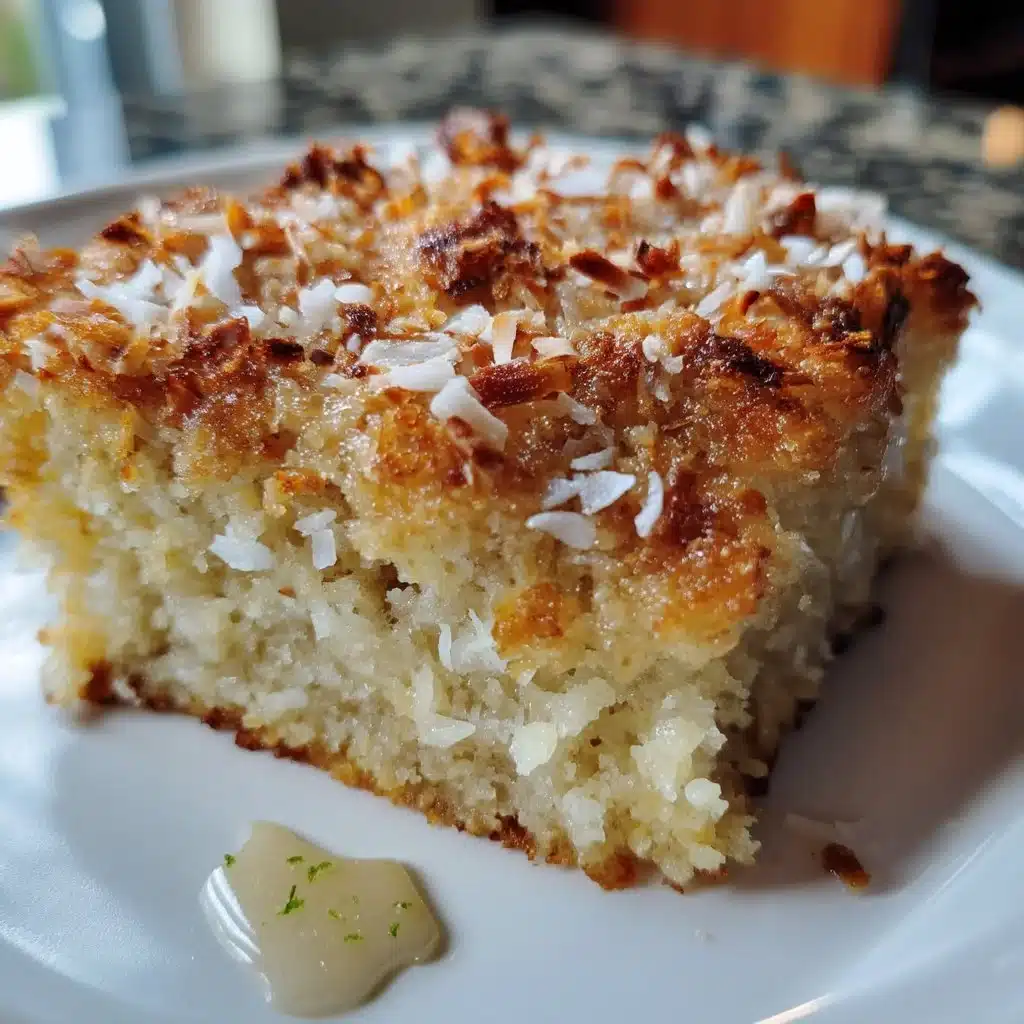
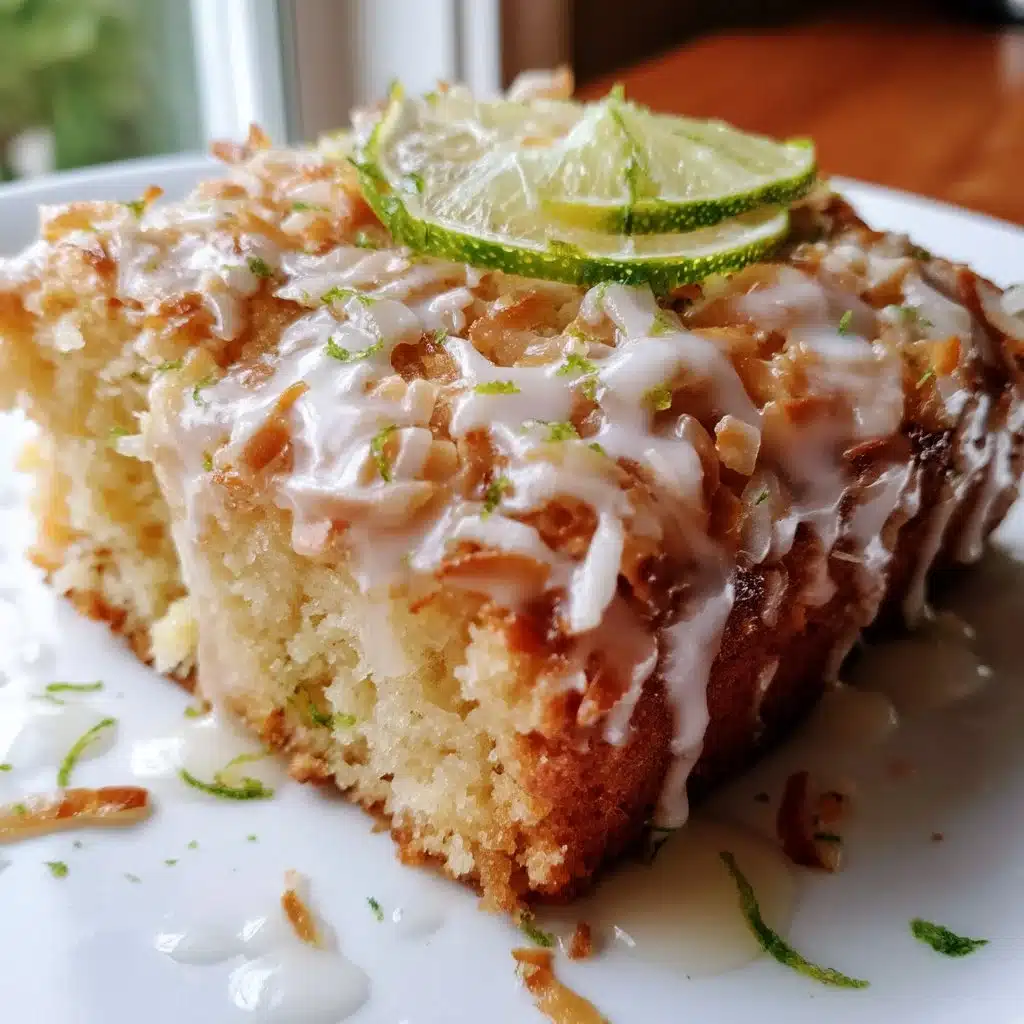
The first bite is a bright, buttery hush the cake gives way with a tender crumb, flecked with crisp toasted coconut that crackles softly against the lime-scented glaze. Toasted Coconut Snack Cake with Lime Glaze carries the scent of warm butter and fresh citrus through the kitchen, the toasted coconut lending a toasty, almost caramel note that plays beautifully against the zing of lime juice and zest. The glaze sits thin and glossy on top, soaking into the top layer just enough to keep each slice moist and singing with flavor.
This is the sort of comfort food that feels like a family hug on a plate: simple enough to make on a weeknight and special enough to bring to a potluck or holiday table. It’s the cake that your sister will ask for by name, the one you’ll serve beside a bowl of soup or a steaming pot of tea on a cool afternoon. The combination of tender cake and crunchy coconut makes it versatile it stands up to bright salads, creamy puddings, or a warm fruit compote. If you enjoy citrus-forward desserts, you might also find pleasure in the bright almond and lemon contrasts of a nearby recipe I love, which you can see here: almond lemon ricotta cake with lemon glaze.
This version is genuinely simple and foolproof, designed so you can focus on the parts that feel the most satisfying creaming butter and sugar until pale, folding coconut into flour, and watching that thin glaze bead and seep into the cake. I’ll walk you through clear steps and share a few warm tips to avoid pitfalls, so even if you haven’t baked in a while you’ll finish with a cake that tastes like it’s been made a hundred times. The recipe is forgiving: the batter comes together quickly and the baking window is short, which means you’ll have that house-filling aroma in under an hour. One small note before we move on if you want another citrusy, tender option, take a look at this link for inspiration: almond lemon ricotta cake with lemon glaze.
Why this recipe works
There’s a comforting logic to why this cake turns out so reliably: the balance of fat, sugar, and moisture is just right for a tender crumb that still holds the textural contrast of toasted coconut. The butter provides richness and a fine structure when creamed with sugar; that step traps tiny air bubbles which expand in the oven to give lift. Eggs act as binders and add moisture and richness, while the milk keeps the batter supple so the cake doesn’t dry out during baking. Because we use a modest amount of baking powder just one teaspoon the rise is steady and gentle, lending a close, tender crumb rather than a coarse, airy one. That texture is what lets the toasted coconut stand out: you want little pockets of crunchy, nutty coconut distributed through a soft cake, not dispersed into a cake that’s too airy or fragile.
Toasted coconut works in two ways here: flavor and texture. Toasting removes the raw, sometimes bland edge of shredded coconut and brings forward deeper, almost nutty flavors that play beautifully with lime. It also dries the coconut slightly so it stays crisp through mixing and baking instead of becoming soggy. Folding the coconut into the dry ingredients prevents overmixing the batter while ensuring even distribution; when added this way, you avoid collapsing the cake’s lift and keep those jewel-like flecks of coconut visible in each slice.
The lime does the heavy lifting for freshness. Lime zest contains aromatic oils that perfume the batter without adding acidity; a light lime juice glaze finishes the cake with a bright, tangy edge that cuts through the buttery richness. Powdered sugar in the glaze dissolves smoothly and sets to a sheen, and the tiny bit of liquid we add is just enough to pour and trickle into the top crumb. Because the glaze is thin, it soaks partially into the surface and locks in moisture, which means even a day later the cake stays soft and appealing.
Beyond chemistry, this recipe works because it embraces ease. The ingredients are common pantry staples for most kitchens, and the steps are straightforward: cream, add eggs, stir in dry ingredients and coconut, bake, and glaze. There’s no need for special equipment or techniques, which is a relief when you want a reliable dessert that still tastes like love.
How to prepare Toasted Coconut Snack Cake with Lime Glaze
The most satisfying part of making this cake is the toasting and the moment the glaze meets the warm top. Toasting the coconut fills the kitchen with that irresistible, toasty scent; keep a close eye so it doesn’t brown too far. When the cake comes out, spreading the lime glaze while it’s slightly warm lets it sink in and shine, making each slice irresistibly glossy. Work simply: measure your ingredients, toast the coconut until lightly golden, cream butter and sugar until pale, then add eggs and the lime flavor. Fold the coconut into the flour mixture and pour into a prepared pan. Bake until a toothpick comes out clean and the top is lightly golden. After it cools a bit, whisk the powdered sugar and lime juice until smooth and pour over. Let it set before cutting. The steps are short, the payoff is big, and you’ll find the process comforting like following a familiar rhythm in the kitchen.
Ingredients
- 1 cup shredded coconut, toasted
- 1 1/2 cups all-purpose flour
- 1 cup granulated sugar
- 1/2 cup unsalted butter, softened
- 2 large eggs
- 1 teaspoon vanilla extract
- 1 teaspoon baking powder
- 1/2 teaspoon salt
- 1/2 cup milk
- Zest of 1 lime
- Juice of 1 lime
- 1 cup powdered sugar
Instructions
- Preheat your oven to 350°F (175°C).
- Grease and flour an 8-inch square baking pan.
- In a bowl, cream together butter and sugar until light and fluffy.
- Add eggs one at a time.
- Mix after each addition.
- Stir in vanilla, lime zest, and milk.
- In a separate bowl, combine flour, baking powder, and salt.
- Add toasted coconut to the dry mixture.
- Gradually add dry ingredients to the wet mixture.
- Mix until just combined.
- Pour batter into the prepared baking pan.
- Smooth the top.
- Bake for 25–30 minutes.
- Insert a toothpick to check: it should come out clean.
- Let cake cool in the pan.
- For the glaze, whisk together powdered sugar and lime juice until smooth.
- Pour over the cooled cake.
- Allow glaze to set before serving.
Serving ideas
This cake is lovely on its own, but here are a few simple pairings that make it feel like a small celebration:
- A light mixed green salad with citrus segments and toasted almonds.
- A bowl of warm fruit compote, such as stewed berries or peaches.
- A spoonful of vanilla yogurt or a dollop of whipped cream for an extra indulgence.
For drinks, pair the cake with hot tea jasmine or a mild black tea works wonderfully or a tall glass of cold milk for a nostalgic comfort feel. In warmer months, a lightly sweetened iced tea with a slice of lime echoes the cake’s citrus notes without overwhelming the palate.
Storing this recipe
Store the cake at room temperature, covered lightly with plastic wrap or a cake dome, for up to two days to keep the crumb soft. If your kitchen is warm or humid, refrigeration will help: keep it in an airtight container in the fridge for up to five days. Before serving refrigerated slices, bring them to room temperature for more of that melt-in-the-mouth texture, or let them sit for 20–30 minutes.
For longer storage, you can freeze the whole cake or individual slices. Wrap tightly in plastic wrap and then foil, or place slices in airtight freezer bags. Freeze for up to three months. To thaw, move the wrapped cake to the refrigerator overnight and then bring to room temperature before serving; for a quicker thaw, leave slices at room temperature for an hour. If you like the glaze fresh and shiny, wait to add it until after thawing; otherwise, the glaze will set during freezing and may crack slightly.
When reheating a chilled slice, warm it gently in a low oven (300°F) for 6–8 minutes or in the microwave for 10–15 seconds on medium power just enough to soften, not melt the glaze. These simple storage steps help the cake keep its texture and flavor through several sittings.
Helpful tips
Avoid overmixing. Once you combine the wet and dry ingredients, stir only until the flour is incorporated. Overmixing develops gluten and can lead to a tough cake. Gentle folding preserves the tender crumb while ensuring the toasted coconut is evenly distributed. Use a rubber spatula and scrape the sides and bottom of the bowl so everything is combined without vigorous stirring.
Toast the coconut carefully. Coconut can go from golden to burned in moments, so stay attentive. Spread it in a single layer on a baking sheet and toast in a 325°F oven, stirring once or twice, until it’s a light golden color. If you prefer stovetop toasting, use a dry skillet over medium-low heat and move the coconut around frequently. The aroma will tell you it’s done; stop once the scent is warm and nutty.
Let the cake cool just the right amount before glazing. If the cake is too hot, the glaze will run off and become very thin; if it’s too cool, the glaze will sit heavily on top and not seep in. Aim to glaze when the cake is warm but not hot about 15–20 minutes after coming out of the oven. Whisk the powdered sugar and lime juice until smooth, then pour slowly, letting it spread naturally.
Measure with care. Spoon flour into your measuring cup and level it off with a knife rather than scooping directly from the bag; that avoids packing in too much flour which can dry the cake. Softened butter should yield slightly when pressed but still hold its shape. If your butter is too warm, chill it briefly; if it’s too cold, it won’t cream properly.
Make-ahead options. You can toast the coconut and zest the lime a day ahead to save time. The batter can be assembled and kept covered in the fridge for a few hours before baking, though return it to room temperature for best rising. The glaze is best made just before serving for the brightest flavor.
These small practices protect the texture and keep the flavors bright, so every slice feels like something you’d happily serve to family and friends.
Recipe variations
Add fresh berries: Fold 3/4 cup of halved fresh strawberries or blueberries into the batter gently for a fruity twist. The berries add moisture and bursts of flavor that play well with lime.
Coconut-lime bars: Press the batter into a slightly larger, rimmed pan for thinner bars and bake a little less time. Cut into squares for a hand-held treat that’s perfect for picnics.
Toasted nut topping: Sprinkle a handful of toasted macadamia nuts or chopped cashews over the glaze while it’s wet for extra crunch and a tropical feel.
Frequently asked questions
Q: Can I use sweetened shredded coconut instead of unsweetened?
A: Yes, you can, but reduce the granulated sugar by about 2 tablespoons to balance the extra sweetness. Sweetened coconut will brown more quickly during toasting, so watch it closely.
Q: My glaze is too thin how can I fix it?
A: Add more powdered sugar, a tablespoon at a time, whisking until the glaze thickens to a pourable but not runny consistency. If it’s too thick, add a drop more lime juice or a little water.
Q: Can I make this cake gluten-free?
A: Substitute a 1:1 gluten-free baking flour that includes xanthan gum and follow the recipe as written. Texture may vary slightly, but the cake should still be tender and delicious.
Q: How do I prevent the coconut from sinking to the bottom?
A: Toss the toasted coconut with a tablespoon of the flour from the recipe before folding it into the batter. This light coating helps suspend the coconut throughout the cake rather than letting it drop to the pan’s bottom.
Conclusion
This cake is a gentle reminder that simple ingredients can make a special moment a tender, buttery slice flecked with toasted coconut and kissed by lime. If you’d like inspiration for a loaf-style cousin to this cake that also uses coconut and lime, I found a lovely example of a coconut-lime banana loaf you can read about here: a coconut-lime banana bread with lime glaze and toasted coconut. Serve your Toasted Coconut Snack Cake with Lime Glaze warm or at room temperature, and enjoy the way small, thoughtful steps in the kitchen turn into memories at the table.
PrintToasted Coconut Snack Cake with Lime Glaze
- Total Time: 45 minutes
- Yield: 8 servings
- Diet: Vegetarian
Description
This cake features a moist, tender crumb with toasted coconut and a bright lime glaze, perfect for any occasion.
Ingredients
- 1 cup shredded coconut, toasted
- 1 1/2 cups all-purpose flour
- 1 cup granulated sugar
- 1/2 cup unsalted butter, softened
- 2 large eggs
- 1 teaspoon vanilla extract
- 1 teaspoon baking powder
- 1/2 teaspoon salt
- 1/2 cup milk
- Zest of 1 lime
- Juice of 1 lime
- 1 cup powdered sugar
Instructions
- Preheat your oven to 350°F (175°C).
- Grease and flour an 8-inch square baking pan.
- Cream together butter and sugar until light and fluffy.
- Add eggs one at a time, mixing after each addition.
- Stir in vanilla, lime zest, and milk.
- Combine flour, baking powder, and salt in a separate bowl.
- Add toasted coconut to the dry mixture.
- Gradually add dry ingredients to the wet mixture, mixing until just combined.
- Pour batter into the prepared baking pan and smooth the top.
- Bake for 25–30 minutes or until a toothpick comes out clean.
- Let the cake cool in the pan.
- Whisk together powdered sugar and lime juice until smooth for the glaze.
- Pour the glaze over the cooled cake and allow it to set before serving.
Notes
Avoid overmixing to keep the cake tender. Glaze while the cake is still warm for best results.
- Prep Time: 15 minutes
- Cook Time: 30 minutes
- Category: Dessert
- Method: Baking
- Cuisine: American