
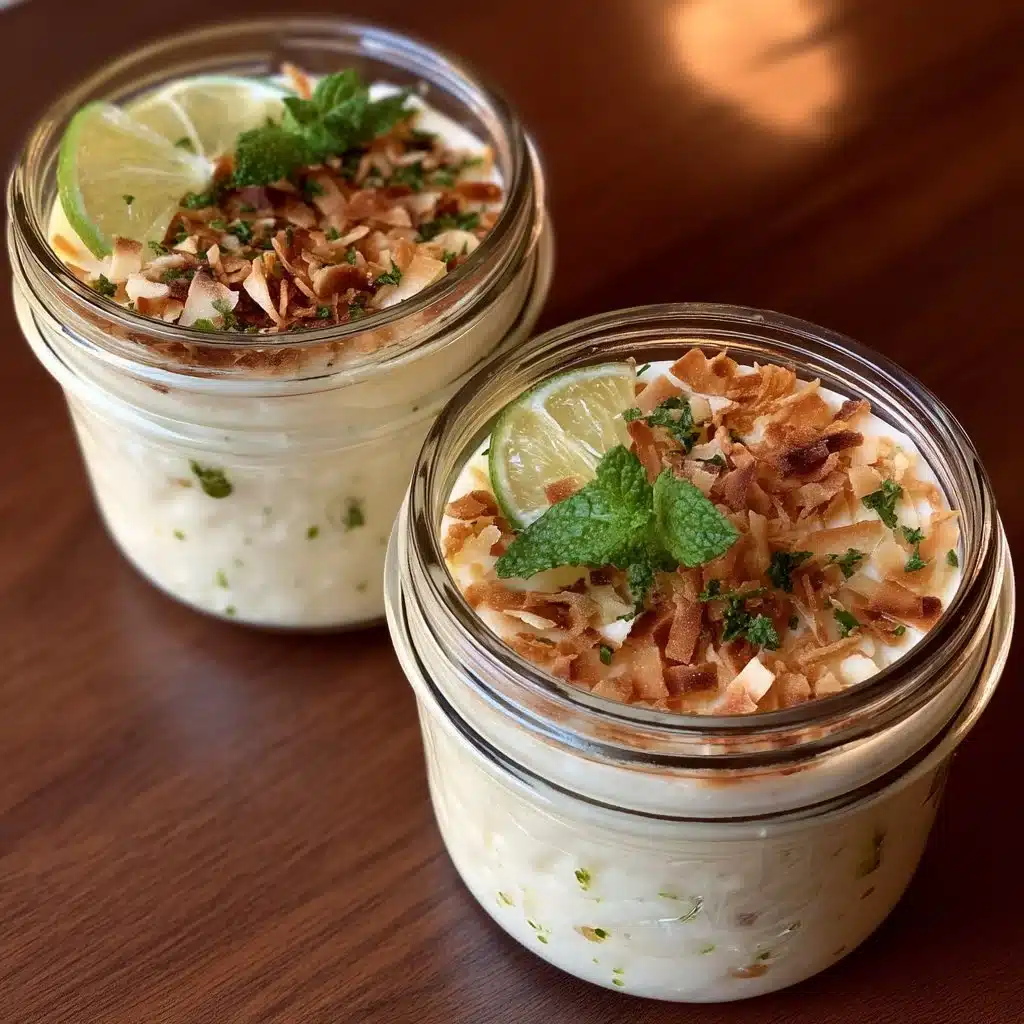
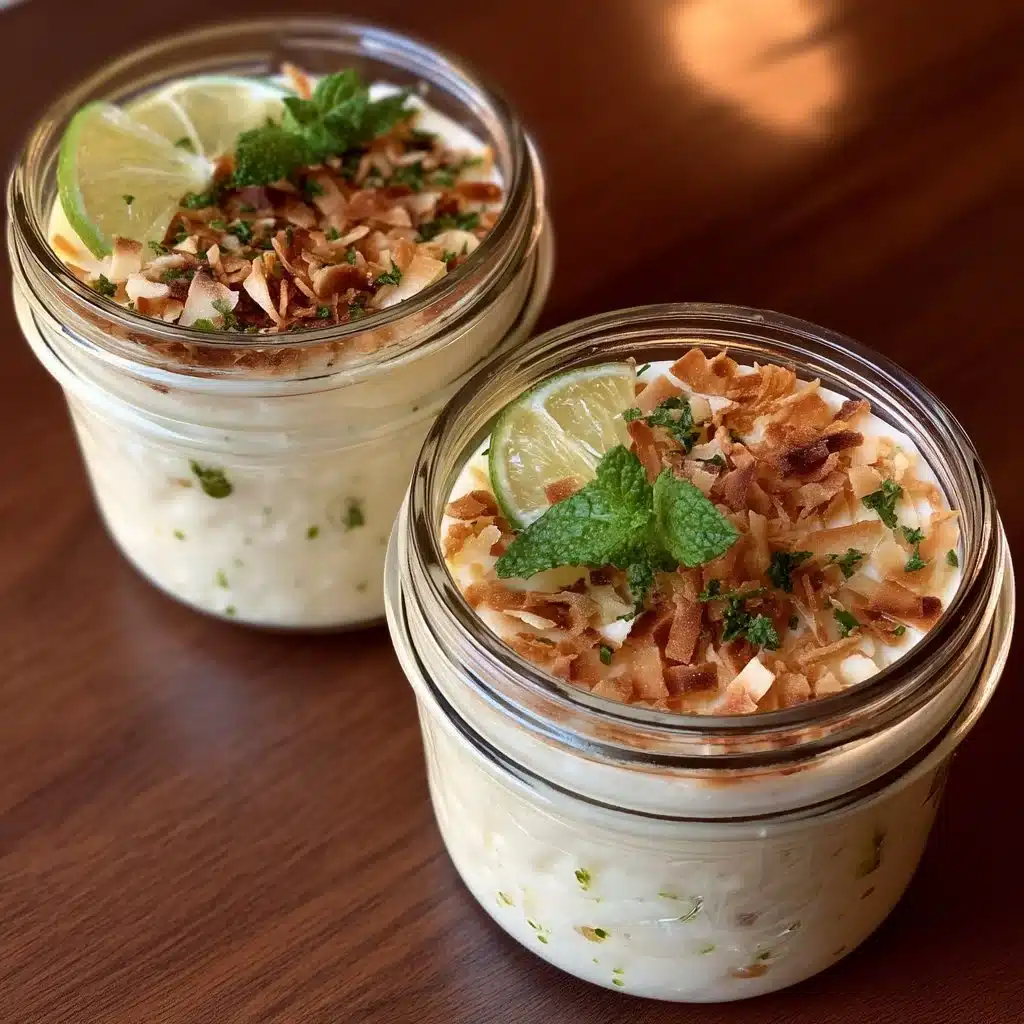
The first spoonful is all velvet and sun: cool, creamy pudding scented with toasted coconut and bright lime, a balance of soft richness and a tiny, crunchy surprise. Toasted Coconut Pudding Jars with Lime Sugar sings of warm afternoons on the porch, the kind of dessert that smells like coconut oil and citrus zest and slips easily into a memory. A gentle lime drizzle adds a whisper of tang that cuts through the sweetness and wakes up the toasted flakes. If you enjoy jar desserts, this one sits comfortably next to those favorite treats in the pantry and makes a fine finish to a simple supper; it’s the kind of thing you can tuck into the fridge ahead of a family visit and pull out when everyone’s ready for something sweet. Jar desserts have that homely charm, and these puddings wear theirs with a little sparkle.
This is classic comfort food at its most unpretentious. It’s creamy and cozy like a bowl of warm rice pudding, but chilled and bright, so it works just as well after a summer barbecue as it does for a holiday potluck. The texture is what makes people sigh: the pudding is smooth and yielding, the toasted coconut brings a toasty chew, and the lime sugar finishes each bite with a fine, citrusy pearl. When family gathers, you want desserts that are forgiving, that can sit in the fridge and not lose their charm. These jars travel well to a picnic, can be arranged at the center of a buffet, or tucked into individual servings for relatives who love portion control. Pair it with a simple fruit plate, a bowl of soup earlier in the meal, or a light salad. It’s especially kind to hands that have done the cooking all day you can assemble most of it at once and relax while it sets.
This version is simple and truly foolproof. The thickening comes from cornstarch, which means no eggs to temper and no delicate curds to fuss with. Everything is done in one pan and then spooned into jars. The lime sugar is quick: mix, wait for it to melt into a glossy syrup, and drizzle. If you’ve made pudding before, this will feel familiar. If you haven’t, it’s a gentle place to start read the steps, keep stirring, and you’ll have a reliable dessert that looks like you worked harder than you did.
Why this recipe works
The magic here is all about texture and straightforward technique. A pudding has to be silky without being runny, and that’s where the cornstarch plays its role. Cornstarch swells as it heats with the milks and sugar, forming a smooth, stable gel that sets when cooled. The mix of coconut milk and whole milk gives a lovely mid-weight body. Coconut milk brings fat and a subtle flavor that pairs naturally with toasted coconut flakes, while whole milk keeps the mouthfeel light enough so the lime notes can sing. Together they create a pudding that’s rich but not cloying.
Toasted coconut flakes add contrast. If you served the pudding without any toasted pieces, it would be delicious but one-note. Toasting brings a nutty depth and a crispness that survives in the fridge for a day or two. When folded in just before the pudding is poured, the flakes keep some bite instead of turning completely soft. The lime rind and lime sugar are small but crucial components. Lime zest releases essential oils that perfume the pudding. A little zest mixed into the warm pudding gives a gentle citrus brightness throughout, while the lime sugar poured on top concentrates the tart-sweet hit at the finale of each spoonful. That bright finish keeps the dessert feeling light and fresh.
The cooking technique is intentionally forgiving. Heat the milk mixture slowly and stir so the cornstarch hydrates and thickens evenly. Over-high heat risks lumps or scorching, but patient stirring yields a glossy, lump-free custard. The timing is short; once the pudding thickens, remove it from heat and stir in vanilla and zest. Folding in the toasted coconut at the end preserves texture. Because there are no eggs to curdle and no long baking times, this recipe is excellent for cooks who want reliable results with minimal risk. If you want a nearby, citrus-forward dessert to complement a coffee or tea service, or a lighter finale after a rich main, these jars fit the bill. If you enjoy a citrus-baked loaf for company, try a slice of coconut lemon loaf with glaze on another afternoon; the same bright notes work beautifully across desserts.
How to prepare Toasted Coconut Pudding Jars with Lime Sugar
Start by gathering everything. Measure the milks, sugar, cornstarch, and lime items so you aren’t hunting while the pudding thickens. Toast the coconut flakes first. They only take a few minutes in a dry skillet over medium heat, and you’ll know they’re ready when they’re golden and fragrant.
The most satisfying part is stirring that milk mixture as it comes together. There’s something calming about watching a pot move from liquid to silk. Mix until smooth, watch it thicken, and then fold in the toasted coconut so you get those little pockets of chew. Pouring into jars feels like wrapping up the work: little glass lids, a ribbon if you’re gifting, and a pale green drizzle on top that makes everything look finished. Chill until set. When it’s time to serve, a quick swirl of lime sugar turns the surface into a glossy, shimmering crown.
Ingredients
- 1 cup coconut milk
- 1 cup whole milk
- 1/2 cup sugar
- 1/4 cup cornstarch
- 1/4 teaspoon salt
- 1 teaspoon vanilla extract
- 1/2 cup toasted coconut flakes
- Juice and zest of 1 lime
- 2 tablespoons granulated sugar (for lime sugar)
Instructions
- In a saucepan, combine the coconut milk and whole milk. Add the sugar, cornstarch, and salt.
- Mix well. Cook over medium heat. Stir constantly.
- Continue cooking until the mixture thickens. Do not walk away.
- Remove from heat. Stir in the vanilla extract. Stir in the zest of lime.
- Once cooled slightly, fold in the toasted coconut flakes. Do this gently.
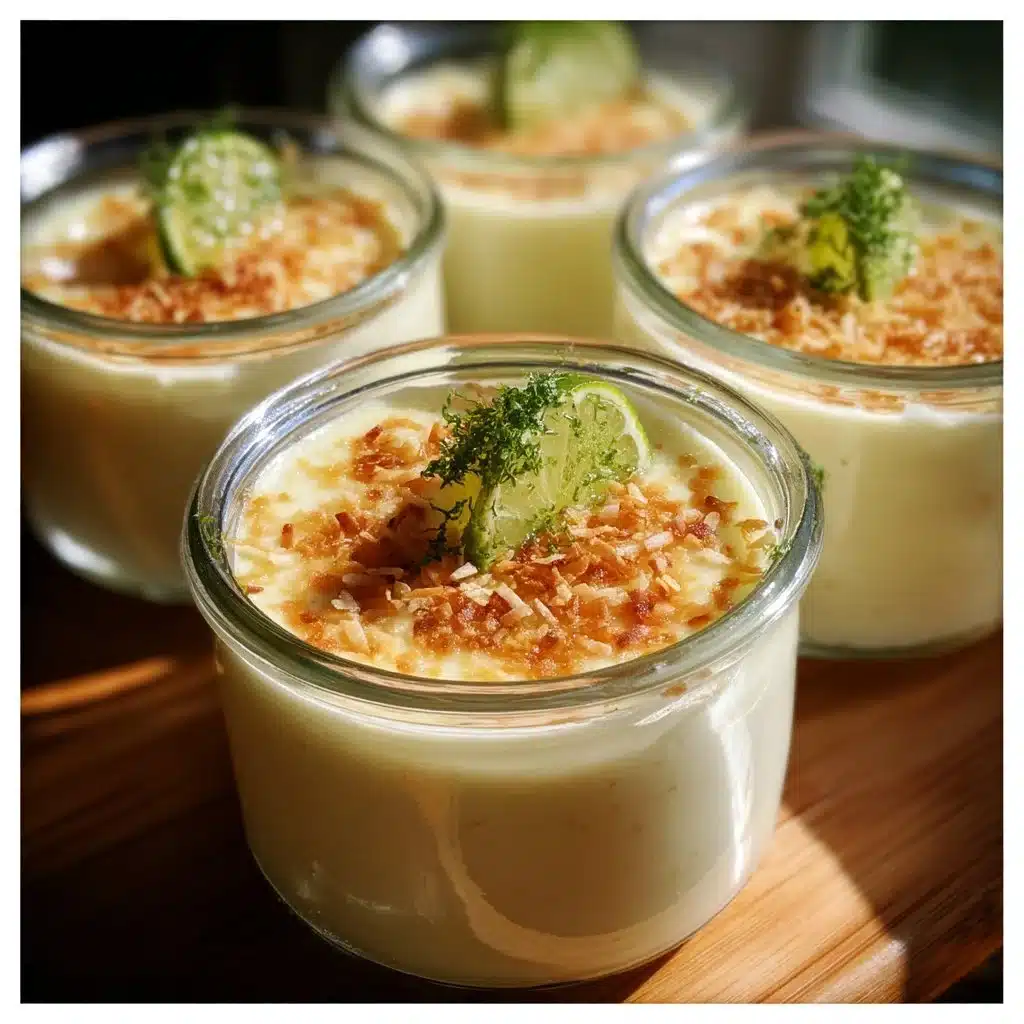
- Pour the pudding into jars. Refrigerate until set.
- For the lime sugar, mix lime juice with granulated sugar. Stir until dissolved.
- Before serving, drizzle lime sugar over the puddings.
Serving ideas
Try pairing these puddings with:
- A fresh fruit salad of mango, berries, or sliced pineapple.
- A light green salad with a citrus vinaigrette to contrast the sweet finish.
- A cheese plate with mild, creamy cheeses and crackers.
For drinks, a jasmine tea or a cold glass of milk keeps things homey. If you’re leaning into the citrus, an iced green tea with lemon makes a bright companion.
Storing this recipe
These puddings keep well in the refrigerator for about 3 to 4 days. Keep them covered with lids or plastic wrap to prevent the coconut from absorbing other flavors in the fridge. Freezing is possible but not ideal; cornstarch-thickened puddings can separate when thawed, forming a grainy texture. If you must freeze, leave jars slightly unfilled to allow for expansion and thaw slowly in the refrigerator overnight, then whisk gently before serving to recombine any separated liquid.
When reheating, warm only gently. You can spoon pudding into a small pot and heat on low, stirring constantly until just warmed through. Do not bring to a boil, as that can thin the set. If the pudding has softened too much, a light whisk over low heat will bring some body back. For individual servings, remove from the fridge about 10 minutes before serving so the flavors open and the lime sugar softens slightly.
Helpful tips
Keep a close eye on the heat. Cornstarch thickens quickly once it reaches the right temperature, and high heat can cause the mixture to seize or thicken unevenly. Start on medium and lower the heat if the pudding seems to be bubbling aggressively. Stirring constantly is less about hard work and more about steady attention this is how you get a glossy finish without lumps. Use a rubber spatula or a wooden spoon and stir in a figure-eight motion to sweep the bottom of the pan.
Toast the coconut carefully. Coconut goes from golden to burnt very fast, so stay nearby when it’s in the skillet. Spread flakes in an even layer over a dry, warm pan and stir every 30 seconds. When the flakes smell toasty and take on a light brown edge, remove them at once. Cooling them on a plate stops the carryover cooking. Fold them into the pudding only after it has cooled slightly; if you add them while the pudding is very hot, they will soften too much and lose their crunch.
Balance the lime. The lime zest and lime sugar are the bright notes that keep the pudding from feeling heavy. Use a microplane to zest only the colored outer layer of the lime; the white pith is bitter. Start with the zest of one lime, then taste. For the lime sugar, dissolve the granulated sugar in the lime juice and taste the syrup. If your family prefers sweeter desserts, add a touch more sugar. If you like the tart contrast, keep the syrup sharp. Always add the lime sugar at serving time so it sits as a bright top note rather than blending fully into the pudding.
These three tips help prevent common problems like grainy texture, burnt coconut, or a dessert that leans too sweet or bland. With a little attention you’ll find this recipe both forgiving and satisfying.
Recipe variations
- Make it dairy-free: Use full-fat coconut milk for both milks. Reduce cornstarch slightly if the pudding becomes too thick.
- Add fruit compote: Spoon a thin layer of warm mango or pineapple compote into the jars before pouring the pudding for a fruity ribbon.
- Turn it into a parfait: Layer pudding with crushed cookies or toasted nuts and finish with lime sugar. Each bite will have contrasting textures.
Frequently asked questions
Q: Can I make this pudding ahead of time?
A: Yes. Prepare the pudding and refrigerate in jars up to three days. Wait to add the lime sugar until just before serving for the brightest flavor.
Q: Can I skip the toasted coconut?
A: You can, but toasting adds flavor and texture. If you skip it, consider stirring in a teaspoon of coconut extract for more coconut aroma.
Q: My pudding is lumpy. What went wrong?
A: Lumps often come from cornstarch not being mixed well into cold liquid or the mixture heating too quickly. Strain the pudding through a fine sieve while warm to remove lumps, then cool and stir until smooth.
Q: How should I adjust sugar for less sweetness?
A: Cut the sugar in the base by one-quarter to start and taste after it thickens. Remember the lime sugar adds sweetness too, so reduce that if you prefer tart.
Conclusion
These Toasted Coconut Pudding Jars with Lime Sugar are a gentle, satisfying dessert that’s easy to make, easy to love, and friendly for family gatherings. For a tropical cousin to these jars, you might enjoy a rich, fruity take like Coconut Mango Sago Pudding (Tapioca Pudding), which leans into mango and sago pearls for a different texture and flavor profile. Try making these jars for the next time you want a dessert that feels like a warm kitchen hug with a citrusy wink.
Print
Toasted Coconut Pudding Jars with Lime Sugar
- Total Time: 25 minutes
- Yield: 4 servings
- Diet: Vegetarian
Description
Cool, creamy pudding infused with toasted coconut and bright lime, perfect for family gatherings or a refreshing treat.
Ingredients
- 1 cup coconut milk
- 1 cup whole milk
- 1/2 cup sugar
- 1/4 cup cornstarch
- 1/4 teaspoon salt
- 1 teaspoon vanilla extract
- 1/2 cup toasted coconut flakes
- Juice and zest of 1 lime
- 2 tablespoons granulated sugar (for lime sugar)
Instructions
- In a saucepan, combine the coconut milk and whole milk. Add the sugar, cornstarch, and salt.
- Mix well. Cook over medium heat. Stir constantly.
- Continue cooking until the mixture thickens. Do not walk away.
- Remove from heat. Stir in the vanilla extract. Stir in the zest of lime.
- Once cooled slightly, fold in the toasted coconut flakes. Do this gently.
- Pour the pudding into jars. Refrigerate until set.
- For the lime sugar, mix lime juice with granulated sugar. Stir until dissolved.
- Before serving, drizzle lime sugar over the puddings.
Notes
These puddings can be stored in the refrigerator for 3 to 4 days.
- Prep Time: 15 minutes
- Cook Time: 10 minutes
- Category: Dessert
- Method: Stovetop
- Cuisine: Tropical