
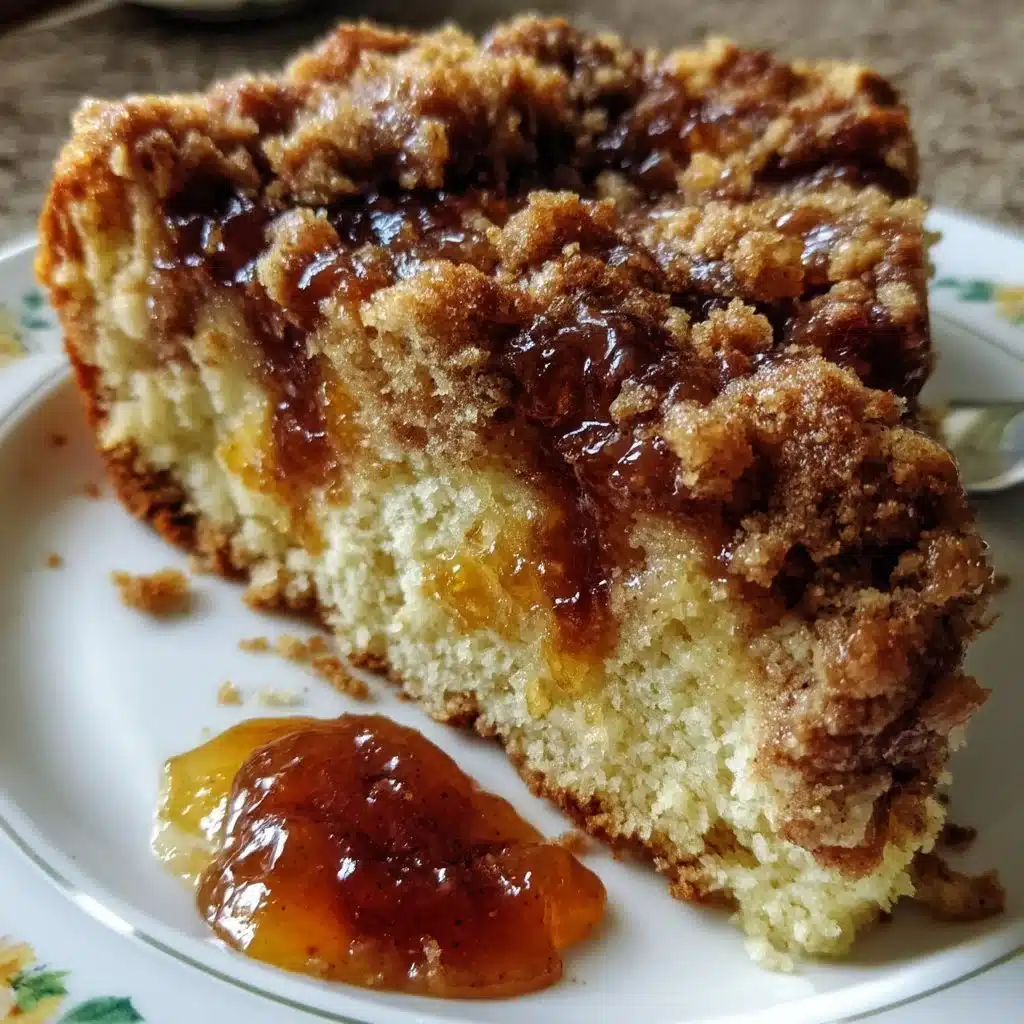
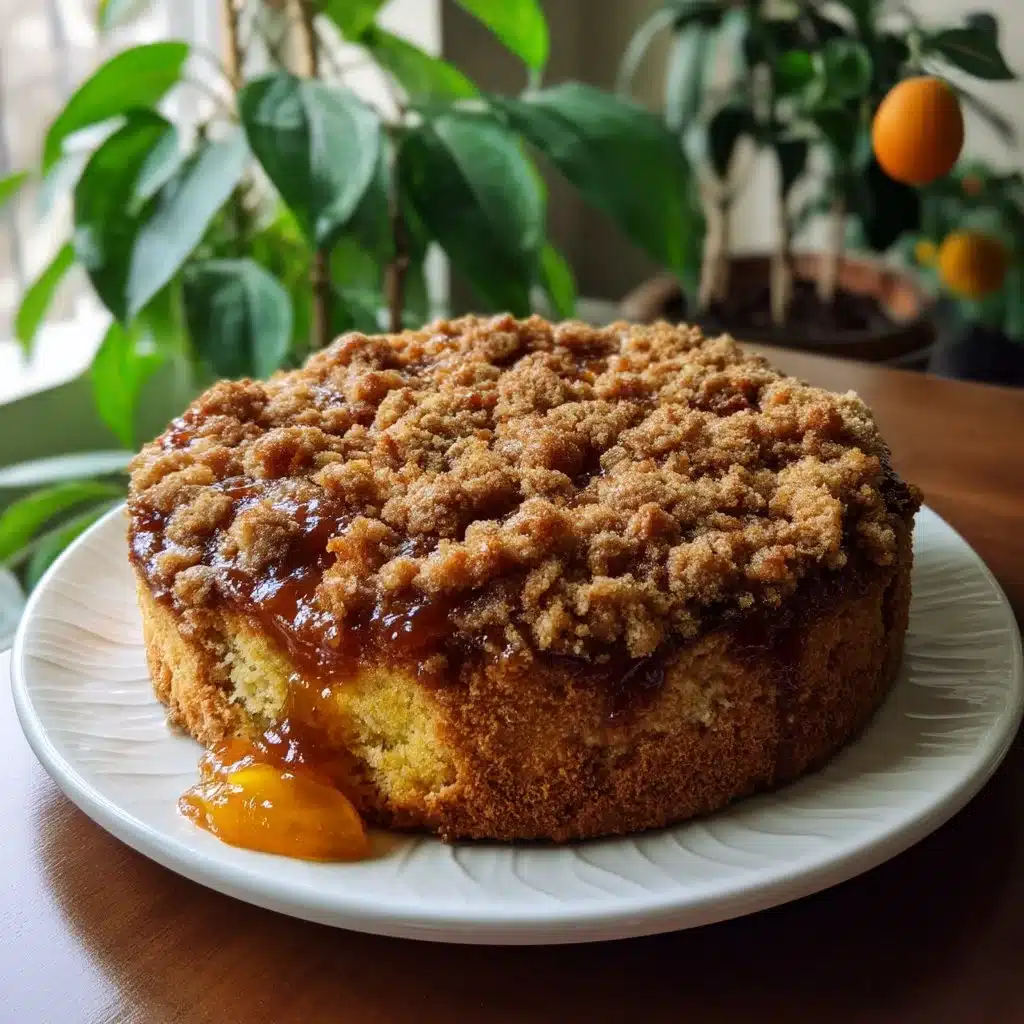
The warm scent of buttery cake folded with bright apricot notes fills the kitchen the moment this Apricot Jam Breakfast Cake with Crumb Topping comes out of the oven, and the first bite gives you slightly crisp crumbs, a soft, tender crumb beneath, and a sticky-sweet ribbon of jam that feels like a small celebration at the breakfast table. The top crackles just enough from the oat-studded crumb to invite a cup of tea, and the jam keeps the cake deliciously moist for days, so every slice feels like a kindly hug from your oven.
This is the sort of classic comfort food that gathers family around the table without fuss. It takes you back to simple weekend mornings when daughters came in with sleep-tousled hair and men lingered over second cups of coffee; it’s the sort of cake you can set out alongside a bowl of soup or a plate of fresh fruit and the conversation flows. The recipe is forgiving: it doesn’t demand perfect folding or exact timing, and you can easily scale it up for a crowd. If you want a bright counterpoint, try a slice of lemon cake on a separate plate, or keep things cozy with rolls and a pot of brewed tea. If you like a little extra zip, a thin lemon glaze complements the apricot sweetness well see a gentle citrus loaf like an almond lemon ricotta cake with lemon glaze for a companion dessert by following this link: almond lemon ricotta cake with lemon glaze.
This particular version is simple and foolproof, meant for mornings when you want homemade without a fuss. The batter comes together quickly, and the most rewarding part is spreading the jam and sprinkling the crumb a small, meditative act that makes the cake feel special. It’s perfect for potlucks, school events, or an unhurried Sunday where friends drop in for coffee and you have a warm pan waiting. Keep the oven timer handy and your hands light; the rest is just loving patience as the kitchen fills with that homey aroma.
Why this recipe works
This recipe shines because of how the textures balance and how forgiving the method is, making it an ideal choice for cooks who want reliable results. The cake portion is a simple butter-sugar-egg batter with milk to keep it tender. The butter adds richness and helps create a fine crumb. The eggs give structure and lift when combined with baking powder, while the milk loosens the batter enough to keep the finished cake soft, rather than dense. Using all-purpose flour gives the cake a sturdy but tender bite that supports the jam layer without collapsing.
The apricot jam is the hero for moisture and flavor. Apricot jam has a bright, slightly tart note that cuts through the sweetness of the batter. Spread between layers, it acts slightly like a steam pocket during baking, keeping the cake moist directly above it and creating a ribbon of concentrated fruit flavor in each slice. The crumb topping made from brown sugar, oats, and cinnamon adds a contrasting texture. Brown sugar brings deeper caramel notes and a hint of molasses that pairs beautifully with apricot. Rolled oats add chew and a rustic crunch that breaks against the soft cake. Cinnamon introduces warmth that ties the fruit and sugar together without overwhelming.
Ease of cooking is another reason this recipe works. The method is straightforward: cream butter and sugar, add eggs and vanilla, alternate the dry ingredients with milk, and spread layers. There’s no delicate folding, no tempering of eggs, and the crumb is mixed in a single bowl. Because the cake doesn’t rely on whipped egg whites or delicate layers, it tolerates minor changes if you stir a touch too long, the cake still bakes up tender. Timing is forgiving, too; the cake is done when a toothpick comes out clean and the top is golden and crackly. In short, the ingredients are familiar pantry staples that harmonize through simple techniques to produce consistent, comforting results.
How to prepare Apricot Jam Breakfast Cake with Crumb Topping
Start by gathering everything on the counter so you won’t rush. Softened butter creams smoothly, so take it out of the fridge 30 minutes ahead. The most satisfying bit is spreading the jam it feels like icing a gift as you see the bright apricot thread contrast with the pale batter. Mixing until smooth will give you a silky batter that bakes up with an even crumb. When you sprinkle the oat-studded crumb, press lightly in spots so it adheres, creating those crunchy pockets that sing with each bite. Watch the oven toward the end of baking; when the edges pull slightly from the pan and the top is golden, you’re nearly there. Let it cool a bit so slices hold together and the jam sets just enough to be sliceable without running.
Ingredients
- 1 cup apricot jam
- 2 cups all-purpose flour
- 1 cup granulated sugar
- 1/2 cup unsalted butter, softened
- 2 large eggs
- 1 cup milk
- 1 tablespoon baking powder
- 1 teaspoon vanilla extract
- 1/2 teaspoon salt
- 1 cup brown sugar
- 1 teaspoon cinnamon
- 1/2 cup rolled oats
- 1/2 cup chopped nuts (optional)
Instructions
- Preheat the oven to 350°F (175°C). Grease a 9×13 inch baking dish.
- In a large bowl, cream the butter and granulated sugar together. Beat until the mixture is light and fluffy.
- Beat in the eggs one at a time. Stir in the vanilla extract.
- In a separate bowl, combine the flour, baking powder, and salt.
- Gradually add the dry ingredients to the wet mixture. Alternate adding the dry ingredients with the milk. Mix until smooth.
- Spread half of the batter into the prepared baking dish. Smooth the top gently.
- Spread the apricot jam evenly over the batter. Leave a small border to prevent spills.
- Pour the remaining batter on top. Spread carefully so the jam remains in the middle.
- In another bowl, combine the brown sugar, oats, cinnamon, and nuts if using. Mix until crumbly.
- Sprinkle the crumb topping evenly over the batter.
- Bake for 30-35 minutes. A toothpick inserted into the cake should come out clean.
- Let cool before slicing and serving.
Serving ideas
This cake pairs nicely with a few simple sides that keep the meal cozy and familiar.
- A bowl of fresh fruit such as sliced apples, grapes, or berries for a bright contrast.
- A small mixed green salad with a light vinaigrette to balance the sweetness.
- Warm toast or soft rolls for guests who want something extra to nibble with their coffee.
For drinks, a pot of hot brewed tea or a carafe of strong coffee is lovely. If you prefer something lighter, a glass of chilled milk or a mild herbal tea complements the apricot flavor without overshadowing it. If you like to pair desserts, consider a lemon-based cake for a bright counterpoint; a lemon companion like almond lemon ricotta cake with lemon glaze makes a sunny pairing for a brunch spread.
How to keep leftovers
Refrigerator: Store slices in an airtight container in the fridge for up to 4 days. The jam and crumb will stay moist, and chilling helps keep the topping intact if your kitchen is warm. If you plan to eat within a day, covering the cake with a loose tent of foil at room temperature is fine, but don’t leave it out more than 24 hours.
Freezing: Wrap individual slices tightly in plastic wrap, then place them in a freezer-safe bag or container. Freeze for up to 2 months. Thaw slices in the refrigerator overnight before reheating.
Reheating: For a single serving, warm a slice in the microwave for 15–25 seconds until just warm. For a gently crisped topping, reheat slices in a 325°F oven for 8–12 minutes on a baking sheet. If frozen, thaw first in the fridge, then reheat by the same oven method to refresh the crumb.
Helpful tips
Tip 1 Use room-temperature ingredients for even mixing. When butter and eggs are at room temperature, they incorporate more easily and the batter comes together without overmixing. Cold butter can result in lumps and require more beating, which can develop gluten and make the cake tougher. Let the butter sit on the counter about 30 minutes. If life gets in the way and the butter is still cool, cut it into small pieces so it softens faster while you measure the dry ingredients.
Tip 2 Balance the jam layer to avoid sinking or bubbling. Spread the jam in a thin, even layer and leave a small border around the edge. Too much jam can make the middle heavy and slow to set. If your jam is very runny, simmer it briefly to thicken, then cool before spreading. That small step makes the difference between a tidy ribbon of fruit and a gooey well in the center. Also, when you pour the top batter over the jam, spread it gently so you don’t push the jam out to the pan sides.
Tip 3 Watch your oven and test for doneness in multiple spots. Ovens vary, and a cake that bakes perfectly in the center can brown too quickly at the edges. Start checking at 25 minutes and test with a toothpick inserted into the cake away from the jam ribbon; if it comes out clean, the cake is done. If the top is browning too fast but the center isn’t set, tent the pan loosely with foil for the remainder of the bake time. Let the cake cool slightly in the pan; it firms up as it cools and slices more cleanly.
These three steps room-temperature ingredients, a controlled jam layer, and attentive baking will help avoid common slip-ups and make sure your cake comes out tender, fragrant, and with that perfect crumb-and-jam contrast that keeps everyone asking for one more slice.
Recipe variations
- Add almond glaze: Mix powdered sugar with a splash of milk and a drop of almond extract. Drizzle over cooled slices for a nutty finish.
- Fruit swap: Use raspberry or apricot preserves, or try a mixed-berry jam for a different flavor profile. Adjust sweetness if the fruit is tarter.
- Streusel upgrade: Replace half the oats with chopped toasted almonds and increase cinnamon for a nutty crunch.
Common questions
Q: Can I use frozen jam or preserves for this cake?
A: Yes. Thaw the jam and stir it to an even consistency before spreading. If it seems thin after thawing, simmer briefly to reduce excess liquid and cool before using.
Q: Can I make this cake dairy-free or with oil instead of butter?
A: You can substitute a non-dairy butter spread and use a plant-based milk, but the texture will be slightly different. Using vegetable oil will make the crumb more tender but reduce the buttery flavor.
Q: Will the jam sink to the bottom while baking?
A: If the jam layer is too thick or runny, it can sink. Use a thin, even layer, and consider reducing runny jam on the stove for a minute to thicken. Also, pour and spread the top batter gently.
Q: How do I keep the crumb topping from becoming soggy?
A: Make sure the crumb pieces are small and evenly distributed. Pressing a few spots lightly helps them adhere. If the cake sits in a humid place, refrigerate once it cools to keep the topping crisper.
Conclusion
This Apricot Jam Breakfast Cake with Crumb Topping is a warm, easy treat that turns simple pantry staples into something special for family mornings or casual get-togethers. For another comforting baked option you might enjoy alongside a weekend brunch, take a look at Sour Cream Coffee Cake – by Liz Prueitt. Whether you make it exactly as written or try a variation, this Apricot Jam Breakfast Cake with Crumb Topping is the sort of recipe that becomes a friendly habit one pan, many smiles.
PrintApricot Jam Breakfast Cake with Crumb Topping
- Total Time: 50 minutes
- Yield: 12 servings
- Diet: Vegetarian
Description
A warm and easy cake featuring apricot jam and a crumbly topping, perfect for breakfast or brunch.
Ingredients
- 1 cup apricot jam
- 2 cups all-purpose flour
- 1 cup granulated sugar
- 1/2 cup unsalted butter, softened
- 2 large eggs
- 1 cup milk
- 1 tablespoon baking powder
- 1 teaspoon vanilla extract
- 1/2 teaspoon salt
- 1 cup brown sugar
- 1 teaspoon cinnamon
- 1/2 cup rolled oats
- 1/2 cup chopped nuts (optional)
Instructions
- Preheat the oven to 350°F (175°C). Grease a 9×13 inch baking dish.
- Cream the butter and granulated sugar together in a large bowl until light and fluffy.
- Beat in the eggs one at a time. Stir in the vanilla extract.
- Combine the flour, baking powder, and salt in a separate bowl.
- Gradually add the dry ingredients to the wet mixture, alternating with the milk, mixing until smooth.
- Spread half of the batter into the prepared baking dish, smoothing the top gently.
- Spread the apricot jam evenly over the batter, leaving a small border to prevent spills.
- Pour the remaining batter on top and spread carefully to keep the jam in the middle.
- Mix the brown sugar, oats, cinnamon, and nuts (if using) in another bowl until crumbly.
- Sprinkle the crumb topping evenly over the batter.
- Bake for 30-35 minutes, until a toothpick inserted comes out clean.
- Let cool before slicing and serving.
Notes
Store leftovers in an airtight container in the fridge for up to 4 days, or freeze individual slices for up to 2 months.
- Prep Time: 15 minutes
- Cook Time: 35 minutes
- Category: Breakfast
- Method: Baking
- Cuisine: American
1 thought on “Apricot Jam Breakfast Cake with Crumb Topping”